

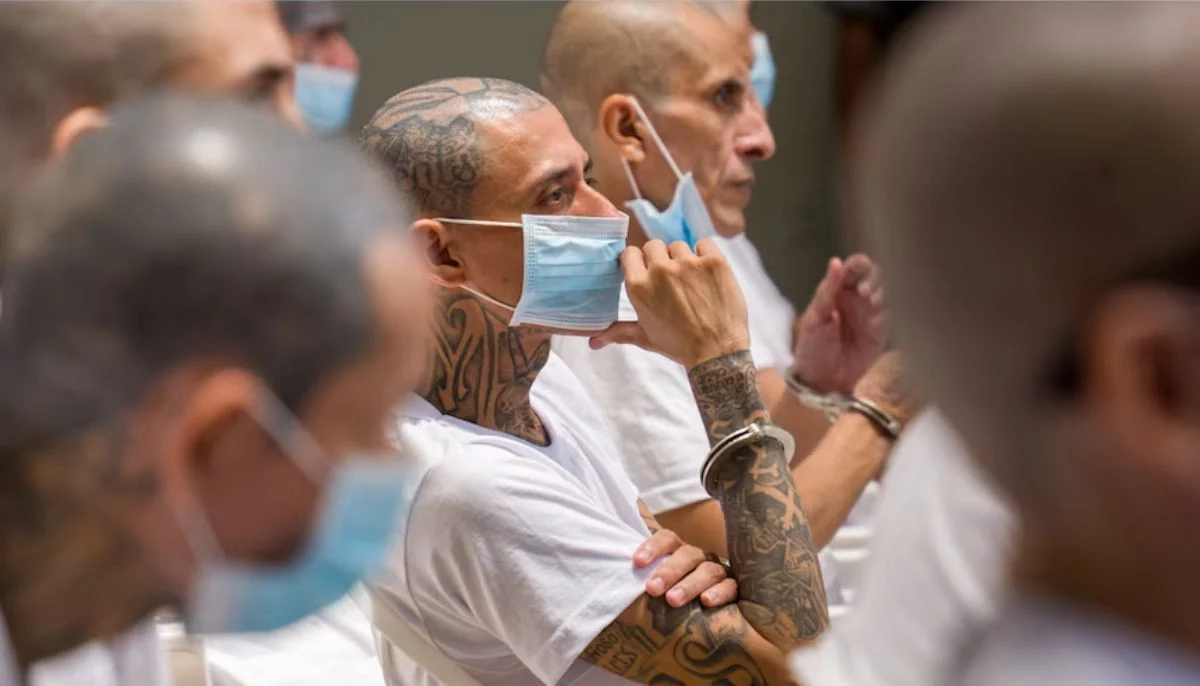
El Salvador has launched a mass prosecution of 486 alleged gang members belonging to the notorious MS-13 or Mara Salvatrucha.
The biggest trial in a Salvadoran court is underway as President Nayib Bukele deploys his controversial emergency powers to crack down on mass violence.
According to prosecutors, MS-13 gang members are accused of more than 47,000 crimes committed between 2012 and 2022, including a weekend that was El Salvador’s bloodiest since the civil war. Crimes include femicide, homicide, arms smuggling and extortion.
In March 2022, the state imposed a massive state of emergency that reshaped the country’s legal and social landscape. Under this paradigm shift, security forces arrested more than 91,500 people. Later, Congress passed a decree allowing mass trials of these detainees.
However, mass prosecutions have raised concerns among human rights groups, who argue that mass prosecutions not only prevent defendants from seeking legal counsel but also violate the right to due process.
The Inter-American Commission on Human Rights called for an end to the use of sweeping emergency powers as a coercive tool to fight crime.
The commission issued a statement saying, “This ruling suspends the rights of legal defense and the inviolability of communications, and also extends the time limit for administrative detention.”
However, Bukele’s government claimed that following a crackdown on gangs, the murder rate would drop to 1.3 per 100,000 people in 2025, compared to 7.8 in 2022.
During the trial, prosecutors presented various evidence, including ballistics analysis, autopsy reports, and witness testimony, urging the judge to impose the maximum prison sentence for each crime.
Given the seriousness and frequency of the crimes, defendants could face up to 245 years in prison if convicted of multiple charges.
