

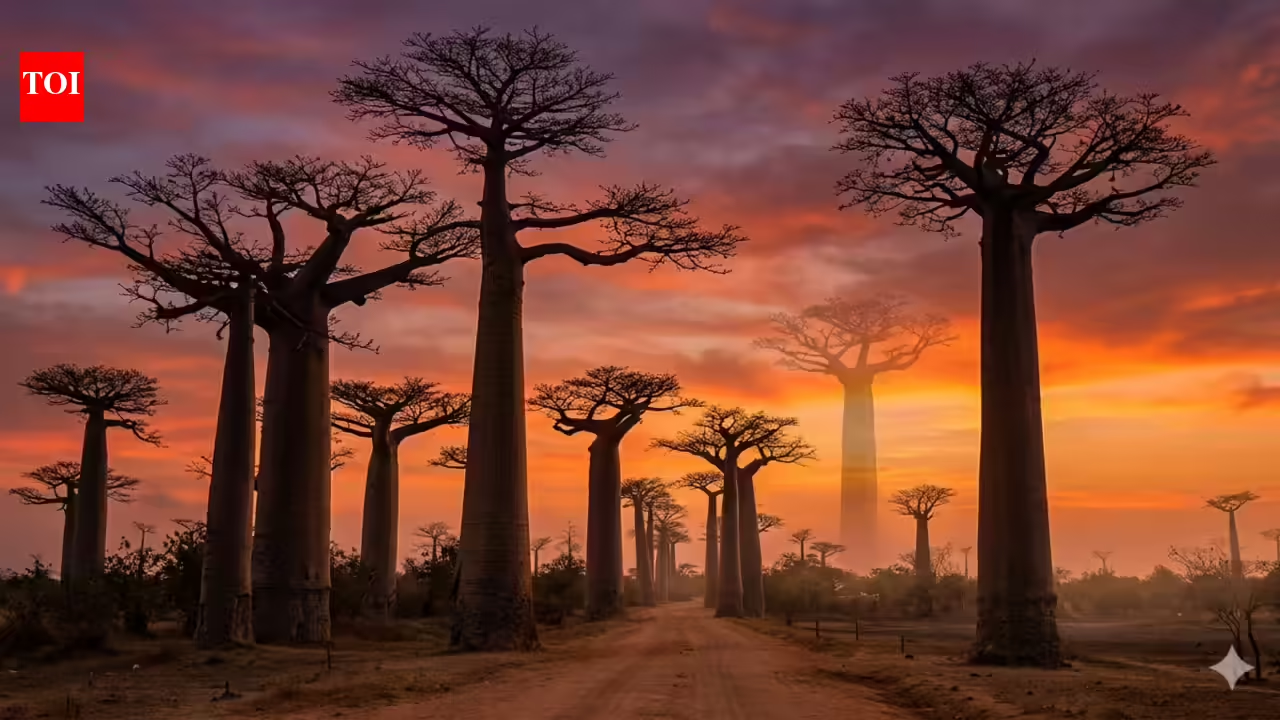
Madagascar’s majestic baobabs are more than awe-inspiring silhouettes on the horizon; They are the historical guardians of the Earth’s climate. These giant trees have lived for over a thousand years and have been quietly keeping a record of the environment year after year. Scientists have made an interesting breakthrough, as it has been found that these trees keep records of rainfall in their bodies for more than 700 years. The chemical composition of the tree can tell scientists how it managed to survive times of drought and what effect it had on humans.
How baobab trees Store centuries of climate data in its rings
Baobabs are commonly called nature’s time capsules because their rings contain climatic information, which becomes embedded in the form of chemical signatures when a new ring is formed each year. Through this unique feature of trees researchers have been successful in determining climate records in terms of rainfall.As stated in a recently published research titled ‘Baobab isotope records and precipitation forces in southwestern Madagascar over the past 700 years.‘, researchers determined the history of rainfall in southwest Madagascar by studying carbon isotopes found in baobab rings for 700 years from the 1300s. Researchers have described these rings as “natural rainfall gauges that have been around for centuries.”The science of this approach is quite precise. Trees absorb higher levels of heavy carbon isotopes (¹³C) during dry periods due to water conservation efforts and their lower absorption in wet years.
700 years old rain patterns revealed
Such results make for a compelling story about Madagascar’s past environment. According to this research, the region received its highest rainfall from 1350 to 1450. This was followed by a persistent and extremely dry period from 1600 to 1750. Since then, rainfall has continued to decline.The fact that a 700-year record has been created is significant given Madagascar’s lack of long-term climate data. Such a dataset fills existing gaps in understanding the natural variability of climate by providing important information.Scientists used not only tree growth data, but also other indicators such as charcoal and pollen. In this way, scientists were able to track not only rainfall but also changes in vegetation and fire.
Climate change and human influences are interconnected
One of the most surprising discoveries is how climate and human activity may be interconnected. It was determined that the change in vegetation from dense forest to grasslands was not solely due to climate, but resulted from drought and human agricultural activities such as forest clearing and slash-and-burn agriculture. As the authors suggest, “environmental change was driven by ‘climate and human activity…simultaneously'” and thus contradicted previous theories that held humans solely responsible for deforestation.However, the atmosphere remained intact. In response to decreasing rainfall, drought-tolerant vegetation replaced water-loving vegetation, and human populations changed their economic activities to include agricultural activities.
why this climate mystery are important
Although the study focuses on Madagascar, it can be applied globally. These findings may help predict further impacts of climate change on various ecosystems and human societies. Furthermore, such a perspective is important when formulating any conservation, agriculture and climate change adaptation policies.Furthermore, the findings refute simplistic assumptions about environmental degradation and reflect the complexity of the relationship between people and nature. Ultimately, the findings prove how valuable historical information can be in climate change policymaking.The relationship between the analyzed data and local sources shows additional information about the climate history of the region. All the findings can be summed up in a single phrase: the past is important for predicting the future. Studying ancient trees can teach us important lessons for future environmental problems.
