

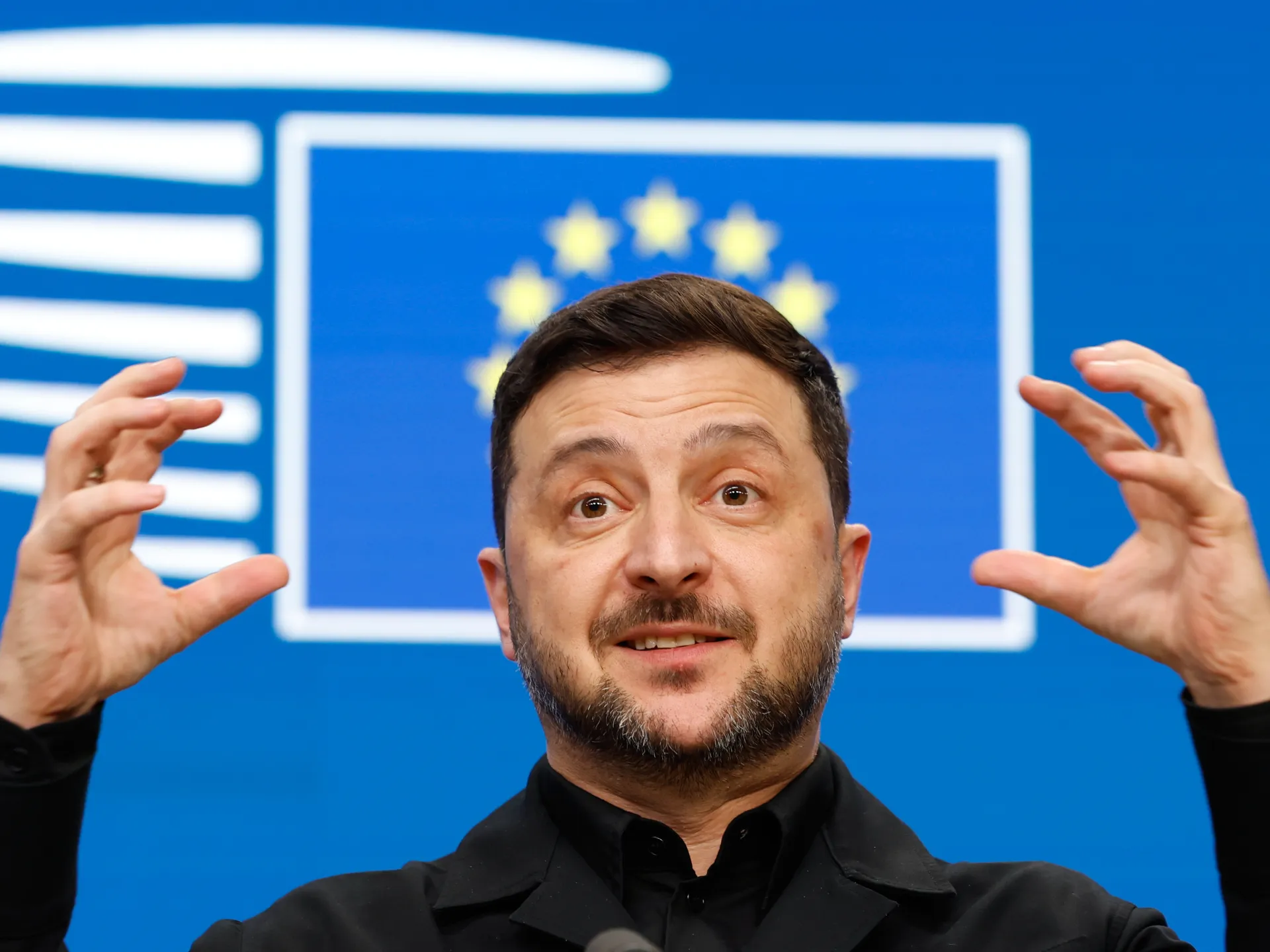
Ukrainian President Zelensky welcomed the development, urging that the first tranche be delivered by May or June.
Published on 23 April 2026
The European Union has given final approval to a 90 billion euro ($105 billion) loan for Ukraine and imposed a new round of sanctions on Russia, giving Kiev a boost after a long dispute.
The measures were signed after Hungary and Slovakia raised objections when Ukraine resumed oil flows after repairing the damaged Druzhba pipeline.
Recommended Stories
4 item listend of list
“The impasse is over,” EU foreign policy chief Kaja Kallas posted online. “Russia’s war economy is under increasing pressure, while Ukraine’s is getting a big boost.”
The dispute has strained EU support for Ukraine at a time when the United States has largely cut off Kiev amid the US-Israeli war over Iran and eased sanctions on Russian oil exports.
Hungary’s outgoing Prime Minister Viktor Orban – who suffered a crushing election defeat this month – blocked the loan to pressure Ukraine to fix a pipeline carrying Russian oil to his landlocked country.
The green light means Brussels can in the coming months begin disbursing the money Kiev desperately needs to plug a budget hole four years after Russia’s aggression.
Ukrainian President Volodymyr Zelensky welcomed the EU’s approval of the loan.
“Today is an important day for our defense and our relations with the EU. The European aid loan to Ukraine has been freed up by 90 billion (euro or $105 billion) over two years,” Zelensky said on the X.
“It matters that Ukraine is achieving this level of financial certainty – after more than four years of full-scale war,” he said, urging that the first tranche be delivered by May or June.
new russia sanctions
At the same time, the EU’s 27 countries also signed off on a new package of sanctions against Moscow, which was blocked by both Hungary and Slovakia over the same issue.
The new round of economic penalties for the Kremlin – the 20th by the EU since Russia launched a full-scale invasion of Ukraine in 2022 – targets Russia’s energy, banking and trade sectors.
The measures include cracking down more heavily on the so-called “shadow fleet” of older tankers, which Moscow uses to avoid oil-export sanctions, and cracking down on Russian cryptocurrency traders.
But the EU declined to impose a full maritime services ban on ships carrying Russian crude, saying it expected Group of Seven (G7) partner countries to move forward together at a later date.
The bloc also announced it was halting sales of some machinery to the Central Asian country of Kyrgyzstan to prevent products from going to Russia.
This is the first time that the EU has used a mechanism to block entire categories of exports to a specific country to avoid sanctions.
