

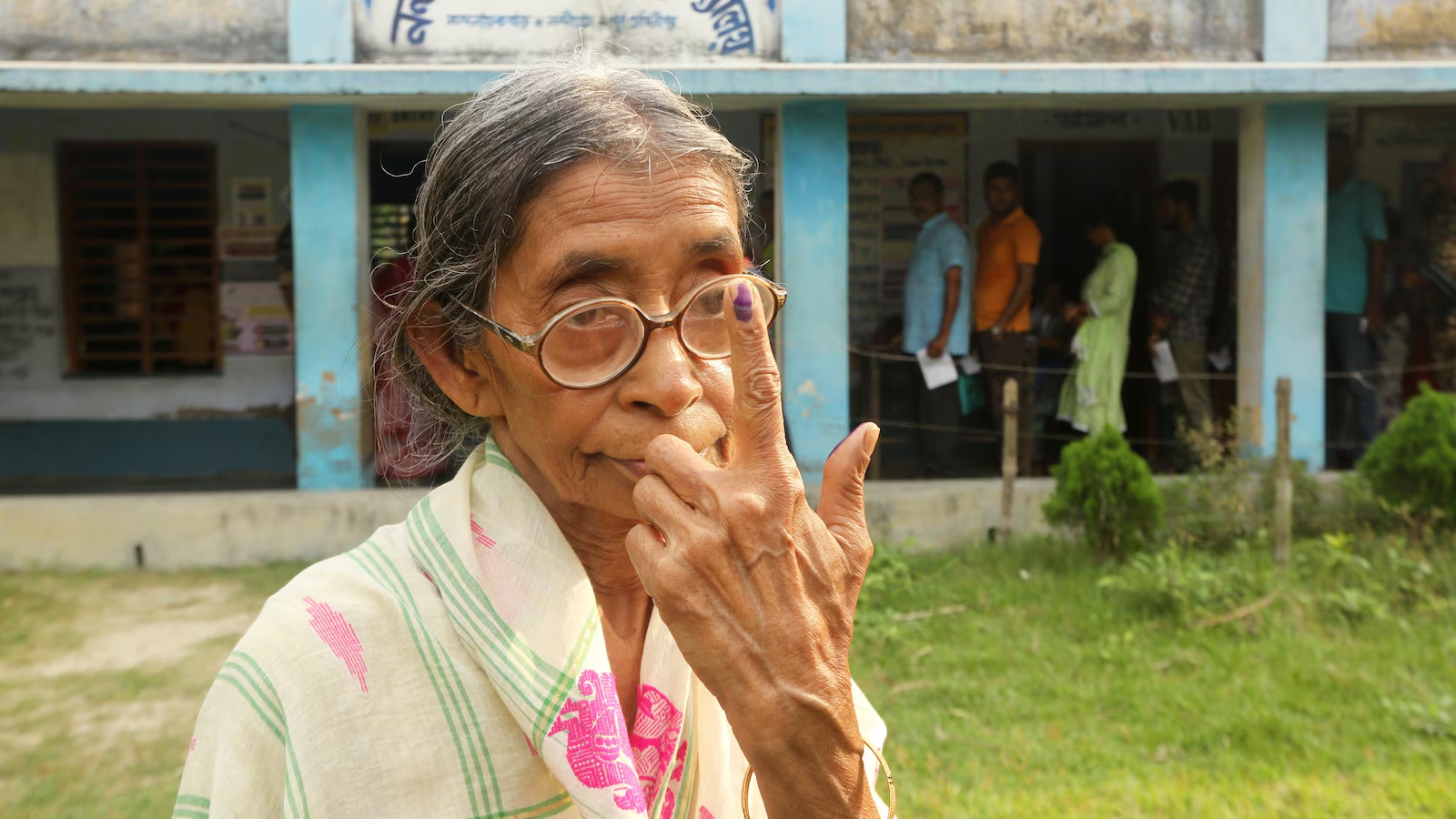
Kolkata, India — Voting in one of India’s most-watched state elections began on Thursday, following a national election voter list revision Lakhs of names were removed and concerns were raised over disenfranchisement in West Bengal, one of the few large states not ruled by Prime Minister Narendra Modi’s ruling party.
The election has national implications. Modi’s Bharatiya Janata Party is looking to make gains in a state long dominated by a regional opposition party, while a victory for West Bengal Chief Minister Mamata Banerjee would cement her position as a key opposition leader.
The second phase of voting is to be held next week. Voting was also taking place in the southern state of Tamil Nadu on Thursday.
voting was part of a comprehensive round of state elections Testing BJP’s reach in opposition strongholds. The results of the latest elections and earlier elections in the states of Kerala and Assam and the Union Territory of Puducherry were expected on May 4.
This election is taking place after a comprehensive revision of the electoral rolls by the Election Commission of India with the aim of removing duplicate, dead and ineligible voters. Officials say about 9 million names – about 12% of the electorate – were removed, including 6.3 million listed as dead or absent and 2.7 million as “doubtful” and pending verification.
Some affected voters said they had voted in previous elections and had valid identification, but were removed without clear explanation.
Sheikh Nazrul Islam, a 53-year-old paramilitary officer on election duty in West Bengal, said he last voted in 2021 and has valid identity documents, yet his name is no longer in the voter list.
“The Election Commission has deployed me to ensure free and fair elections. Yet, it does not consider me a citizen of this country,” he said.
In another case, 62-year-old retired school administrator Taibunesa Begum said she was shocked to see her name removed despite having a passport, pension records and earlier voter registration.
“It felt like being told I didn’t exist,” he said.
Opposition leaders allege that the removal will adversely impact Muslims and other marginalized communities.
The Election Commission of India has denied the allegations and said that the process has resulted in the removal of dead, duplicate and fake voters from the electoral rolls.
Modi’s party said the amendment was a routine administrative practice done in many states and argued that any disproportionate effect in West Bengal reflected the presence of undocumented migrants. He says that many Hindu voters were also removed.
However, critics link these deletions to the broader political message of Modi and some BJP leaders, who have repeatedly suggested that the revision of voter lists target those who have immigrated illegally from neighboring Bangladesh. Opposition leaders said such rhetoric has deepened fears among minority communities, especially Muslims, that voter list revision is being used to exclude them.
Derek O’Brien of the opposition Trinamool Congress called the practice “invisible rigging”.
“The aim is to disenfranchise voters,” he said.
Analysts have warned that the removal could raise concerns about long-term consequences.
Political analyst Iman Kalyan Lahiri said, “Losing your place in the voter list can be very upsetting. It’s not just about the right to vote; it’s about dignity, recognition and assurance that you matter as a citizen.”
However, for many affected voters, the issue is more immediate.
“This is not just about politics,” Begum said. “It’s about identity, about whether we belong in this country.”
___
Salik reports from New Delhi.
