


addressing 2026 World Overflight Risk Conference Earlier this week in Malta, ICAO Secretary-General Juan Carlos Salazar warned that emerging weapons were creating an environment where civilian aircraft were at an increasing risk of being targeted or caught in crossfire.
“We must now reach beyond the limitations of aviation as we know it,” Mr Salazar told delegates, adding that although the industry had shown “remarkable resilience” during recent Middle East crises, operational resilience alone cannot solve the underlying security threat.
Three steps to safety
To prevent a catastrophic event, the Secretary-General urged Member States to adopt three priority measures:
- Instant Intelligence Sharing: Informing civil aircraft about threats in real time.
- Strong Risk Assessment: Improve timely decision making for airspace closure.
- Civil-Military Coordination: Enhance communications to prevent misidentification of civilian targets.
ICAO is currently finalizing a global crisis management framework and updating safety manuals to help airlines navigate increasingly militarized skies.
Mr. Salazar reminded the international community that under the Chicago Convention, the use of weapons against civilian aircraft is strictly prohibited.
Three out of four new displacements in Somalia are due to drought
The worsening climate crisis in Somalia has left nearly 62,000 people homeless since the beginning of the year, with drought now accounting for the majority of new displacements.
according to International Organization for Migration (IOM) On Friday, drought-related displacement increased by 22 percent compared to last year.
Even if the upcoming rainy season is largely beneficial, experts estimate that another 125,000 people could be forced from their homes by June as water sources dry up and livestock die.
A mother and daughter at the Rabi Yasir camp for internally displaced people in Mogadishu, Somalia. .
“When water disappears, crops are ruined and livelihoods are destroyed, displacement becomes a last resort,” said Manuel Pereira, head of the IOM mission for Somalia.
He warned that without immediate action, the crisis will continue to uproot communities and deepen the hunger crisis.
urban centers under pressure
As pastoralists and farming families are losing their livestock and crops, they are moving to towns and cities in search of food and water.
However, these urban areas are struggling to deal with floods. Many families are moving into crowded informal settlements with little access to clean water or toilets, increasing the risk of disease.
While IOM is providing emergency shelter and life-saving supplies through its rapid response teams, the agency warned that the scale of the crisis far exceeds available resources.
In addition to immediate assistance, IOM is calling for long-term investment in water infrastructure to help Somalis hold on to their lands and withstand future climate shocks.
Solar irrigation project boosts food security in drought-hit Ethiopia
World Food Program (WFP)wfp) and the Ethiopian government has Solar powered irrigation scheme inaugurated In the Somali region, it aims to help pastoral communities cope with intense climate shocks.
Located in Gode, the project is part of the “IFTIIN” initiative – which means “light” or “hope” in Somali – and is funded by Germany through the KfW Development Bank.
The scheme draws water from the Shebelle River, allowing year-round farming in a region traditionally dependent on unreliable rainfall.
“WFP’s approach in Ethiopia is to support the government’s transition towards resilient, self-reliant food systems,” said Zlatan Milicic, WFP Country Director. He said the project allows communities to “absorb climate shocks and reduce long-term dependence on humanitarian aid”.
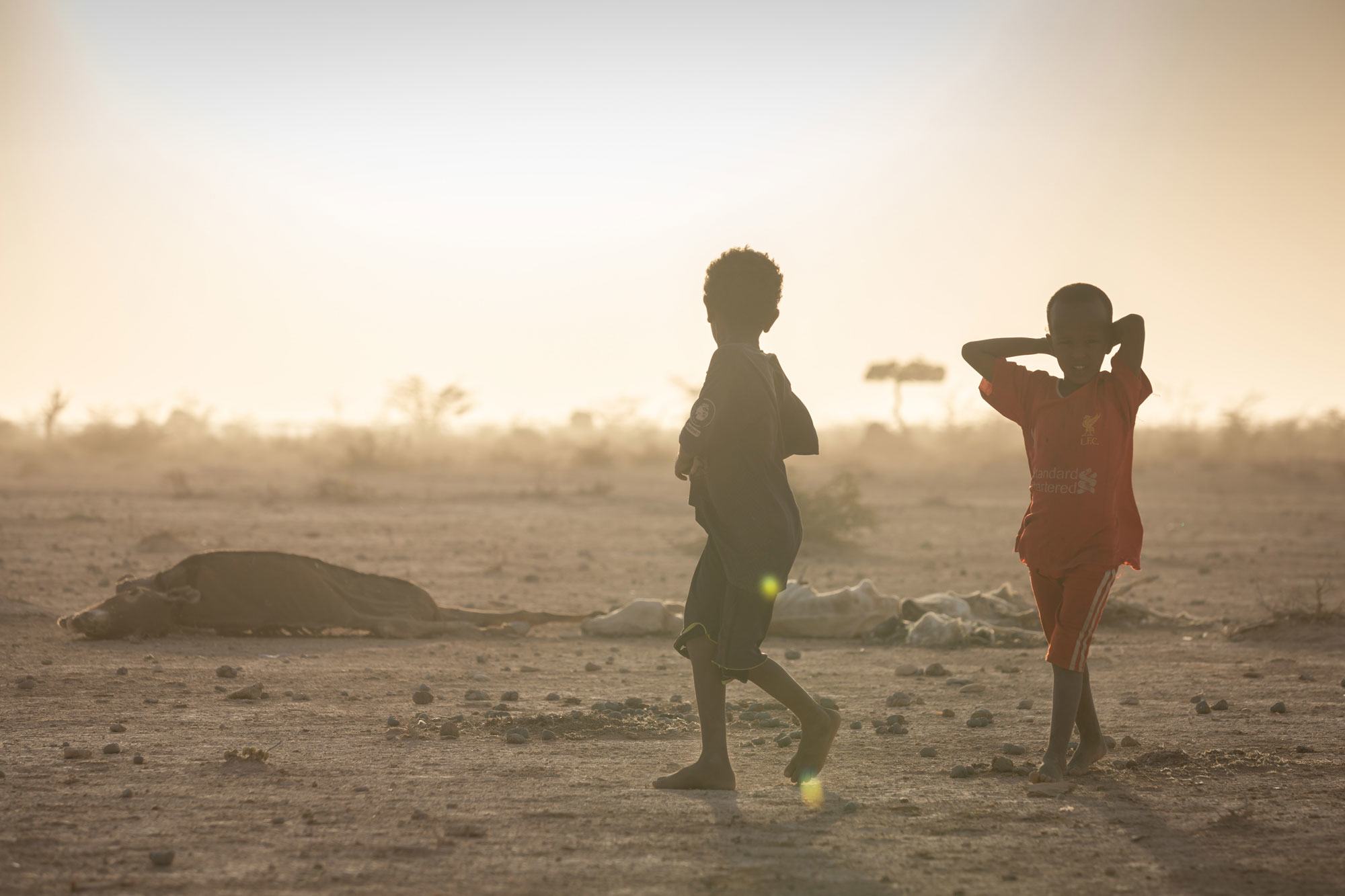
There is a severe drought in Ethiopia’s Somali region (File).
Investing in local resilience
The initiative supports approximately 85,000 people across the region by integrating water infrastructure with economic support.
Apart from constructing 17 irrigation schemes and 13 livestock ponds, the project has installed 29 dams to regenerate vegetation and protect against floods.
To ensure long-term sustainability, farmers are being linked directly to traders and markets, helping to increase family income and improving access to basic financial services.
Between 2024 and 2025, the Gode site saw its local farmers earn nearly $290,000 from their crops, demonstrating the potential of climate-smart solutions to transform food security in lowland areas.
