

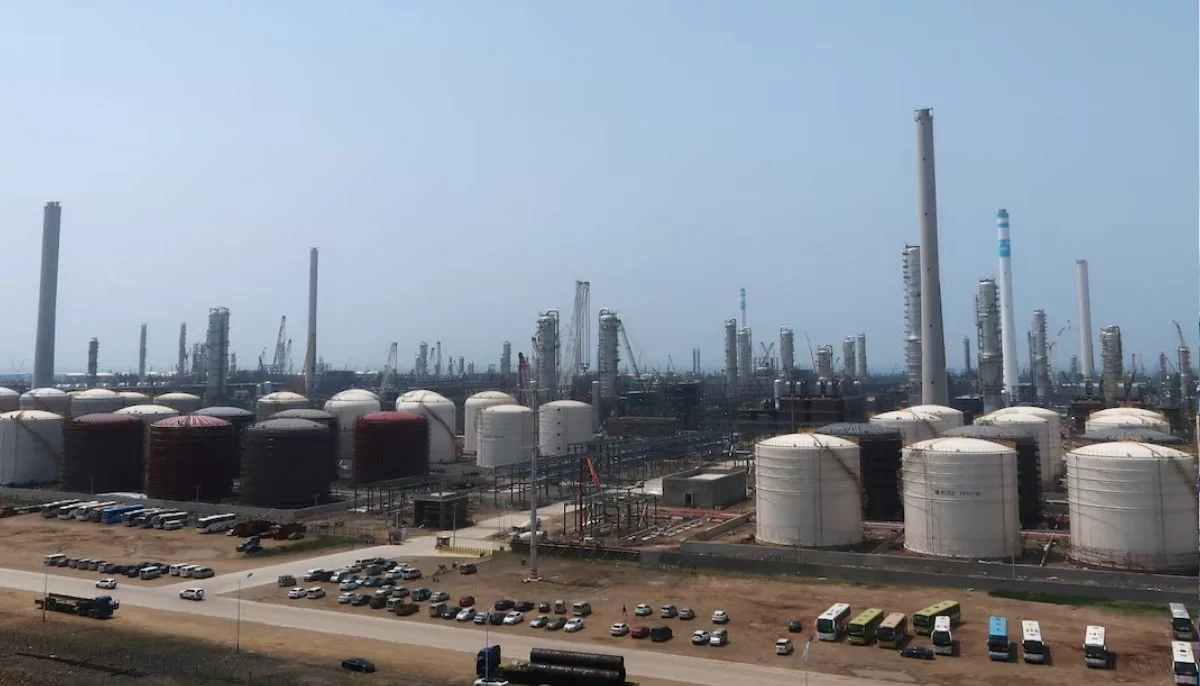
China is once again the target of Trump administration’s action. In a recent development, the United States has imposed sanctions on Hengli Petrochemical Refinery for importing Iranian oil worth billions of dollars.
As Al Jazeera reported, the announcement comes just after officials from Washington and Tehran attended another round of peace talks in Islamabad, Pakistan, over the weekend.
Hengli Petrochemical Refinery, considered China’s second largest “teapot” or independent refinery, is one of Iran’s largest customers of petroleum products and crude oil.
Given the refinery generates millions of dollars in revenue for Iran amid the ongoing conflict with the US, the Treasury Department decided to target it.
The department’s Office of Foreign Assets Control issued a statement announcing sanctions on 40 shipping companies and vessels that are part of Iran’s shadow fleet.
US Treasury Secretary Scott Besant said on Friday that the US would continue to target ships, vessels, networks and buyer countries on which Iran’s oil economy heavily depends.
“Any person or vessel facilitating these flows through clandestine trade and finance is at risk of US sanctions,” he said.
However, China has strongly opposed this new step of the US and termed it as “illegal unilateral sanctions”.
A spokesperson for the China Embassy in Washington said, “We call on the US to stop politicizing trade and sci-tech issues and using them as a weapon and a tool, and to stop abusing various forms of sanctions to influence Chinese companies.”
The sanctions could damage China’s energy markets and economy as Beijing imports half of its oil from the Middle East. In 2025, the world’s second-largest economy will buy more than 80% of Iranian oil, according to a report by analytics firm Kpler.
Teapot refineries are of vital importance to China by increasing oil supplies through imports and storing discounted Russian and Iranian oil.
