

The United Kingdom’s Ambassador to the United States, Christian Turner, has described King Charles III’s four-day visit to the US as an effort to “renew and revive a unique friendship” between the two allies.
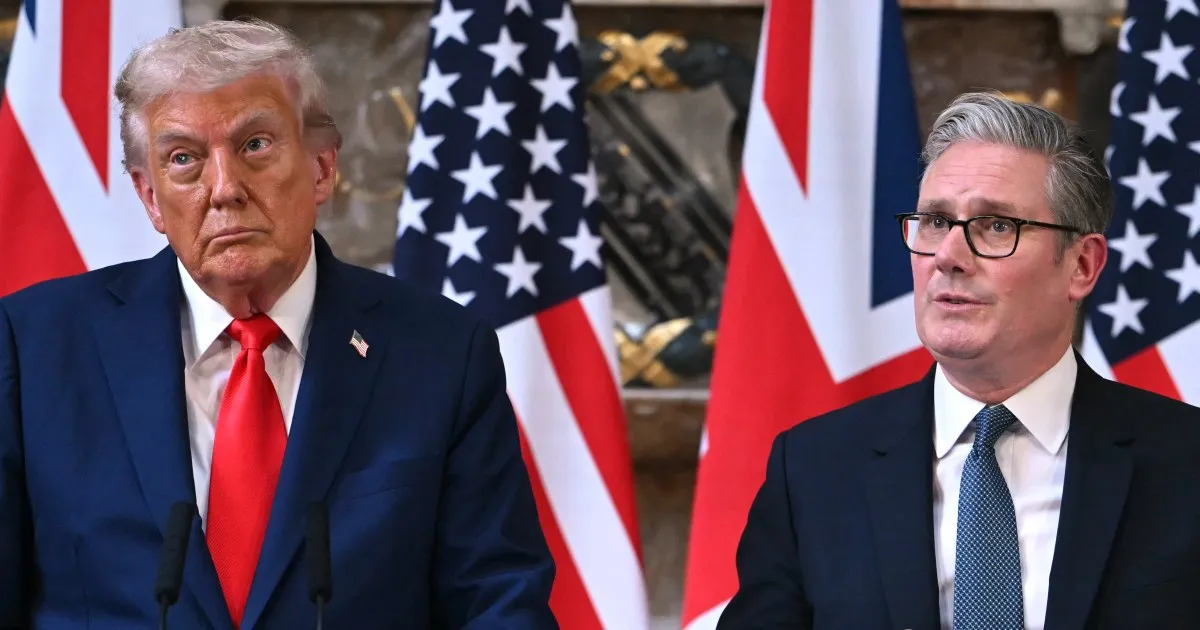
The visit, which began on Monday, comes during a tense period in US-UK relations as US President Donald Trump continues to publicly criticize British Prime Minister Keir Starmer over his stance on the US-Israeli war on Iran, accusing him of not assisting Washington in the fight against Iran or helping the US reopen the strategic Strait of Hormuz.
Recommended Stories
list of 3 itemsend of list
Days after the war began – and after Starmer initially refused to allow US forces to use UK military bases to attack Iran – Trump described the British leader as “no Winston Churchill”.
Despite the United States gaining independence from Britain in 1776 and fighting against it in the War of 1812, the two countries have mostly remained staunch allies and have strengthened their ties over the past century, often referred to as a “special relationship”.
Nevertheless, their relationship has faced strain from time to time, even when they have agreed to unite on major issues.
Here is a timeline of the ups and downs of this “special relationship”:
1940–1944: World War II
The most significant alignment between the countries occurred during World War II when London and Washington closely coordinated war efforts with the Soviet Union on behalf of the Allies against the Axis powers led by Nazi Germany.
The two countries came together specifically over the “Germany First” strategy, in which they prioritized defeating the Nazis rather than confronting Imperial Japan.
In the same period, US President Franklin D. Roosevelt also signed the Lend-Lease Act in March 1941. It provided war and military supplies to Britain and others in the Allied camp even before the US formally entered the war in December 1941.
1956: Suez Canal crisis
Following President Gamal Abdel Nasser’s move to nationalize the Suez Canal in 1956, France and Britain quietly coordinated with Israel to launch a joint invasion of Egypt.
Angered at being kept in the dark and worried that the Soviet Union, then Egypt’s close partner, might be drawn into the fighting, US President Dwight Eisenhower supported a UN resolution condemning the attack.
Washington also warned that it would withhold vital financial aid from its European partners and the fighting stopped within days.
The crisis was ultimately ended by the United Nations’ first armed peacekeeping force, a pioneering mission that became the model for later United Nations peacekeeping operations.
1982: Falklands War
When in April 1982 Argentina invaded the Falkland Islands, which had been under British control since the 19th century, the US at first rejected Britain’s request for military assistance.
The US, which was also Argentina’s ally, wanted to stay out of the dispute. Instead, US President Ronald Reagan urged British Prime Minister Margaret Thatcher to negotiate a peace deal and recommended agreeing to joint control of the islands.
Thatcher disagreed, and Britain took back the islands after a 10-week war, with the US providing Britain with logistical support.
1994: Northern Ireland
US President Bill Clinton granted Gerry Adams, leader of the Northern Ireland political party Sinn Féin, a 48-hour visa to visit the US to speak at an event in New York.
London had lobbied strongly against the visa. Britain believed Adams was a member of the Irish Republican Army, which had been designated a “terrorist organization” and which had carried out bombings in Britain and Ireland.
Irish diplomat Sean Donlon later reported that British Prime Minister John Major refused to take Clinton’s calls for several weeks after the visa was issued. However, in the end, Adams’s visit helped bring the US into Northern Ireland peace talks, resulting in the 1998 Good Friday Agreement.
1998–1999: Kosovo War
While the Kosovo War, the conflict between ethnic Albanian separatists and Yugoslavia, is often seen as a moment of strong UK–US alignment, there was significant disagreement between the two countries over the extent to which military action should be taken to intervene.
Amid human rights atrocities and ethnic cleansing by Serb forces, as well as the displacement of one million Albanians, Britain, then led by Prime Minister Tony Blair, was one of the strongest supporters of military intervention against Yugoslavia and its Serb leader Slobodan Milosevic.
Blair repeatedly asked Clinton to take a more aggressive approach, including the possibility of deploying ground forces, but Clinton was reluctant to do so.
The US supported a narrowly focused NATO air campaign, which took place, while Britain worried that its airpower might fail to stop the Serb forces. Finally, the war ended after a 78-day NATO bombing campaign.

2003: Invasion of Iraq
The Iraq War was one of the closest periods of political and military coordination between London and Washington in decades. Blair strongly supported US President George W. Bush’s plan to invade Iraq and committed British forces to the US-led invasion in March 2003.
Britain was Washington’s most important ally in the coalition, providing thousands of troops and intelligence support.
Blair supported Bush at a time when other US allies such as France and Canada were strongly opposed to the invasion, as were many in Britain.
Blair’s decision sparked one of the largest protests in British history, with more than one million people taking to the streets of London.
2011: Libyan war
Following the fall and death of Libyan leader Muammar Gaddafi, US President Barack Obama revealed that there were significant differences of opinion between Washington and London over how to manage Libya in the post-Gaddafi era.
In a 2016 interview, Obama accused British Prime Minister David Cameron of being “distracted by too many other things” after the intervention and said he placed too much trust in Europeans “investing in follow-up.”
