

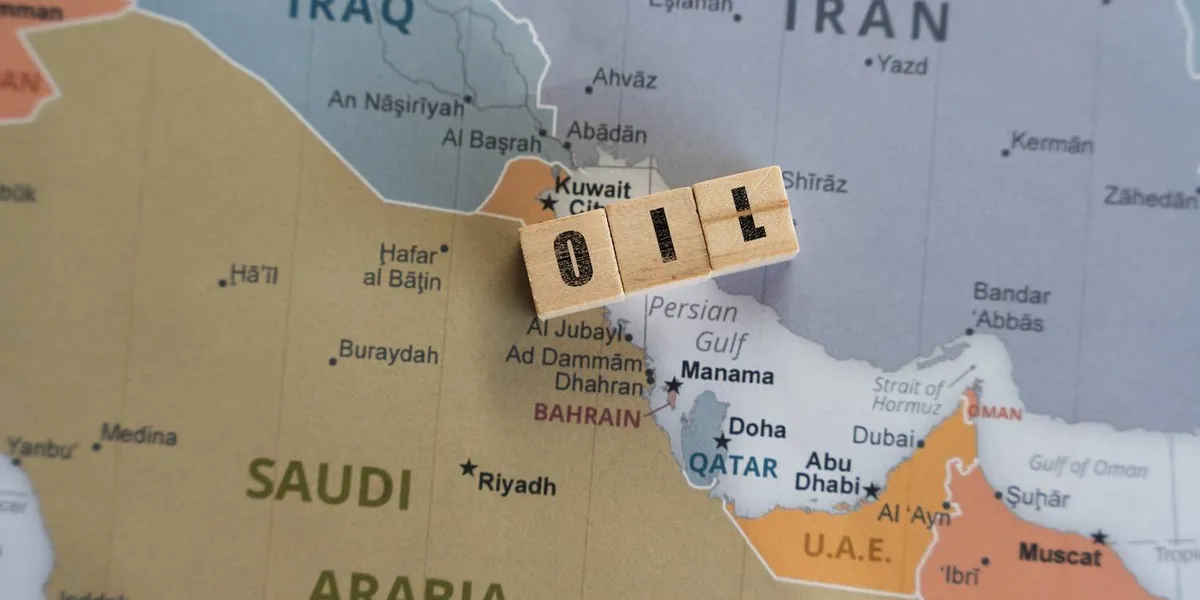
The United Arab Emirates (UAE) has announced plans to leave The Organization of the Petroleum Exporting Countries (OPEC) collapsed effective Friday (May 1), a significant blow to the oil producer alliance as geopolitical tensions and supply disruptions continue to impact global energy markets.
The move would remove one of the cartel’s largest and fastest-growing producers at a time when oil prices remain high due to the ongoing war in Iran. The conflict has caused the closure of the Strait of Hormuz, a vital shipping lane that usually carries about a fifth of the global oil supply.
Brent crude traded above US$111 a barrel on Tuesday (April 28), 50 percent more than pre-war levels.
The UAE, which joined OPEC through Abu Dhabi in 1967, has long signaled frustration with production quotas, saying they limit its ability to capitalize on the billions of dollars invested in expanding domestic production capacity.
Analysts estimate the country could produce up to 5 million barrels of oil per day, up significantly from about 3.4 million barrels before the conflict began in late February.
Global oil production in 2024.
in a statement Carried by the state-run WAM news agency, the UAE said the departure reflects its “long-term strategic and economic vision” and its desire for greater flexibility as it accelerates investment in energy production. The country also confirmed it would pull out of the broader OPEC+ alliance, which also includes Russia.
The decision highlights growing rifts within the producer group, whose influence on global oil markets has weakened in recent years as U.S. output has risen above 13 million barrels per day.
Describing the impact of the UAE’s departure, Richard Tullis, natural resources analyst at Water Tower Research, said in an email to Investing News Network, “OPEC has lost an important member that was producing 3 to 4 percent of pre-war global oil production and about 11 percent of OPEC production.”
Market observers have also pointed to growing tensions between the UAE and key OPEC producer Saudi Arabia over both economic strategy and regional politics.
“The UAE has reportedly commented on its disappointment that other OPEC members have not done more to help prevent the damage the UAE suffered during the war,” Tullis said.
For more from Tullis about the oil markets and how investors should be positioning, listen to his March 24 podcast interview Above.
This division could further complicate OPEC’s ability to manage prices and coordinate supply.
“The UAE’s decision to leave OPEC next month allows the country to pursue its goal of significantly increasing its oil production without OPEC interference,” Tullis said.
“The UAE had the capacity to produce an estimated 4 million to 4.25 million barrels per day in 2025, but was limited to around 3.5 million barrels per day production for most of the year due to OPEC+ production quotas.”
He added, “The UAE has expressed a goal to reach 5 million barrels per day production by 2027 and could potentially take its low unit cost oil production to even higher levels by the end of the decade if demand requires.”
Although the UAE’s exit will be a blow to the status of the OPEC oil cartel, the decision may provide some relief to consumers when the Strait of Hormuz reopens for international trade. As Tullis explained, “For energy investors, this move by the UAE could help provide some relief to the oil price in the medium term, as the UAE aims to significantly increase oil production over the next few years and has the ability to continuously export its oil.”
Don’t forget to follow us @INN_Resource For real-time updates!
Securities Disclosure: I, Georgia Williams, do not have any direct investment interest in any of the companies mentioned in this article.
Editorial Disclosure: Investing News Network does not guarantee the accuracy or completeness of information provided in interviews it conducts. The opinions expressed in these interviews do not reflect the opinions of Investment News Network and do not constitute investment advice. All readers are encouraged to do their due diligence.
From articles on your site
Related articles on the web
