

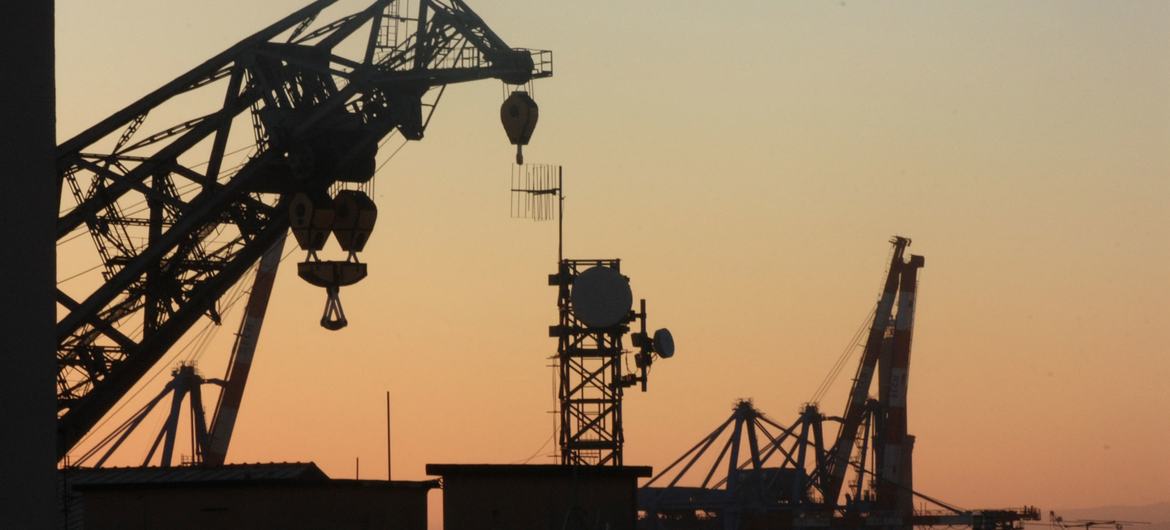
The last major UN climate conference (COP30 in Brazil) broke up without a successful agreement on phasing out coal, oil and gas – but there were many positive developments, including commitments to boost financing for climate action, provide funding for adaptation and fight climate misinformation.
The issue of the transition to a low-carbon global economy proved very thorny (as it is at all COPs) and many countries and civil society groups expressed frustration at the lack of consensus on the issue.
That frustration has been channeled transition away from fossil fuels (TAFF) program in Santa Marta, Colombia, which ends on Wednesday.
Described as a “coalition of the willing”, TAFF is considered the first international diplomatic meeting that focuses explicitly on the practicalities of moving beyond limited carbon-emitting fuels to renewable energy sources.
More than 53 nations, across all sectors and development levels, from both fossil fuel producers and consumers, joined with representatives from academia, the private sector and civil society groups to chart an ambitious path towards sustainable societies and economies.
United Nations/Esther Agbarakwe
Selwyn Hart at the Transition Away from Fossil Fuels Conference, Santa Marta, Colombia.
new imperative
Although TAFF is not organized by the United Nations, senior officials from the organization were invited to attend, including Selwyn Hart, Special Adviser to the Secretary-General on Climate Action and Just Transition, who said that the current global energy crisis caused by the Iran conflict has highlighted the extent to which “AThe global energy system built on fossil fuels is inherently unstable, unstable and unreliable“
Addressing the conference on Tuesday, Mr Hart pointed out that three out of every four people live in countries that are net importers of fossil fuels, making them vulnerable to shocks they did not cause and cannot control. He said, that dependence has to be ended “A security imperative, an economic imperative and a development imperative.”
Renewable energies such as wind and solar, on the other hand, provide stability, sovereignty and control over one’s own energy future and represent the fastest and most cost-effective path to universal energy access. In a world where approximately 800 million people do not have access to electricity.
© ADB/Viet Tuan
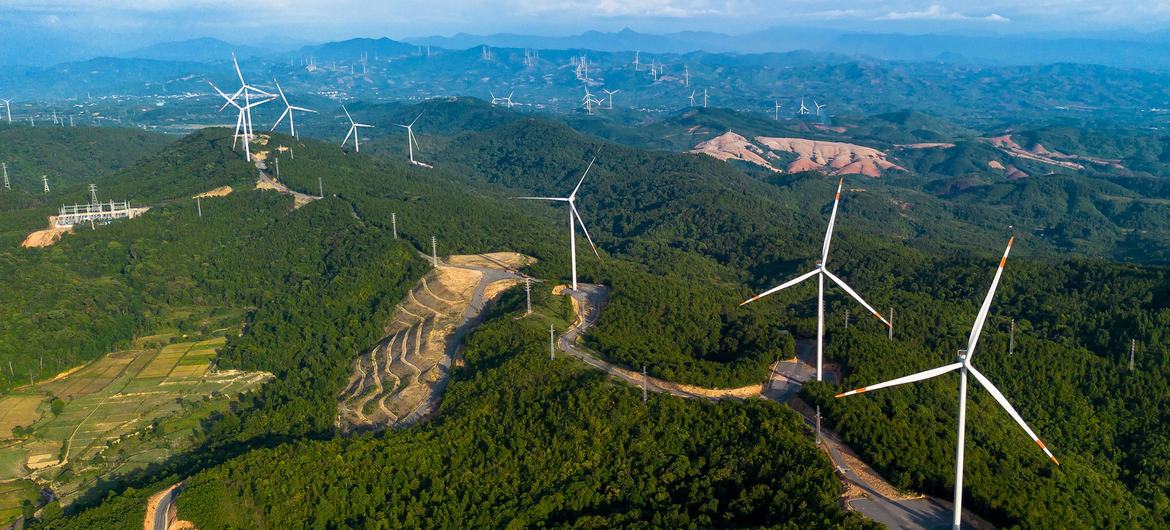
Windmills that generate electricity are located on the hills of Quang Tri Province, Vietnam.
no turning back
“There are no restrictions, price shocks, tariffs or tolls on air or sunlight, He said.
Mr Hart warned that political and economic forces opposing change are actively working to delay and undermine the process, sow doubt on the science, distort economics and undermine the integrity of climate information to protect the status quo and fossil fuel interests.
senior advisor The Santa Marta Program called for marking the beginning of a new model of cooperation And send a message that “the direction of travel is irreversible, and this change will be managed with purpose, partnership, and urgency”.
an economic turning point
A sense of urgency unique to climate discussions is tangible in Santa Marta, according to Martin Cross, director of the Climate Change Division at the United Nations Environment Programme.UNEP).
Mr. Krause, who attended the conference, attributes this sense of momentum to the highly volatile nature of energy markets and the real-world impact they have. He believes this could be a tipping point for the wide-scale adoption of renewable energy.
“We have seen over the past few years that renewables, particularly solar and wind, are competitive in many markets and often cheaper than most fossil fuel-based alternatives. So, we are seeing a very strong move towards electrification across entire economic sectors.”
market-driven
Despite the perceived slow pace of progress in official climate talks, the market is already moving and citizens are paying attention, Mr. Krause says. The transition “is” in some markets and countries. No longer being driven by policy. It’s market driven.
People are now feeling the difference at the gas station, but the crisis is also putting inflationary pressure on the price of food and many consumer products, because so many things depend on the price of oil and gas.
Some particularly hard-hit countries, Mr. Krause says, “can barely keep the air conditioners on, or the lights on, because they are so dependent on imported fossil fuels. They are realizing that this is not a long-term solution for their economy.”
