

By emmitt barryWorthy News Washington DC Bureau Chief
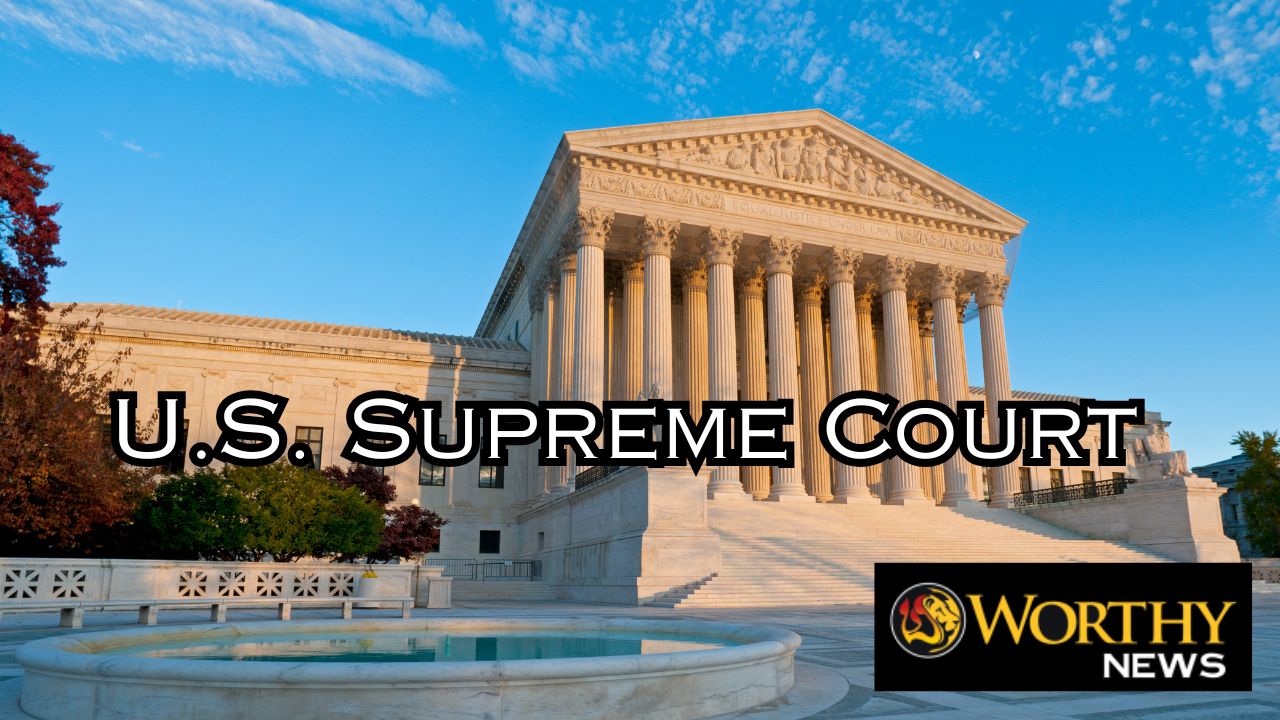
(Qualified News) – The U.S. Supreme Court ruled Wednesday that Louisiana’s revised congressional map, which added a second majority-Black district, violates the Constitution, marking a significant development in the ongoing national battle over redistricting.
In a 6–3 decision, the Court found that the state’s use of race in drawing the new district amounted to an unconstitutional racial discrimination. Writing for the majority, Samuel Alito said that the Voting Rights Act does not require Louisiana to create an additional majority-minority district, and therefore does not justify the state’s race-based approach.
“Since the Voting Rights Act did not require Louisiana to create an additional majority-minority district, no compelling interest justified the state’s use of race,” Alito wrote. “That map is an unconstitutional racial discrimination.”
The decision stems from a years-long legal dispute arising from Louisiana’s redistricting process following the 2020 census. The state initially adopted a map with only one majority-black district, leading to legal challenges that argued it diluted black voting power in a state where black residents make up nearly a third of the population.
After a federal court found that the original map potentially violated the Voting Rights Act, Louisiana lawmakers approved a revised map in 2024 that created a second majority-Black district. However, that map was challenged by a group of voters who argued that it relied too heavily on race in violation of the Constitution’s equal protection guarantees.
The Supreme Court affirmed the lower court’s decision, agreeing that the amended map could not stand under the Fourteenth Amendment and Fifteenth Amendment.
Clarence Thomas filed a concurring opinion with Neil Gorsuch, reinforcing the majority’s argument. In dissent, Elena Kagan, joined by Sonia Sotomayor and Ketanji Brown Jackson, argued that the decision weakens states’ ability to address voting rights violations through race-conscious measures.
This decision is expected to have wide-ranging implications. Legal analysts say it could prompt the redrawing of congressional maps in several Southern states and reshape how courts interpret the balance between the Voting Rights Act and constitutional limits on race-based districting.
Politically, the decision could also affect the balance of power in the US House of Representatives ahead of the 2026 elections, as districts affected by similar legal challenges could be redrawn.
As redistricting battles continue across the country, the Court’s decision signals a stricter standard for when and how race can be used in drawing congressional boundaries — potentially reshaping electoral maps for years to come.

12
People are praying right now.
💡 Do you know? One of the best ways you can support
meaningful news Simply by leaving a comment and sharing this article.
📢 Social media algorithms push content when there is more engagement – so every 👍 like, 💬 comment and 🔄 share helps more people discover the truth. 🙌
latest lol news
Former first lady of South Korea sentenced to four years in prison, plans to appeal
IDF declares “no ceasefire” as fighting continues on Israel-Lebanon border
Two Jews injured in terrorist attack in London amid rising anti-Semitism
Iran’s economy bows to the pressure of war as the crisis deepens
Supreme Court strikes down Louisiana map containing 2nd majority-Black district
Trump warns Iran: “No more Mr. Nice Guy”
Federal indictment fuels allegations of COVID cover-up, raises new questions about government transparency
IS claims attack on Nigerian village kills dozens, including Christians at risk
Military convoy attacked in Ghana violence, civilians killed amid increasing insecurity
If you are interested in articles produced by Worthy News, please check out our free syndication service available to churches or online Christian ministries. To know more, visit Qualified plugins.
