

United Nations, May 8 (IPS) – The consequences of nuclear war would transcend borders and its impact would be felt for generations. Yet even knowing this, member states, including nuclear-armed states, are increasingly violating the nuclear taboo, while also relying heavily on deterrence to prevent fallout.
Throughout the Cold War era, there were stories of nuclear “close calls” – moments when the world could have plunged into nuclear war if it were not for human intervention or sheer luck. The Cuban Missile Crisis of 1962 and the Petrov incident of 1983 may be the more famous examples from history, but others can also illustrate what lessons should be learned from these ‘close calls’.
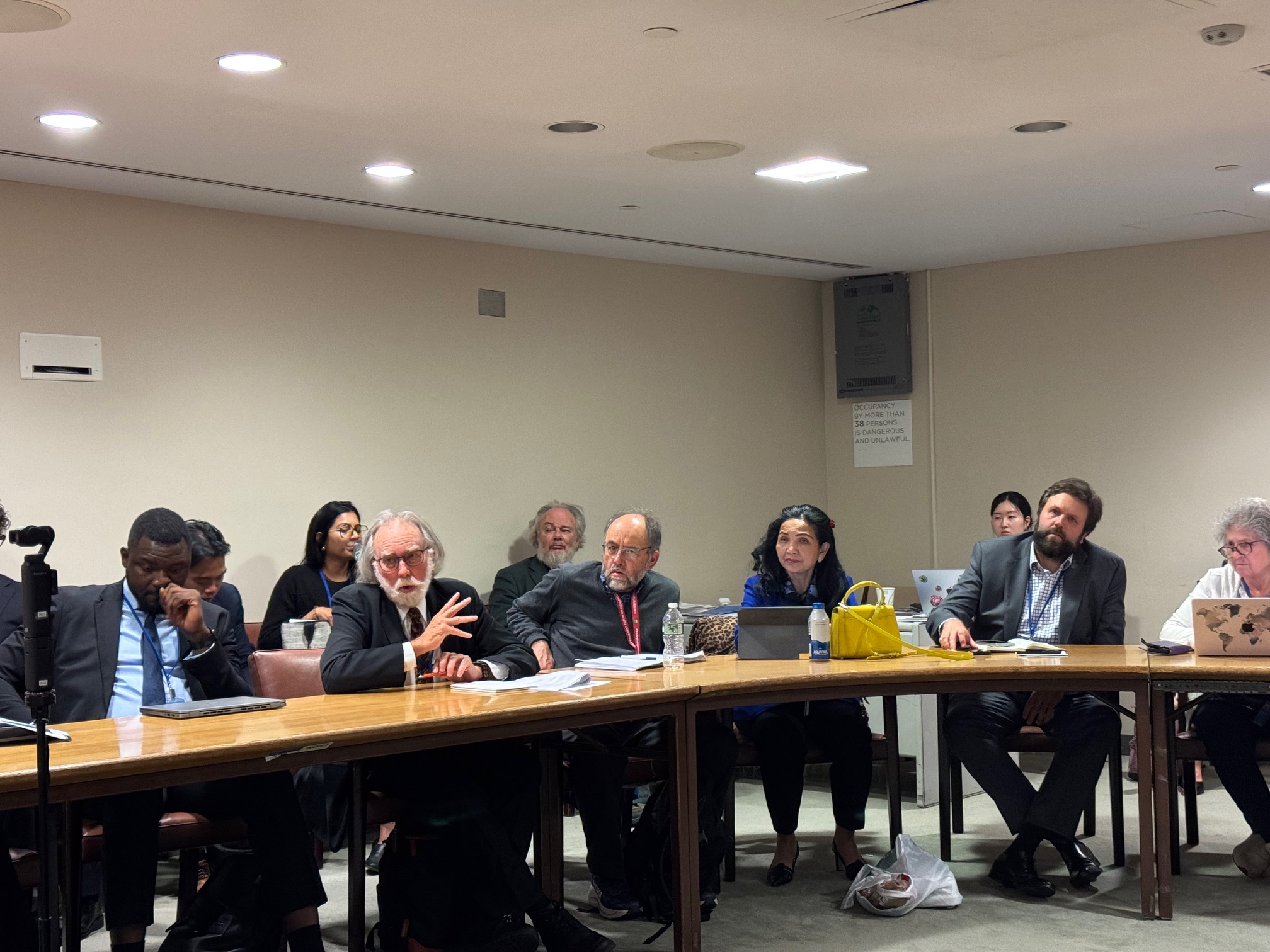
Academics, government and civil society gathered to discuss this on the sidelines of the 2026 NPT Review Conference. On May 1, at an event hosted by Soka Gakkai International (SGI) and the James Martin Center for Nonproliferation Studies (CNS), people came together to discuss past and present efforts to prevent nuclear proliferation. Panelists argued that these stories demonstrate how nuclear deterrence cannot be an effective security strategy toward disarmament or nonproliferation.
Georg-Wilhelm Gallhofer, Director of Disarmament, Arms Control and Nonproliferation at Austria’s Federal Ministry for European and International Affairs, said, “The history of Cuba, Petrov, Black Brant and many other less famous incidents does not tell us that deterrence works. It tells us that deterrence has almost failed on several documented occasions.” “Destiny is not a security strategy. And yet, the global security order, 60 years later, still rests on it.”
Gallhofer suggested that the nuclear taboo needs to be strengthened once again by promoting honest dialogue between nuclear powers and non-nuclear states, where non-nuclear states remind all parties of the stakes at play. Principles such as the NPT and the Treaty on the Prohibition of Nuclear Weapons (TPNW) should be treated as security treaties, not merely moral or ethical frameworks.
Ellen White, a Johns Hopkins professor and former UN ambassador to Costa Rica, echoed this sentiment, saying the issue of nuclear threat is rooted as much at the societal level as it is through legal frameworks. A shared understanding of nuclear threat arises not only through weapons systems or treaties but also through the values of decision makers and society.
“This is the 21st century; we also have to acknowledge that the erosion of the nuclear taboo cannot be separated from broader nationalist tendencies that rank human life unequally and make it easier to imagine that mass destruction inflicted on others (…) is tolerated,” White said.
Emerging technologies such as artificial intelligence threaten to further complicate nuclear escalation, with nuclear states, in an effort to stay ahead of the curve, adopting these technologies for their perceived ability to reduce the human margin of error. Automation of decision making in the use of nuclear weapons is not entirely new, as was seen in 1979 and 1980, when the North American Aerospace Defense Command (NORAD) received several false alarms through errors in its missile warning system.
Yanliang Pan, a research associate at CNS, commented that these cases prove that automated systems will still be susceptible to automation bias and compressed decision-making time, increasing the likelihood of accidents. Although humans should still have ‘meaningful’ control over nuclear use decisions, Pan said that these close calls occurred when humans were in control. “We should be talking about the impact of automation on the reliability of human control, rather than just human control as an antidote to automation,” Pan said.
Currently, academic research can uncover recurring patterns in how nuclear close calls were handled and what this can tell decision makers about risk reduction in the region. According to Sarah Bidgood, a postdoctoral fellow at the UC Institute on Global Conflict and Cooperation, recent studies have focused on how there cannot be a single framework for crisis management that can be applied to nuclear close calls. When it comes to crisis management and risk reduction, the dynamics of past nuclear closure calls do not exist in a monolith, but instead have variations in their outcomes. The lessons that leaders draw from such situations are unlikely to lead to a move away from nuclear weapons. Instead, these events may reinforce what leaders already think about the risks and benefits of nuclear weapons. If a leader views nuclear weapons as having perceived strategic value, then after a close call, they are likely to adopt new capabilities that will allow them to threaten the use of weapons at multiple levels of conflict. Bidgood raised the question of what this scenario would mean for the future of risk reduction in the current geopolitical environment.
“We need to be quite skeptical of this conventional wisdom that we often hear in our community… that to get arms control and risk reduction back on track, maybe we need another event like the Cuban Missile Crisis. Because if my theory is right, it tells us that the next crisis could easily take us down a very different path. And that’s something that I don’t think we as scholars or practitioners are really responsible for,” Bidgood said.
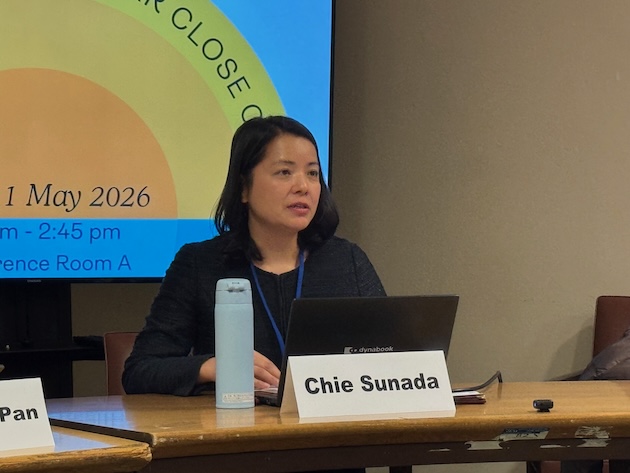
Such near-misses may often be due to individual human judgment calls rather than the positions of nuclear states. Chi Tsunoda, director of disarmament and human rights at the SGI Peace Center, recalled an example of an incident during the height of the Cuban Missile Crisis in 1962, where a near-miss even in the Pacific would have targeted an uninvolved third party. during this timeUS military bases in Japan hosted nuclear missiles powerful enough to level cities. What appeared to be a certified launch order to the base at Okinawa. However, the most senior field officer at the site, Captain William Bassett, Discrepancies found With launch orders and the level of preparation of the missiles, including that the missiles at this base were targeted primarily at China. So he ordered the subordinates to stand down.
Sunada warned that a sense of urgency to take decisions on de-escalating nuclear tensions is missing from the current discussion and that the reality of a nuclear attack and the consequences of Hiroshima and Nagasaki “will fade into abstract history.” He urged that nuclear disarmament education would be an “important mechanism” for maintaining “strategic restraint”, recognizing that a key element of its success is empathy for the pain of others, which is itself a form of resistance.
“We cannot depend our survival on fate,” Sunada said. “We urge all States parties to recognize that risk reduction requires more than adjusting military doctrines. It requires a fundamental shift in the way we understand these weapons, driven by education. By cutting the chain of hatred and nurturing the heart that values and respects others, we achieve ultimate disarmament and pure, proper peace education.”
Note: This article is brought to you by IPS Noram in collaboration with INPS Japan and Soka Gakkai International in consultative status with ECOSOC.
IPS UN Bureau Report
© Inter Press Service (20260508081742) – All rights reserved. Original source: Inter Press Service
