

Joe Maring/Android Authority
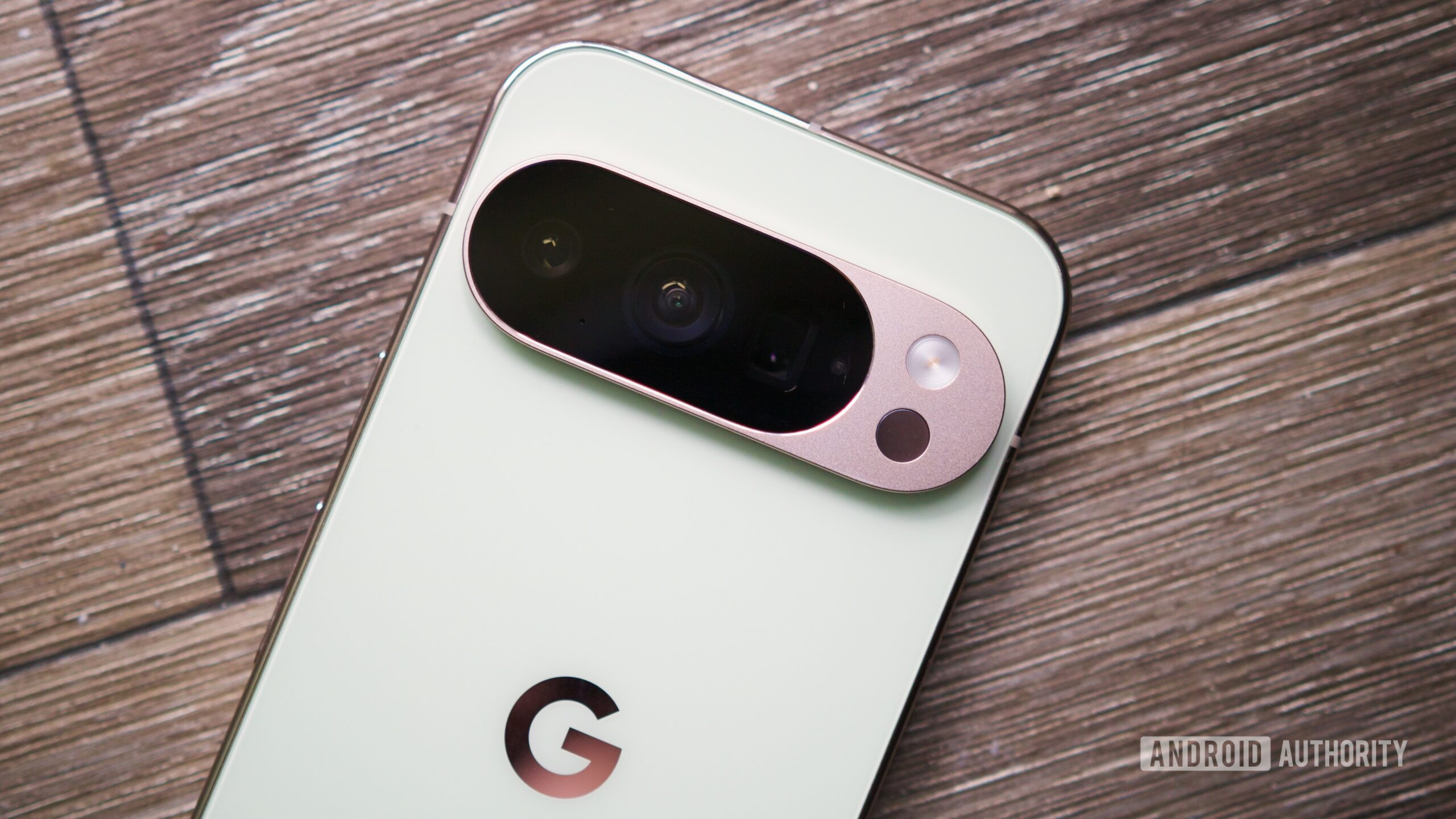
The latest Tensor G6 leak is good and bad news for the Pixel 11, adding further weight to what we’ve already come to expect from Google’s next-generation chip for this year’s Pixel 11 series.
On the one hand, it looks like Pixel 11 customers are going to benefit from a significant jump in CPU performance. The chip is expected to feature a single Arm C1-Ultra core clocked at 4.11GHz, four C1-Pro cores clocked at 3.38GHz, and two C1-Pro cores clocked at 2.65GHz. Google is skipping the Arm Cortex X925 era altogether, going straight to the same CPU group as the powerhouse MediaTek Dimensity 9500.
This represents a potentially significant boost from the Tensor G5 and its Arm Cortex-X4, A725, and A520 setup. Looking at the single-core Geekbench 6 results, there’s about a 40% potential uplift between the old and new cores, which would clearly be a significant jump if this holds up. Multi-core benefits can be even larger when moving away from higher overall clock speeds and very small cores.
The larger CPU core of the Tensor G6 could theoretically be 40% faster than the G5.
However, despite very modern CPU cores, Google’s cluster remains somewhat conservative compared to other flagship chips, even those built with similar off-the-shelf Arm cores. MediaTek’s Dimensity uses one C1-Ultra and three C1-Premium cores, which are larger and more powerful than the Pros. Similarly, Qualcomm’s Snapdragon has two large custom Orion cores and six smaller cores, providing heavy lifting capabilities. For brands looking to merge mobile and PC use cases, two or more power-house cores are beneficial – Tensor isn’t in that league yet.
I expect the Pixel 11’s CPU to perform closer to Samsung’s Exynos 2600 inside some of the new Galaxy S26 models, which use very similar C1-Ultra and C1-Pro configurations. However, with higher clock speeds, Tensor should advance by a slight margin. This puts it in a very solid performance category that will ensure it’s a strong daily performer, even if not benchmark-topping.
Will gamers also get the same benefits?
Unfortunately, graphics will almost certainly remain the Pixel’s Achilles heel. Tensor G6 PowerVR is reportedly switching to CXTP-48-1536. The Tensor G5 has a DXT-48-1536 and according to the Imagination Technologies website, its GPU ranges from A (smallest and most power-efficient) to E (highest performance).
After some digging, it’s not entirely clear where CXTP lands. The 2021-era C-series includes the very low-end CXM for smart TVs and CXT, a more flagship-level product (almost certainly no longer up to 2026 standards) that supports ray tracing.
The Pixel 11 may be more efficient at gaming, but not more powerful.
As far as I can understand, the “P” model is not part of the original 2021 era C-series. If it’s something like DXT vs DXTP, the “P” indicates better power efficiency. DXTP arrives in early 2025 With a 20% FPS-per-watt efficiency gain over DXT. CXTP probably offers something similar. That sounds impressive, but how it compares to the power draw of the 2023-era DXT in the G5 is anyone’s guess.
What this actually means for the Pixel 11’s gaming performance is also unknown. The C-series is clearly not designed to match the extreme performance of the D-series, and Imagination’s own material suggests 20% better display density per area than the CXT. In all likelihood, the Tensor design team is considering how to get the best performance out of a limited GPU silicon budget, and perhaps the new “P” models, the move to a smaller 2nm node, or simply licensing costs have shifted it slightly in favor of CXTP compared to last year’s DXT, while keeping performance competitive with the previous generation.

Robert Triggs/Android Authority
Like DXT in the Tensor G5, CXTP can support ray-racing. However, this requires additional cores and space, and I suspect Google is moving to the C-series to save silicon area. So don’t even bet on detecting this generation.
As the graph above shows, the Tensor G6 will need to make substantial changes to its GPU configuration to remain competitive. Even though the new 2nm manufacturing process and more efficient GPU cores may enable higher clock speeds and/or better sustained performance, using improved 2021-era architectures is likely a sidegrade at best. As a result, the Pixel 11 will remain a more sluggish gaming phone than 2026 flagship phones powered by the Snapdragon 8 Elite Gen 5, Dimensity 9500 and, quite likely, even the AMD-equipped Exynos 2600.
Is the Tensor G6 worth the wait?

Robert Triggs/Android Authority
Google’s custom silicon project has never really been about chasing benchmark leaderboards, and the Tensor G6 isn’t going to suddenly change the status quo. We may have to wait for Tensor G7 or longer for this.
For general app performance, the CPU upgrade will be noticeable for both the substantial performance uplift and the efficiency gains from moving to a more efficient architecture. Sadly, gamers aren’t expected to get the same benefits, but perhaps the Pixel 11’s battery life will increase enough that it will feel like somewhat of an upgrade for those long sessions. In any case, this is unlikely to bother series fans who aren’t bothered by Tensor’s lack of graphics grunt.
New AI and imaging capabilities are likely to be more attractive than performance.
Instead, Tensor is a means for Google to pursue its AI ambitions without being beholden to other silicon partners. Case in point, the chip is set to switch from its long-running but often troubled use of the Samsung Exynos modem to the MediaTek M90. We’ll have to test it to see if it finally gets rid of the series of connectivity issues and battery drain issues once and for all.
Similarly, Google is preparing its in-house Titan M3 security chip and next-generation “Santa Fe” TPU and “Metis” image signal processing for the Tensor G6. Those upgrades alone will allow Google to introduce interesting new features in the areas of on-device AI and computational photography, which will undoubtedly be a much bigger selling point than display for the Pixel 11 series. With this in mind, and ignoring the moves of competitors, the Tensor G6 could prove to be a notable upgrade when the Pixel 11 series arrives later this year.
Don’t want to miss the best of Android Authority?


Thank you for being a part of our community. Please read our comment policy before posting.
