

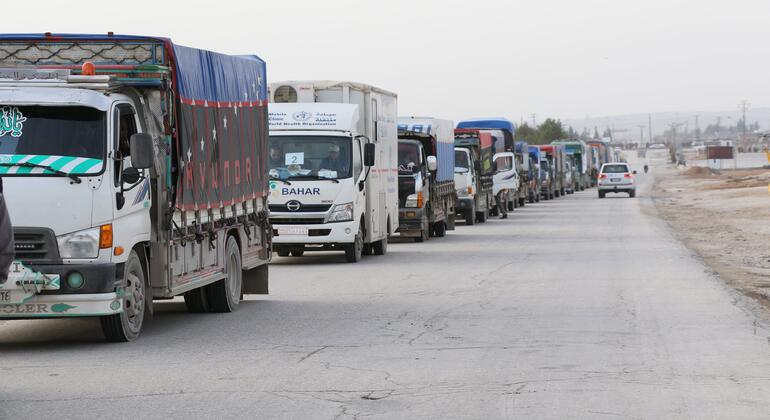
UN officials warn that the cuts come at a dangerous moment, as families – already struggling to survive – are now forced to skip meals, reduce portion sizes and rely on less nutritious food. Children are particularly vulnerable, with prolonged food shortages increasing the risk of malnutrition.
Marianne Ward said, “We are being forced to withdraw a vital safety net at a time when people need it most, with serious impacts on food security, social cohesion and stability, leaving the most vulnerable families with little choice to cope.” wfp Country Director in Syria.
Food insecurity across Syria
Last year, the agency reached 5.8 million people across all 14 governorates through emergency food assistance, nutrition assistance, livelihood programs and social protection initiatives. But due to ongoing funding shortages, operations have now reduced from 14 governorates to only seven.
“decrease in wfpAid is motivated solely by lack of funds, not by lack of needs,” Ms. Ward said.
The agency estimates that more than seven million people are seriously food insecure across Syria, with 1.6 million of them facing emergency situations.
The lifeline of bread disappears
WFP has also halted its nationwide bread subsidy program, one of the country’s last remaining large-scale safety nets that previously helped millions of Syrians buy daily bread.
The initiative supported more than 300 bakeries, providing them with fortified wheat and helping to deliver subsidized bread to four million people every day in some of the most fragile areas of Syria.
Aid officials have warned that the loss of cheap bread could rapidly escalate hunger and force families to deal with increasingly desperate situations.
regional impact
The funding crisis is also affecting Syrian refugees in neighboring countries, where many families rely on humanitarian aid.
In Jordan, WFP has halted cash-based food assistance for 135,000 Syrian refugees living in host communities, while support continues to be reduced for about 85,000 refugees in camps.
Without immediate and sustained funding, we risk reversing years of progress and pushing millions of people into food insecurity inside Syria and in neighboring countries hosting refugees.
-Samar Abdeljaber
Refugee families in Lebanon are struggling with rising costs and limited income opportunities. Aid for 20,000 Syrians in Egypt has been cut.
“Across the region, vulnerable families are facing the cumulative effects of a prolonged crisis, rising costs and declining support.” said Samir Abdeljaber, WFP Regional Director for the Middle East, North Africa and Eastern Europe.
funds to restore operations
WFP says it urgently needs $189 million over the next six months to maintain and restore vital operations inside Syria.
Timely funding will help it reach the 1.6 million most vulnerable people, preserve nutrition programs and maintain access to affordable bread at a critical moment for the country’s fragile recovery.
“Without immediate and sustained funding, we risk reversing years of progress and pushing millions of people into food insecurity inside Syria and in neighboring countries hosting refugees, jeopardizing broader prospects for stability and recovery.Mr. Abdeljaber warns.
