

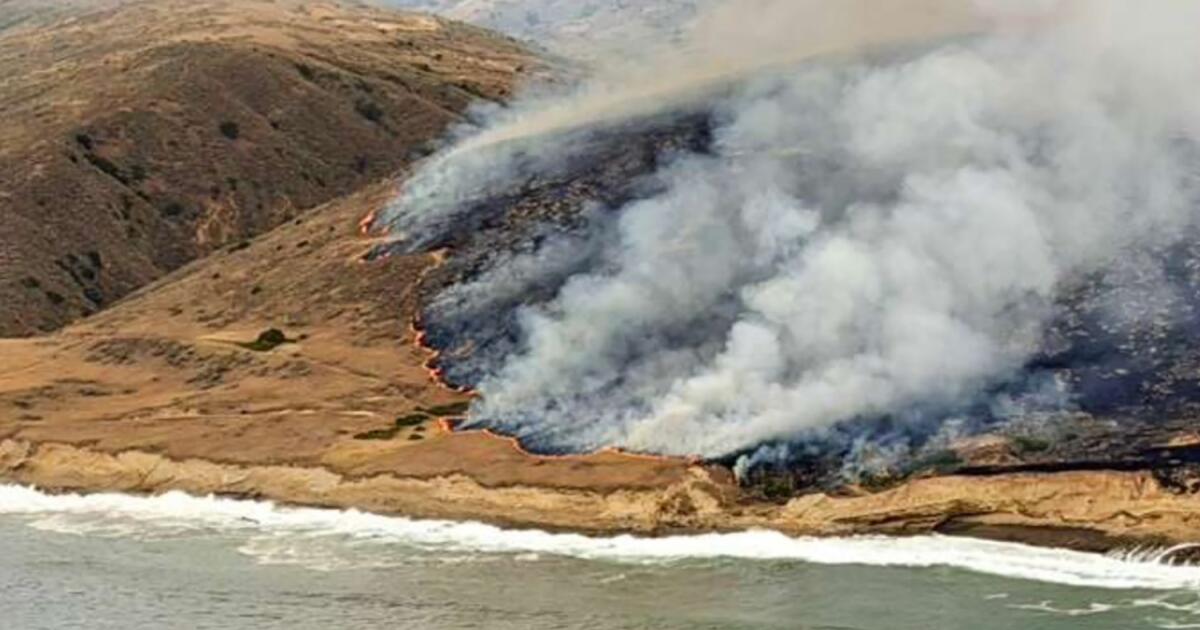
A wildfire sparked by the fire of a shipwrecked sailor has burned nearly a fifth of Santa Rosa Island and authorities have called it the largest fire recorded on the island in modern history.
Firefighters hauled pallets of personnel, equipment and supplies by boat amid strong winds and rough seas as they raced to save sensitive wildlife, including the continent’s rarest species of pine tree. Conservationists were concerned that the flames could spread to the region’s unique pristine terrain.
“This is one of our gems of the California coast,” said Michael Cohen, chairman of the Channel Islands National Marine Sanctuary Advisory Council. “It looks like it used to be 100 years ago – it’s absolutely untouched.”
The fire had burned more than 10,000 acres of land and was 0% contained.

Mike Thune, the fire information officer assigned to the incident, said the flames spread up the steep slopes, consuming some grass and bushes as well as island chaparral.
Two historic buildings – the Johnson Lee Equipment Shed and the Wreck Line Camp Cabin – were destroyed along with a storage structure, he said. On Sunday a helicopter evacuated 11 employees of the National Park Service, which manages the island as part of the Channel Islands National Park.
The flames were about a half-mile from a stand of Torrey pines on the island — one of only two places in the world where the species grows naturally, Thune said. He said firefighters were trying to contain the blaze using pre-existing features such as roads, ridges and trails rather than building a fire line through the island’s sensitive ecosystem.
Phyllis Griffman, vice chair of the advisory council, said each Channel Islands group has endemic species and subspecies, including island foxes, found nowhere else. “They’re kind of known as the Galapagos of (North) America.”
Santa Rosa is home to six endemic plants, Cohen said, and the island is also home to the spotted skunk and rare birds. It also has a rich cultural history — North America’s oldest definitively dated human remains were found here in 1959, and there are culturally significant Chumash sites, said Cohen, who is also president of the Santa Barbara Adventure Company.
According to the U.S. Coast Guard and witnesses, the fire was inadvertently started by a man who crashed his boat into rocks on the rugged south side of the island and then fired an emergency flare to call for help.
New Hustler sportfishing boater Jess Malone saw smoke about 9:30 a.m. Friday and moved closer to the island so children on his boat could see. Then he saw someone waving.
A man was standing on a small patch of unburned land, surrounded by charred vegetation, Malone said. Small pieces of his ship were scattered among the rocks. A photo released by the Coast Guard shows that he had somehow scratched “SOS” into the blackened earth.

Coast Guard Air Station Ventura MH-60T Jayhawk aircrew rescued a 67-year-old sailor after his boat struck rocks on Santa Rosa Island.
(US Coast Guard)
Malone called the Coast Guard, which sent a helicopter to lift the man up, he said. The sailor, who was not seriously injured, had spent Thursday night stranded on the island, the agency said in a social media post.
Windy conditions initially fanned the flames and made it difficult for firefighters to reach the fire. Brian Lewis, a meteorologist with the National Weather Service in Oxnard, said hurricane warnings were in effect from Friday night to early Monday morning and forecasters warned boats of all sizes to stay in port.
The winds also prevented the use of water-dropping planes, Thune said: Firefighters attempted to make a drop, but the wind blew the water away before it reached the ground.
Still, firefighters reached the island less than 12 hours after the fire was confirmed, which was “no easy feat,” he said. He traveled by boat, which he described as the most time-efficient means of transportation and also necessary to accommodate all the supplies needed to fight the wildfires. “That’s what makes fighting these types of fires different, unlike fighting mainland fires where we can drive in trucks and equipment,” he said.
Thune said one firefighting aircraft was able to fly over the fire Monday and communicate with firefighters on the ground to determine if it would be possible to use more aircraft. About 70 people have been deployed to douse the fire and more are on the way, he said.
The last major fire on the Channel Islands was the Scorpion Fire, which burned 1,368 acres on Santa Cruz Island in 2020.
