

05.07.2026
12:00
The Wall Street Journal
By Elizabeth Bernstein, The Wall Street Journal
Sasha Pedro for WSJ
05.07.2026
12:00
The Wall Street Journal
By Elizabeth Bernstein, The Wall Street Journal
Our columnist turned to science to see what happened when she tried to slow her mind
I recently prepared myself for the hardest reporting assignment of my career: sitting still for 15 minutes
I was about to have my brain scanned while I meditated
Researchers at Harvard Medical School and the National Institute of Mental Health and Neuro Sciences in India, among others, have mapped the brains of people while they meditate and discovered exactly when they calm down: in two to three minutes. Peak Zen, they found, occurs at about seven minutes
Even complete newbies to meditation had these results on their first session, according to the study, which was published in Mindfulness in March
I needed to know: Could this work for me, a stressed-out reporter with zero patience, who had never successfully meditated before?
Meditation produces both physiological and neurological changes. By focusing on a single anchor—like your breath or a phrase—you shift your brain out of its fight-or-flight mode and activate your parasympathetic nervous system, which controls your body’s “rest and digest” functions. Heart rate decreases, blood pressure drops and levels of the stress hormone cortisol plummet
At the same time, your brain’s amygdala, or fear and emotion center, calms down and its prefrontal cortex, which governs rational thought, amps up. This is why meditators report feeling both calmer and more focused
Here’s the irony: It can be stressful to start meditating. There are so many different apps, guides and types of meditation out there. How do you know what works?
The science of meditation
“The goal of meditation is to get into a space where you are observing your thoughts coming and going, but you are not caught up in them,” says Dr. Balachundhar Subramaniam , a professor of anesthesiology at Harvard Medical School who oversaw the study. “There is a distance between you and your body and mind.”
Research shows that meditation can decrease symptoms of anxiety and depression and boost positive emotions. It can help improve sleep, relationships and work engagement. The brains of people who meditate regularly age more slowly—six years more slowly to be exact who also is director of the Sadhguru Center for a Conscious Planet at Beth Israel Deaconess Medical Center in Boston, a research lab that studies the intersection of science and spirituality
The effects are cumulative, according to research. The more you meditate, the more lasting the benefits
Sasha Pedro for WSJ

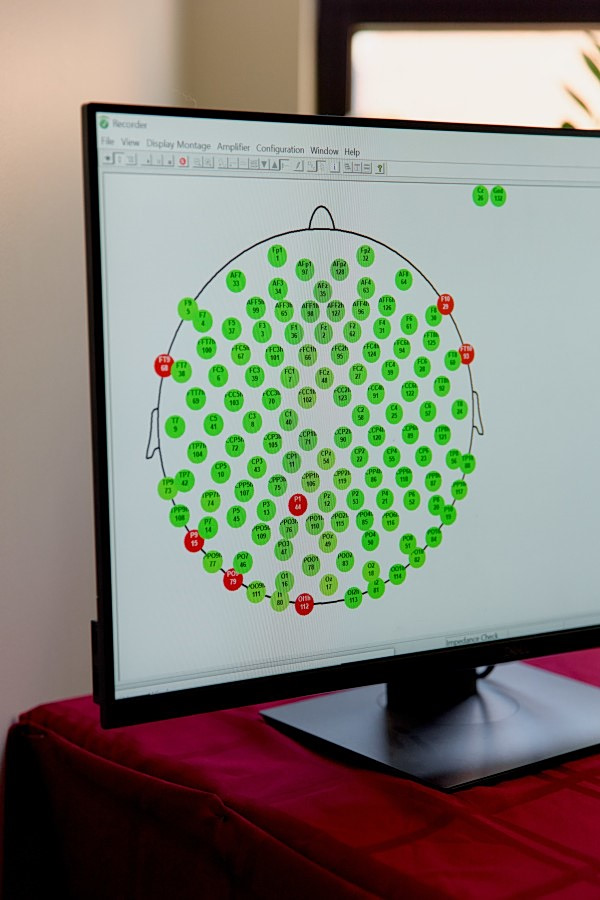
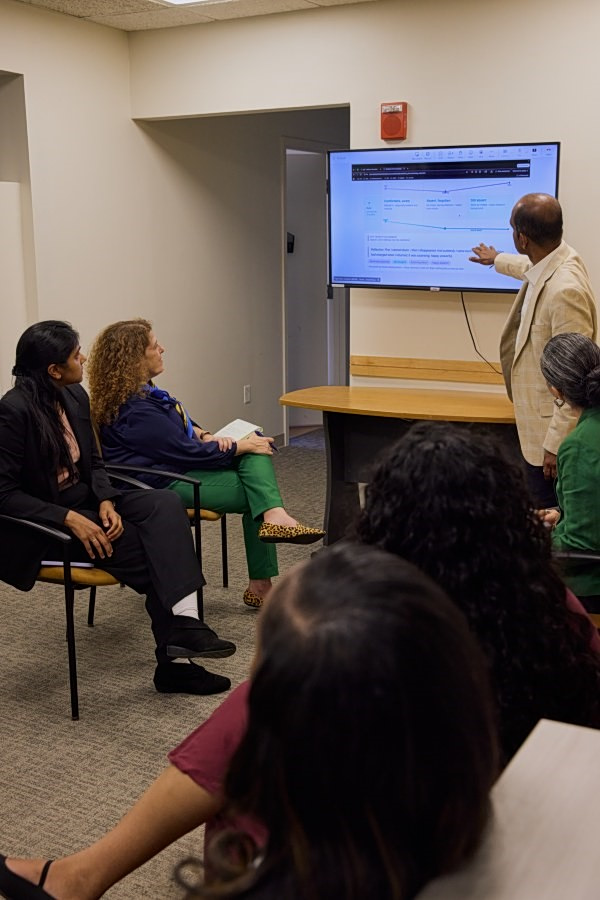
Before meditating, Elizabeth stared at a spot on the wall. Dr. Balachundhar Subramaniam reviews results with Elizabeth and researchers. Mapping Elizabeth’s headcap. Sasha Pedro for WSJ
There are three main “catchall” types of meditation, Subramaniam says. In focused-attention meditation, you concentrate on something, such as your breath or heartbeat. In open-awareness meditation, by contrast, you observe your thoughts, sounds or physical sensations coming and going. Loving-kindness meditation directs feelings of compassion toward yourself and others
Many people worry that they don’t have the time to meditate—or can’t stop their mind, Subramaniam says. (Guilty as charged!) His answer: Meditation frees up time, because it eliminates background noise and helps you focus. And, yes, anyone can do it
“Just pay attention to your breath,” he says. “It’s always there, and it’s cheap.”
What happened when I meditated
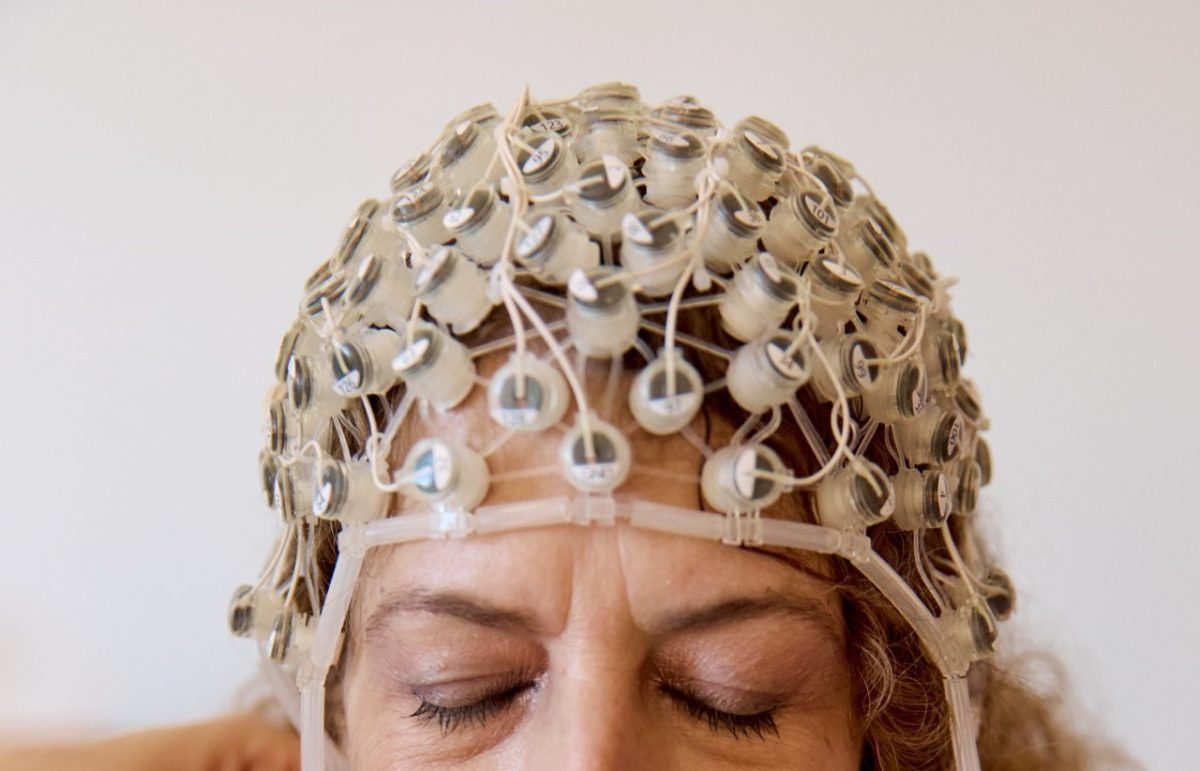
To check this out for myself, I meditated recently at Subramaniam’s lab. To measure my brain waves, I wore a high-density electroencephalogram headcap with 128 channels
I was more stressed than usual before my meditation session, because the researchers had instructed me to avoid coffee and hair gel—directions I found problematic for both my reporting focus and my curly hair. They said that caffeine could affect the results, and gel interferes with the electrodes. Making matters worse: A videographer was going to document my session
All good fodder to see if I could really block out my mental chatter
I meditated for 15 minutes, listening to a recording of the Indian yogi and mystic Sadhguru repeating: “I am not the body. I am not even the mind.” (It’s available on the free Miracle of Mind app .) Researchers who led me through the experiment instructed me to breathe in on the first sentence and breathe out on the second
To collect baseline brain activity before the meditation, the researchers had me focus on a spot on the wall for two minutes, then close my eyes and let my mind wander for four more minutes. I did this again afterward
When I started the meditation itself, I panicked. I felt like Sadhguru was speaking too fast and I couldn’t match his pace with my breathing. I fought the urge to tell the researchers that we needed to start over at a slower pace. I didn’t want to fail, so I made myself keep going
And then a funny thing happened: Sadhguru appeared to speak slower—and slower . I wondered whether the scientists had sensed my stress and reset the recording. Then my thoughts moved on to…absolutely nothing. My mind went blank. At one point, I even felt myself jolt back to consciousness, as if I’d fallen asleep. Had Sadhguru stopped talking?
After my meditation, I answered a series of questions about my experience so that the researchers could compare what I felt with what my brain scan showed
I told them I was sorry the meditation session had ended
Seeing the effects
At lunch later, I remarked that the food was especially tasty, and the researchers laughed. “It’s the meditation,” Subramaniam told me. “It heightened your senses.”
The shift in energy I experienced while meditating showed up on the results of my brain scan. My brain remained active for a minute or so, with higher-frequency alpha waves associated with alertness staying strong. Then by 2½ minutes, slower-frequency theta waves related to deep inner stillness increased. They peaked somewhere between seven and eight minutes and dominated for the rest of the meditation
Better still, my brain’s baseline activity had shifted, explained Deepthi Rajashekar, the researcher who showed me my results. Even after I stopped meditating, my theta-wave activation was 13% higher than it was before I started
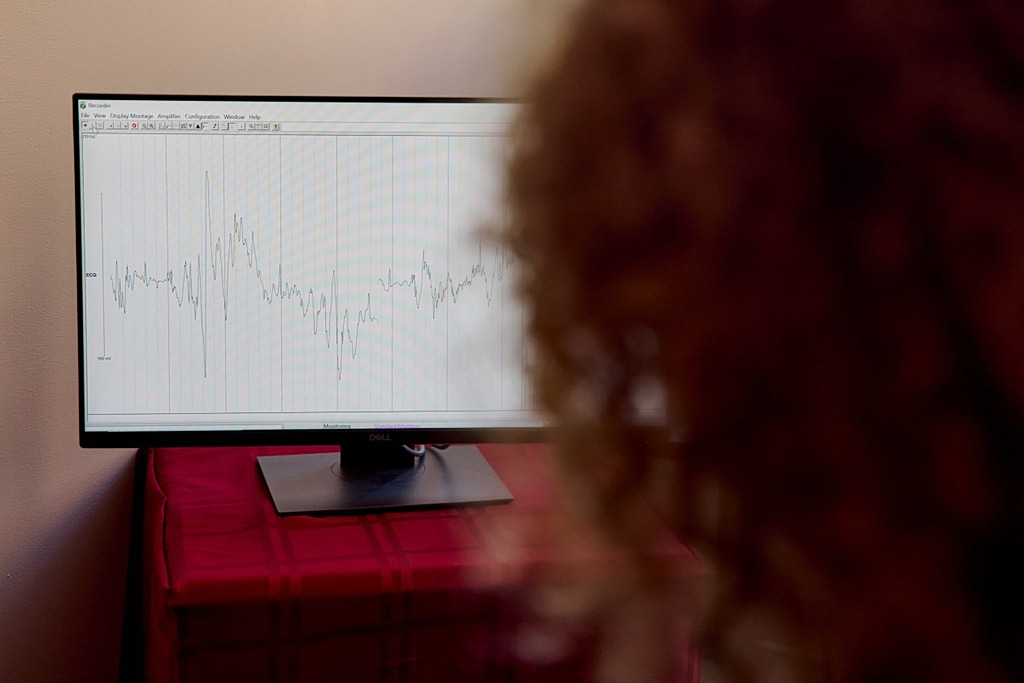
Elizabeth looks at a screen monitoring her meditation. Sasha Pedro for WSJ
My question for the researchers: Did the recording of Sadhguru guiding me through the meditation slow down and even stop at some point?
Nope, Subramaniam said. It was my mind that was slowing, something he called “time dilation.” It’s similar to a flow state, where the brain loses its perception of time
He explained it like this: Think of how elite athletes sometimes feel like the background noise of the stadium disappears and time slows during critical moments of a game
“You can reach that kind of state with meditation,” he says
- brain
- health
- Research
Follow tovima.com on Google News to keep up with the latest stories
