

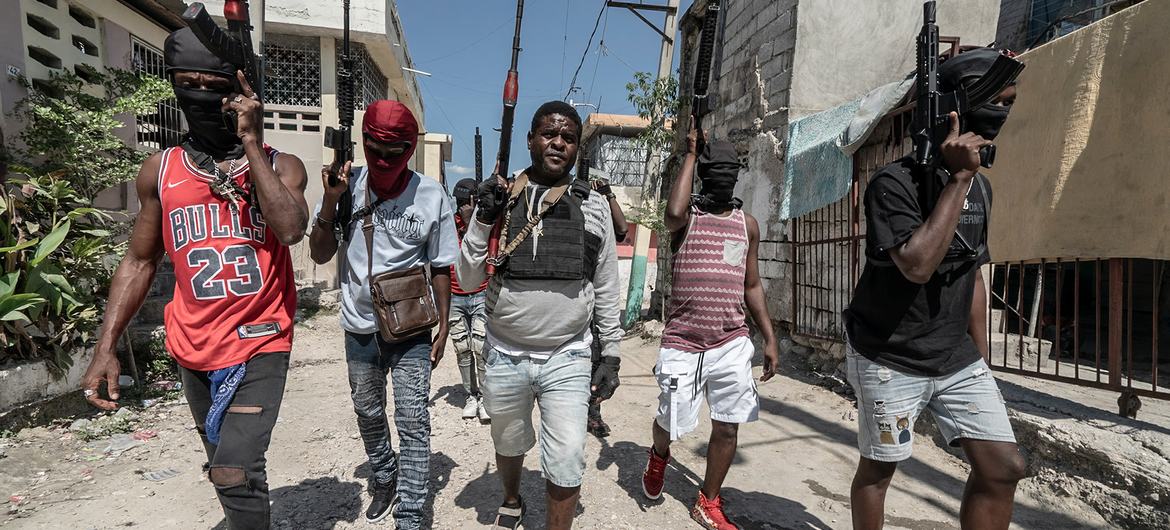
At least 26 gangs operate with “alarming levels of violence” in Haiti’s capital Port-au-Prince and surrounding areas.
About 14 lakh people have been forced to flee their homes and thousands have been killed.
A new UN human rights office report The report, published in Geneva on Tuesday, details the effects of gangs’ growing reach on the human rights of Haitians amid persistent and deadly violence – which resulted in the deaths of more than 5,500 people last year.
gang expansion
Over the same period, gangs have expanded their activities beyond the capital into its outskirts and northward into the Artibonite and Center departments, the report said.
© WFP/Emily Pinna
People displaced by violence wait in line at an aid distribution site in Haiti.
Gangs have become capable “Strengthen strategic corridors and maintain dominance over vital sea and land routes that sustain their financing and operational flexibility.”
Meanwhile, they have continued to terrorize the population by killing and kidnapping people, trafficking children, stealing at illegal checkpoints, extorting money from businesses, and destroying and vandalizing public and private property.
Gangs targeted individuals perceived to be cooperating with the police or disobeying their authority. “Some victims were killed, their bodies often doused in gasoline and burned,” the report said.
disproportionate use of force
involves violence Not only gangs, but also Haitian security forces, private security contractors, and self-defense groups.
The report identified approximately 250 instances of “actual or attempted summary executions of suspected gang members or individuals supporting gangs” by police using “unnecessary or disproportionate” force.
Concerns have also been raised about security operations reportedly conducted by a private military company contracted by the Haitian government, which has used drone strikes and helicopter gunships. There is some doubt about the validity of this approach.
“Some or even most of these drone strikes and helicopter operations could be described as targeted killings, particularly given the clearly premeditated, deliberate and deliberate use of lethal force against previously identified individuals,” the report said, and “It appears that no investigation has been initiated by judicial authorities To establish the legality of these operations.”
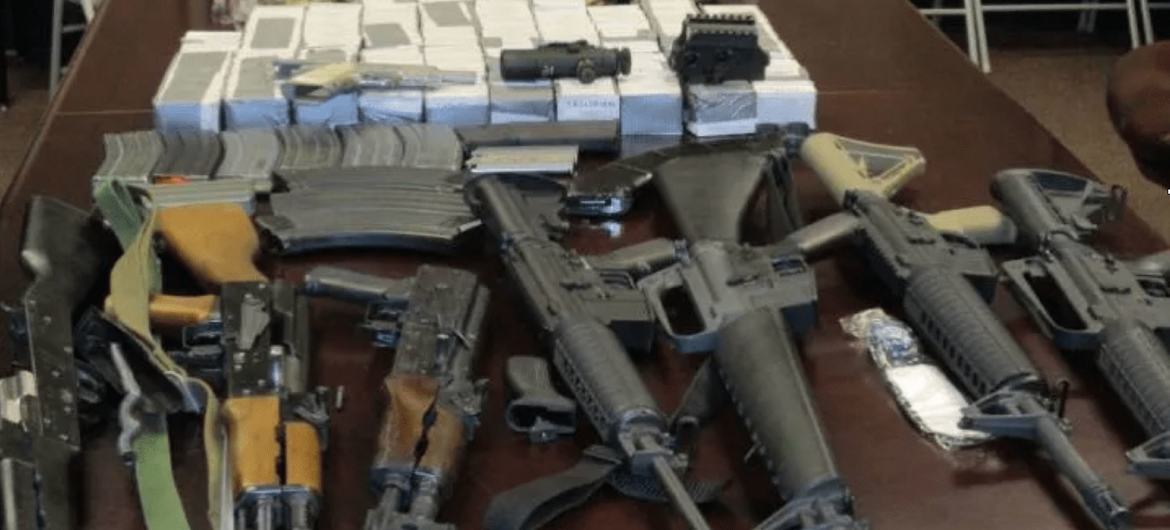
© CPB/HSI
Arms and ammunition are often smuggled into Haiti through the same routes as drug smuggling.
Self-defense groups and mobs, armed with stones, machetes and high-powered firearms, engaged in so-called “popular justice”, whereby people suspected of gang affiliation were beaten to death, sometimes “allegedly encouraged, supported or facilitated by police elements.”
UN support
The United Nations has consistently stressed that restoring security is essential to Haiti’s stability, but is not sufficient in itself.
Without progress in governance, justice, accountability and social services, especially for young people, any security gains will be fragile.
Continued international support is critical to supporting the Haitian-led effort to break the cycle of violence and instability and restore security.
UN supported gang suppression force (GSF), set up in 2025 and mandated to have 5,000 personnel, is expected to play an important supporting role.
Earlier in March, Daniela Kroslak was named as the head of the newly established United Nations Support Office in Haiti (UNSOH) which would provide logistical support to the GSF.
