

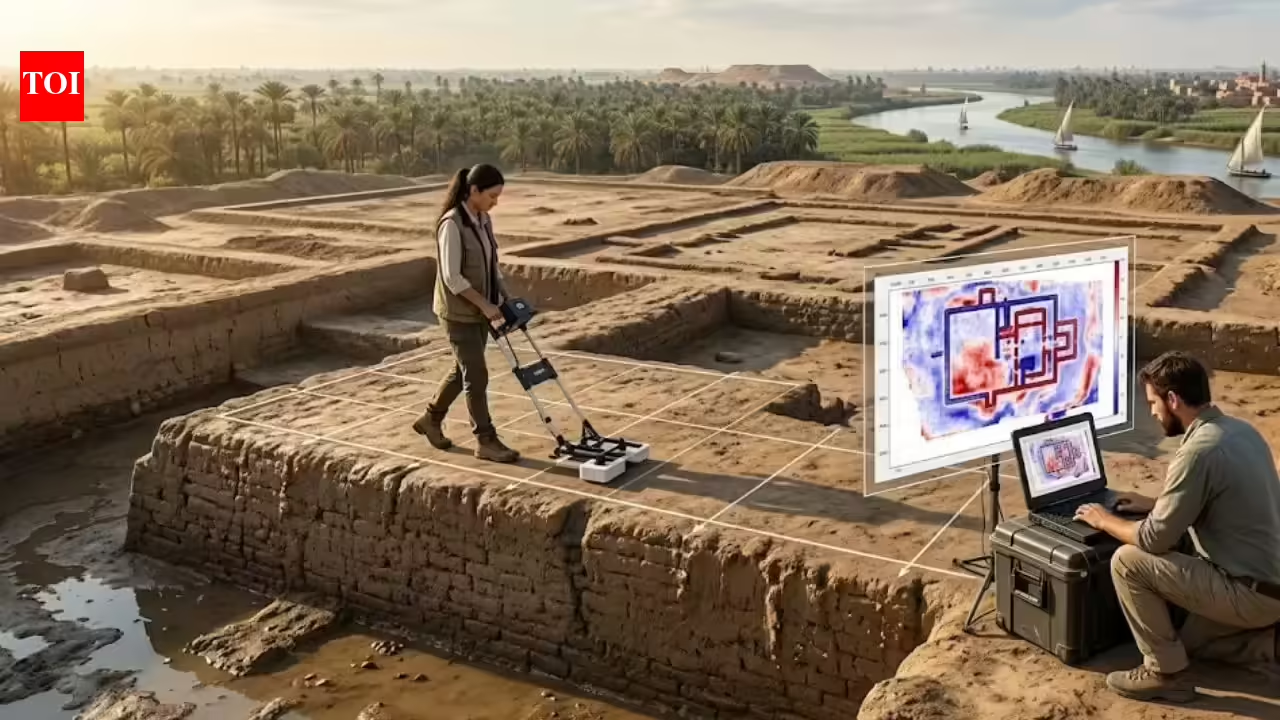
Archaeologists, using non-invasive geophysical methods such as magnetometry and electrical resistivity tomographic techniques, have unearthed a massive 2,500-year-old mud-brick building that was buried under silt deposits and waterlogged sediments of Egypt’s Nile Delta for thousands of years. The structure was located as part of a recent archaeological project within Tell el-Balamun by researchers from the Polish Center for Mediterranean Archeology and collaborating local authorities. The building dates from the last period of ancient Egyptian history, specifically the 26th Dynasty.The discovery of this massive ancient building is of immense archaeological importance, given that most ancient structures are not well preserved due to exceptionally high water levels in the delta region, destroying almost all archaeological material. Therefore, this very large hidden monumental building provides an unprecedented record of the nature of urban planning and administrative arrangements in the ancient Egyptian delta at a crucial time in the history of the Mediterranean and Egypt.
Nile Delta discovered: massive 2,500-year-old structure
Non-destructive geophysical survey techniques (magnetometry and electrical resistivity tomography) were used to explore an extensive ancient site (Tell el-Balamun) containing archaeologically significant remains beneath several meters of Nile silt, without any intrusive excavations. The archaeological survey team produced a high-resolution geophysical plot of the footprint of the site’s mud-brick walls (built in the 26th Dynasty) by identifying magnetic anomalies and measuring electrical resistance in silt-laden soil throughout the site.
Protection against water level
According to research published by the British Museum, due to the height of the natural water table and the wet, silt-laden environment, excellent examples of well-preserved mud-brick are unlikely to be found in the Nile Delta. Much of the ancient material in the area may have been eroded or compacted by taphonomic processes that have accumulated in the area over thousands of years. This discovery is of remarkable importance from a scientific point of view because the bedrock remains of these structures provide an extraordinary opportunity (i.e.A time capsule) to understand the architectural techniques used during the last period of Egyptian civilization.
center of administrative power
Let us tell you that Al-Balamun was built about 2500 years ago during the Saite period (26th Dynasty) when Egypt experienced cultural and political renewal. Let us tell you that Al-Balamun served as a strategic northern border post; It was a major administrative and religious centre. The large size of this complex suggests that it served as either an elite residence or the headquarters of the Egyptian government and reflects the organization and centralization of the population of the delta region during that time.
Avoiding the annual flood waters of the Nile River
According to the UNESCO World Heritage Centre, the construction of this large structure serves as a model of how the ancient Egyptians built their cities on marshy terrain. The thickness of the mud-brick walls also indicates that the engineers who designed this structure had significant knowledge about building structures that could survive the flood waters of the Nile each year. Analysis of the overall layout will also enable historians to understand the importance of the delta region for the transfer of power and as a strategic location for Mediterranean trade and a place of defense against military attacks.
