

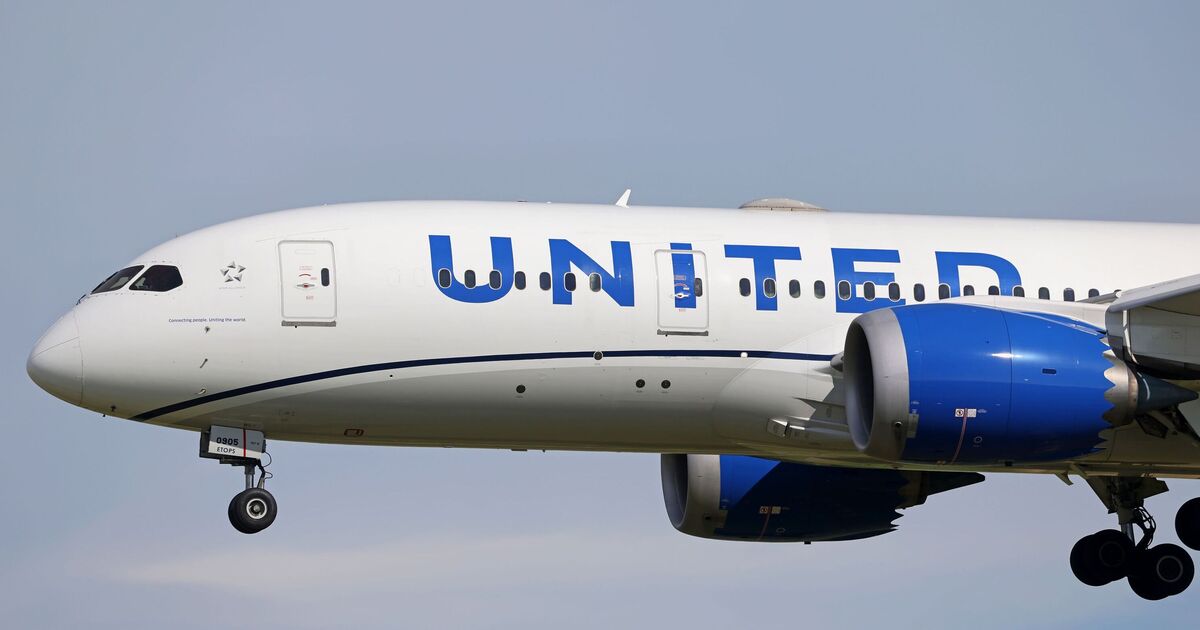
A United Airlines flight was forced to divert due to a possible bomb threat shortly after takeoff. Flight UA2092 declared an emergency after departing Chicago O’Hare International Airport for New York on Saturday morning. Flight tracking app FlightDeck said the emergency and subsequent diversion to Pittsburgh, Pennsylvania, was due to a “bomb threat.”
The Boeing 737 Max 8 is said to have used 7700, the transponder code used to signal an in-flight emergency, after reaching flight altitude. Messages reportedly sent through the Aircraft Communications Addressing and Reporting System (ACARS) and shared on social media show that a “possible bomb” was mentioned.
A message says, “One second count per beep / Possible bomb”, indicating that the crew believed there was a potential explosive threat, possibly linked to the repetitive beeping sound or an item matching that description.
The messages also suggested that the crew and ground teams consider diversion options, with “CLE or PIT” referencing Cleveland Hopkins International Airport or Pittsburgh, and “CORD KLGA” identifying the original route using the airport’s code.
The timestamp of “Crew 15:42Z / 10:42 CDT” exchanges around 10:42 am local time in Chicago.
Squawk 7700 is a universal transponder code used by pilots to indicate normal, in-flight emergencies, which immediately alerts Air Traffic Control (ATC) requiring priority handling, immediate assistance, and clear airspace.
It is the aviation equivalent of May Day, indicating situations such as engine failure, medical issues or technical faults.
Upon receiving a bomb threat, pilots immediately declare 7700 emergency to ATC. This allows the crew to prioritize landing and receive immediate attention upon touchdown, such as being in a remote area for police.
