

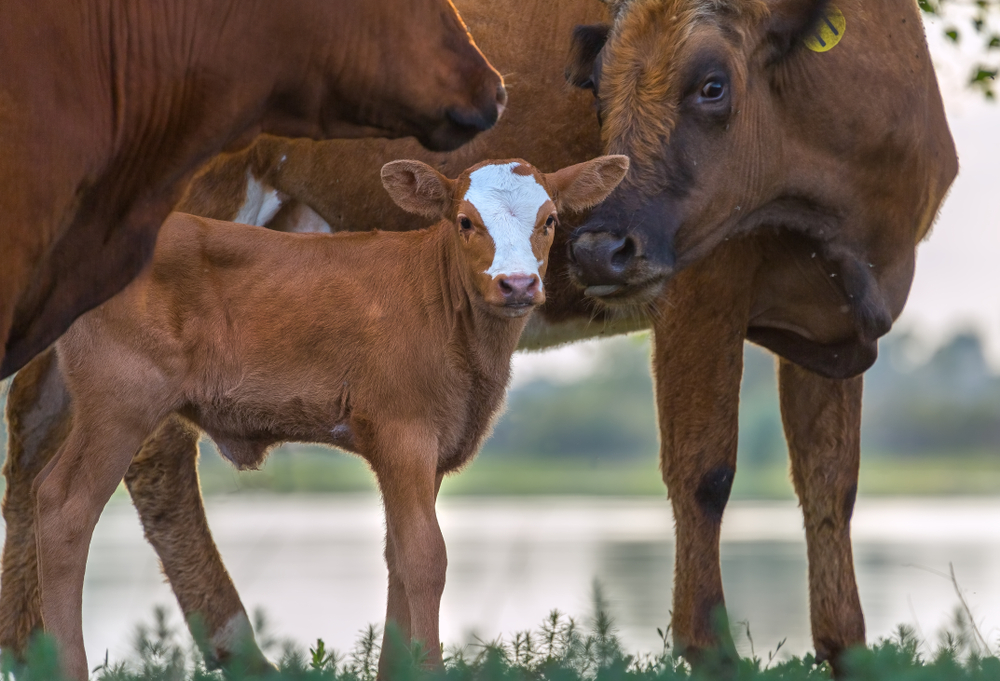
A newly launched Catholic group is seeking to apply the Church’s teachings on the subject of animal welfare to counter the “unnecessary suffering” of animals and underline their “inherent value”.
“I believe most Catholics would be surprised, as I was, to learn of the extent of preventable animal suffering in our world today,” Kristin Dunn, founder of the St. Francis Institute for Animals, told EWTN News.
The group launched in March and is promoting community outreach and parish partnerships to spread its message. It also offers a guided 30-day program of “reflections, readings, short videos, and exercises” to introduce Catholics to the topic of animal welfare.
Dunn said she started learning more about animal welfare more than a decade ago. She said, “She loved dogs, but she thought little of other animals.”
Their growing awareness of the issue was reinforced by works such as Pope Francis’ encyclical Laudato Si’, As part of his reflection on the environment, he criticized the “indifference or cruelty” humans often show towards animals.
Dunn wrote a book by Catholic author Matthew Scully in his 2003 book “Dominion,” which criticized “the many ways our society turns our attention away from animals” and allows animal suffering to flourish.
Dunn said, “This is something I have felt called to do beginning over the past decade, ever since learning about the issues, realizing how connected they are to my Catholic values, and knowing that other Catholics can have a tremendous impact with increased awareness.”
The group has so far received funding from small donors and has received free legal aid and design assistance. Since the launch, “many Catholics have shared that they look forward to something like this, which is extremely encouraging,” Dunn said.
‘Not to hurt our humble brothers’
The institute is named after St. Francis of Assisi, who lived during the High Middle Ages and who became famous for his teachings on treating animals kindly and respectfully.
Catholic theologians over the centuries have not always expressed such concern for animals. For example, St. Augustine largely rejected objections to animal suffering by arguing that animals are “irrational” and “do not share with us the use of reason.”
St. Francis, on the other hand, argued strongly for the inclusion of animals within the human moral framework. He famously wrote that “If you have men who will exclude any of God’s creatures from the shelter of compassion and mercy, you will also have men who will treat their fellow men in the same manner.”
The saint wrote, “It is our first duty towards our humble brothers not to hurt them,” though he advised that “stopping there is not enough” and that we should “serve them wherever they need it.”
Pope Francis reiterated those sentiments in his historic 2015 encyclical Laudato Si’. In the document he also pointed to the Catechism of the Catholic Church, which, while arguing that “it is lawful to use animals for food and clothing”, stipulates that “making animals suffer or die unnecessarily is contrary to human dignity.”
The Vatican also regularly recognizes the importance of animals in creation through the annual blessing of animals in St. Peter’s Square.
“God cherishes his creation. He cares for animals, plants, because these create the conditions for life to continue and flourish, especially intelligent life, the life of the human race,” Cardinal Mauro Gambetti said during a blessing last year.
Cardinal Mauro Gambetti, high priest of St. Peter’s Basilica, personally welcomes several animals after a blessing on the Feast of St. Anthony Abbot, Jan. 17, 2023. Credit: Alan Copschall/EWTN News
Many animal advocates over the centuries have opted for vegetarianism or veganism to avoid any use of animals for food or other materials.
In the modern era, meanwhile, many consumers concerned about animal welfare have chosen “humane” farming options such as pasture-based farms rather than the intensive factory-style animal farming from which most meat comes.
Dunn said the St. Francis Institute is “encouraging people to learn about factory farming, seeing what so many animals endure and the urgent need for change.”
“Our focus is on choosing plant-based foods to have the greatest impact on animals, and within that, taking the first steps,” he said.
Among its other outreach efforts, “We’re focused on building partnerships with parishes to share practical, meaningful ways to protect God’s creatures,” Dunn said.
“We can advise on direct changes they can make to make them more animal-friendly, coordinate conversations with animal experts, provide our printed brochures and explore other ways of working together,” she said.
Dunn said that people who are unsure about how to begin advocating on behalf of animals should “know who animals are – how smart, sensitive, and gentle they are.”
“For example, most people don’t know that pigs are thought to be as intelligent as dogs. How can we treat them so differently?” He said.
He quoted Pope Francis, who was in Laudato Si’ Wrote that if humans “feel intimately united with all that exists, restraint and care will develop spontaneously.”
When learning about animals, Dunn said, “follow the example set by St. Francis, who saw every creature as a person worthy of love and care.”
