

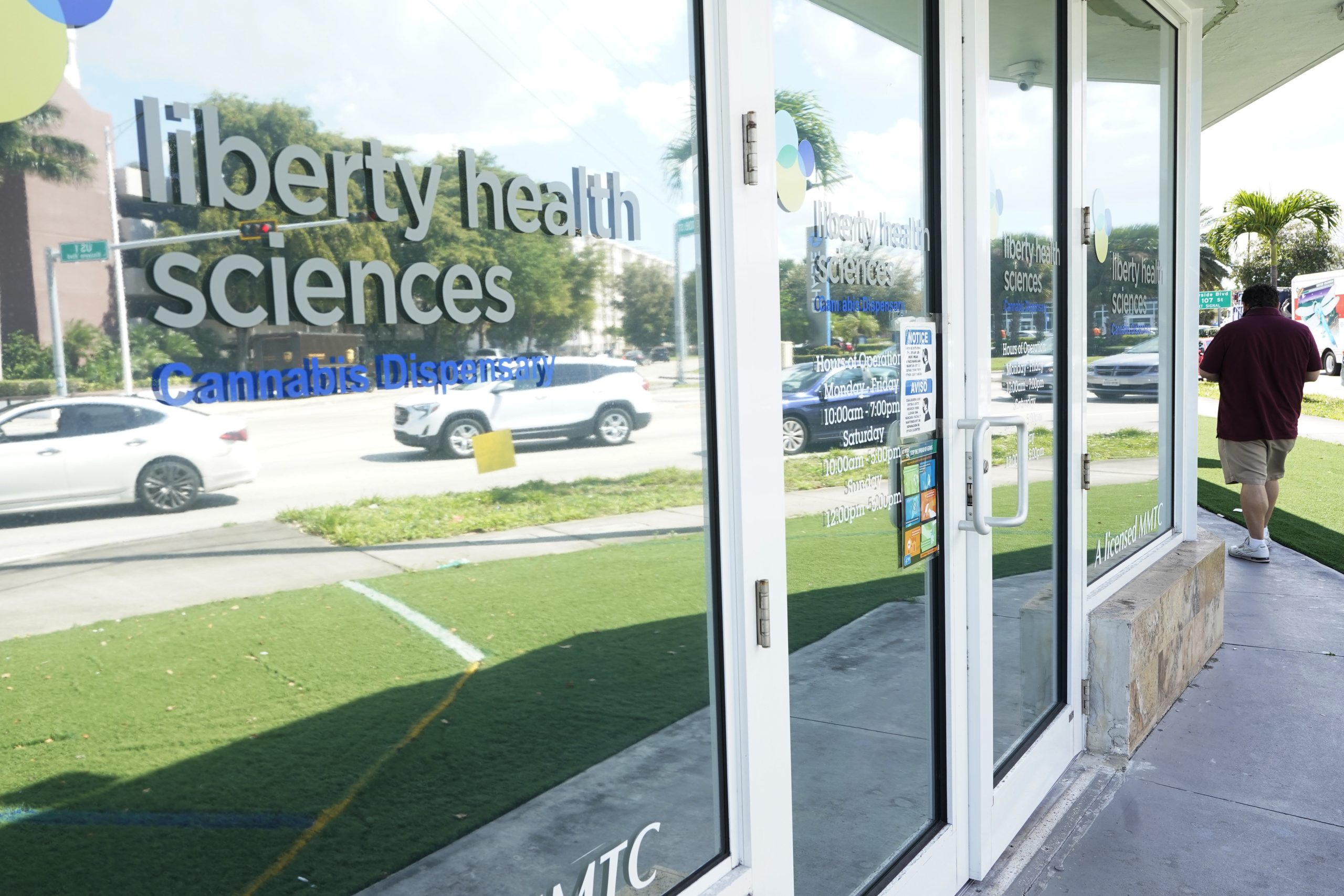
TALLAHASSEE, FLORIDA – It’s all about fun in the sun in Florida – except when it comes to marijuana. And the state’s pot businesses are learning this the hard way.
When the Florida agency responsible for approving medical marijuana licenses began accepting applications for 22 state licenses for sales and cultivation, applicants envisioned a market for adult recreational use with heavy federal restrictions.
But three years later, those dreams are long gone, with initiatives to decriminalize recreational pot in limbo, tighter restrictions brought in by Gov. Ron DeSantis and little federal progress in Washington.
“It’s going to be a challenge, and I think expectations have been lowered,” said Jeffrey Sharkey, president of the Medical Marijuana Business Association of Florida. “There was always a feeling that some of them would sell, but the price is too low to be worth it.”
Florida’s 2017 medical marijuana law creates four new licenses each time the state’s population of active, doctor-verified patients increases by 100,000. But even as the patient population grew rapidly — now more than 900,000 patients — the state’s application process was delayed into 2021 due to litigation in the state Supreme Court challenging key components of the actual process.
The Office of Medical Marijuana Use reopened the application process for 22 licenses in April 2023 and announced the winning applicants in November 2024. The decision prompted some losing applicants to file at least 11 legal challenges, with the judge promising to rule on May 11.
Even though Administrative Hearing Judge Mary Creasy’s final decision faces the possibility of an appeal, it is an important step for the winning applicants in finalizing the license and ultimately opening for business.
Gary Stein, policy director for NORML Suncoast, said the state’s newest applicants selected by OMMU for licenses will ultimately face competing companies that have become weed distributors in many states. Trulieve, which opened its first dispensary in Tallahassee shortly after the state program launched in 2017, has since become the largest multi-state industry operator in the country.
“It’s already impossible, and now people are trying to get these new licenses, and after waiting so long, they realize their time is up,” Stein said.
Sharkey said the companies selected to receive licenses are already considering the reality of Florida’s current market. The Medical Marijuana Use Office began taking applications for licenses in 2023 as Trulieve began pouring about $150 million into the recreational use campaign. At the same time, state lawmakers were ready to crack down on raw hemp, which was synthesized in a lab to create THC, only without the hundreds of dollars in doctors’ bills and annual program fees that medical marijuana patients are required to spend.
Now, Trulieve’s recreational campaign has been put on hold until at least 2028 after failing in this year’s vote. And efforts by state lawmakers to pass basic regulations on hemp products to compete with medical marijuana have foundered amid intense pressure from the hemp industry.
Congress legalized cannabis in 2018 with strict limits on THC, also known as Delta 9. But federal lawmakers also failed to ban other chemicals found in the plant, such as delta-8, which can be altered to provide the same effects as pot. President Donald Trump signed new language into law in December to close the “hemp loophole,” but the products are still available in some stores and online.
“The understanding of the market is much more mature than it was three years ago,” Sharkey said. “There was a strong belief that there was going to be a lot of money in these licenses, but that has largely diminished.”
State rules also required the 22 applicants to retain the storefronts and other properties included in their application while the lawsuit continued in administrative court. Covering those expenses, as well as spending up to $15 million in the first two years to keep growth facilities, factories and dispensaries open, may prompt some applicants to rework business plans so they don’t compete directly with long-established competitors. Sharkey said licensees have discussed ideas such as focusing on age groups or emphasizing the health benefits of pot.
“The licensees, at least the ones I’ve talked to, are very excited to get started,” Sharkey said. “But they must have a very targeted business plan.”
Sharkey said selling licenses was an attractive option for opening a medical marijuana company in the first few years of the program, but the prices it once offered are long gone. For example, in 2018, Phoenix-based Harvest Health & Recreation Inc., which later merged with Trulieve, purchased the Florida license for $70 million. They are now available for less than $10 million.
“It’s definitely not the old days,” he said.
Increasing regulatory control in Florida played a significant role in reducing the value of licenses. DeSantis, who called on the Legislature to repeal the ban on smokable medical pot three weeks after first taking office in 2019, increased the renewal fee from about $60,000 to more than $1.2 million. And the state Office of Medical Marijuana Use, which the governor’s office oversees as part of the state health department, recently enacted emergency regulations with strict marketing restrictions.
Sally Peebles, who advises potential license applicants for the Vicente Law Firm office in Jacksonville, said that despite the increased fees and tighter controls, the market still has immense potential, especially should recreational use be allowed in the nation’s top vacation destination.
“Those days of quick turnaround? They’re long gone,” Peebles said, adding that some applicants diverted cash and other resources earmarked for Florida into development opportunities in other states.
“A lot of these teams asked, ‘Why don’t we focus on something else?'” Peebles said.
Peebles said applicants will also consider any potential end to the federal ban on pot and ongoing conversations about eliminating the high taxes paid by pot companies that the IRS created for illegal drug dealers. But despite those views and strong opposition from Florida Republican leaders, the industry plans to stick around in the Sunshine State.
“They may not be in the state right now, but they will be back,” Peebles said. “Florida’s industry is here to stay.”
