

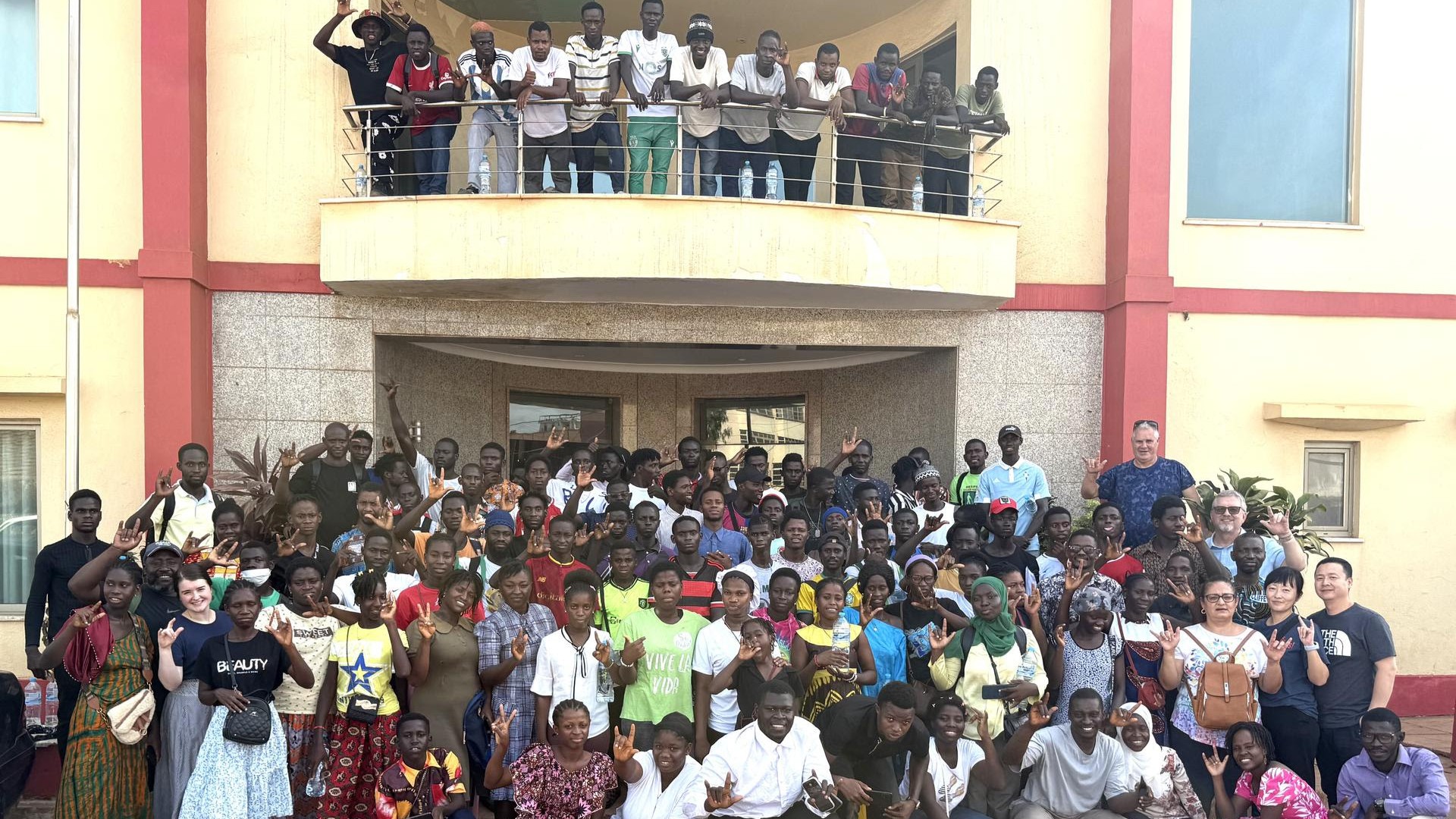
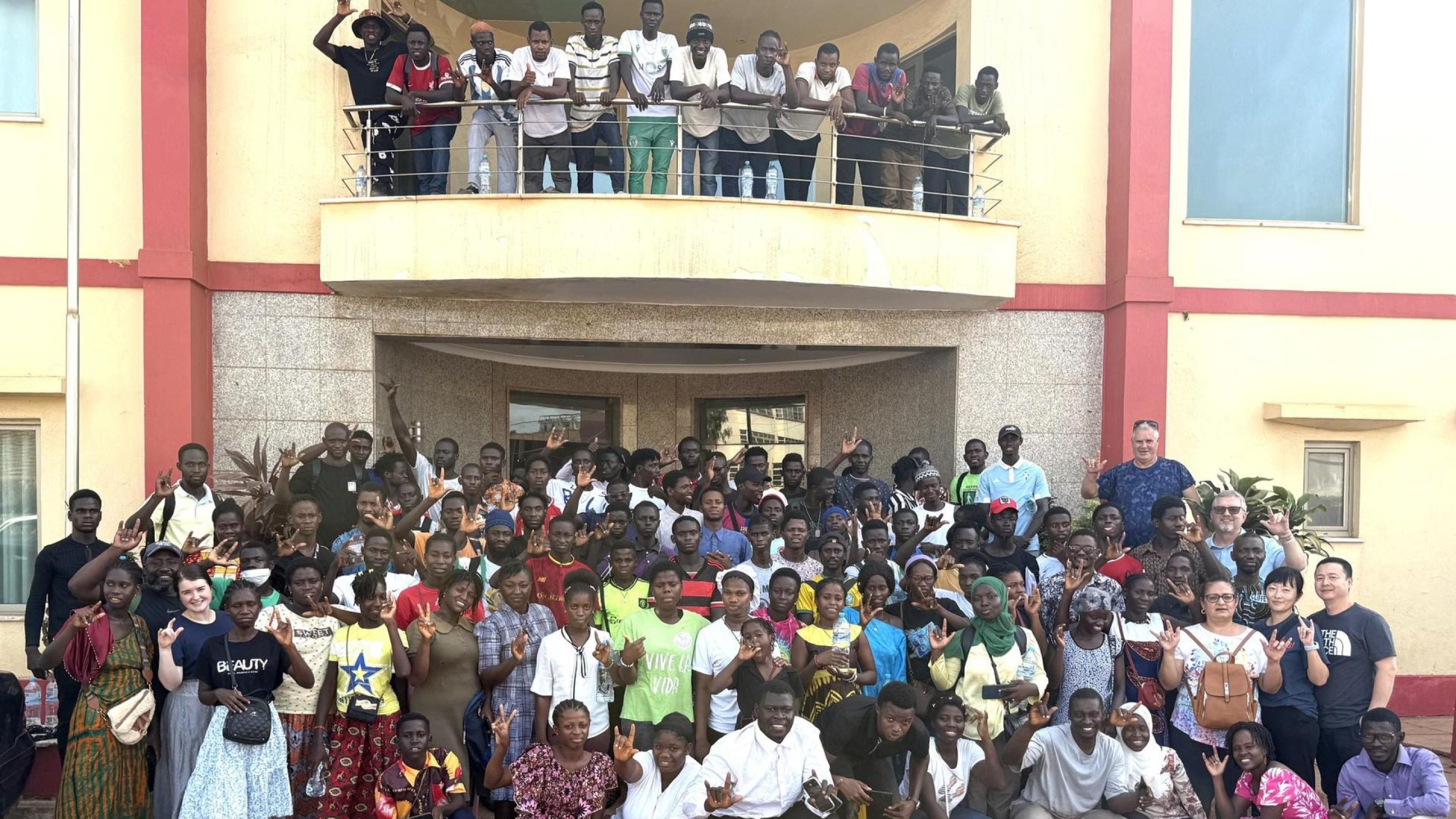
More than 100 Deaf trainees participated in the two-week translation workshop in Guinea-Bissau. (Photo credit: Oasis Network for Community Transformation Inc.)
Last spring, Oasis Network for Community Transformation facilitated workshops in Guinea-Bissau and the Central African Republic for the Deaf in Africa to begin training on translating the Bible into their sign languages. Each workshop, supported by churches in the region, saw 100 participants gather for two weeks to experience the Scriptures come alive in their language.
Maria, a Deaf trainer from Liberia, shared, “For the first time in our lives, we are translating the Bible into our own language and training people in other countries to do it too. That alone is a miracle… We’ve discovered that Deaf people are not just capable of receiving God’s Word; we are capable of carrying it.”
Some participants, having never had the gospel presented
Some participants, having never had the gospel presented clearly to them in sign language, gave their lives to Christ and asked to be baptized.
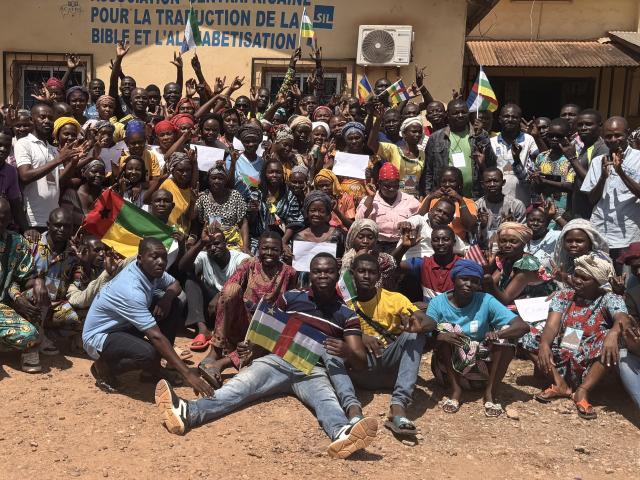
Deaf trainees wave the flags of the nations represented at the two-week translation workshop in the Central African Republic. (Photo credit: Oasis Network for Community Transformation Inc.)
If I ask you to think about the people who are leading Bible translation efforts around the world, what picture comes to mind?
Decades ago, Bible translation was largely a Western
Decades ago, Bible translation was largely a Western missionary-led effort, driven by translation experts who sought to make Scripture available in the world’s minority languages. This allowed for incredible strides to be made toward translating the Bible for all people.
In recent years especially, we’ve seen the number of language communities waiting for God’s Word drop from thousands to hundreds. Those hundreds represent the hardest-to-reach people and places on Earth, often because of government restrictions or unrest. I personally know a translation team member who, by traveling to a nearby country to attend a training workshop, risked 15 years of prison time. And yet, the progress continues, reminding us that God’s hand is at work.
A powerful force fueling this progress is the growing global Church — particularly in the global East and South — that, empowered by the Holy Spirit, has become a passionate and capable force for Bible translation.
Today, the work often centers on,
Today, the work often centers on, and is even initiated by, the community that needs it. While Bible translation organizations are engaged and providing support, much of the work is being fueled by local churches and teams of dedicated people who bring expertise in their own language and culture to a translation project — and who then share the translated Scriptures with their neighbors.
Because of these developments, when I picture the leaders of Bible translation, every country, culture, community and color is represented. It’s as diverse as Christ’s Church.
Bible translation agencies and partners continue to play a vital role in the movement, but the ways they participate have changed. Whereas the network once focused largely on translating and distributing translated texts, it now provides reeople — to equip local church communities as they translate
One of the realities I’m seeing that excites
One of the realities I’m seeing that excites me most is how the translation process itself is transforming these individuals and communities.
Ultimately, Bible translation isn’t about completing a task; it’s about transformation and impact. For the Scriptures to truly transform a community, the translation must be embraced as their own rather than an external product. In one ongoing project in the Philippines, when Tau’t Batu leaders began to enthusiastically champion and take part in the translation work, it ignited a community-wide passion for Scripture and dramatically increased the likelihood of it being integrated into their daily lives and church practices over the long term.
What I’m seeing across the Bible translation movement beautifully and organically involves the entire global Church in the Great Commission. People all over the world are still waiting for a Bible they can clearly understand — and now, people all over the world are bringing those translations into being.
Here in the U.S., the Church is uniquely
Here in the U.S., the Church is uniquely positioned to join our brothers and sisters in this effort. They are asking us to walk beside them in whatever ways God may be calling each one of us — whether it be prayer, giving or service.
With prayer, the circumstances surrounding many hard-to-reach language communities are out of our control. But we can stand together, in awe of God, and ask for Him to open doors and lead the way.
With giving, there are various opportunities: partnering with a specific project or language community, partnering with a missionary, adopting a book of the Bible as a church and more. Giving circles are also growing in popularity, as small groups multiply their impact by pooling both their prayers and financial re
With service, the opportunities to use your skills
With service, the opportunities to use your skills and passions range from volunteer work to short-term roles to long-term service both on and off the field.
God is already moving to advance His purposes. Our part is to stand with our global neighbors — let’s pray, give and go where we are led.
Meg Huntserves as Vice President of Global Partnerships Engagement at Wycliffe Bible Translators
About The Author
Source: cbn.com

3 Comments
Pingback: "The Bible is speaking in my language": YWAM Singapore launches Singaporean Hokkien audio Bible to reach 200,000 in their heart language - Christian Corner
Pingback: Hope Fountain School wins BSN Bible quiz for deaf students - Realnews Magazine - Christian Corner
Pingback: Sweden marks 500 years of the Swedish New Testament with all - Christian Corner