

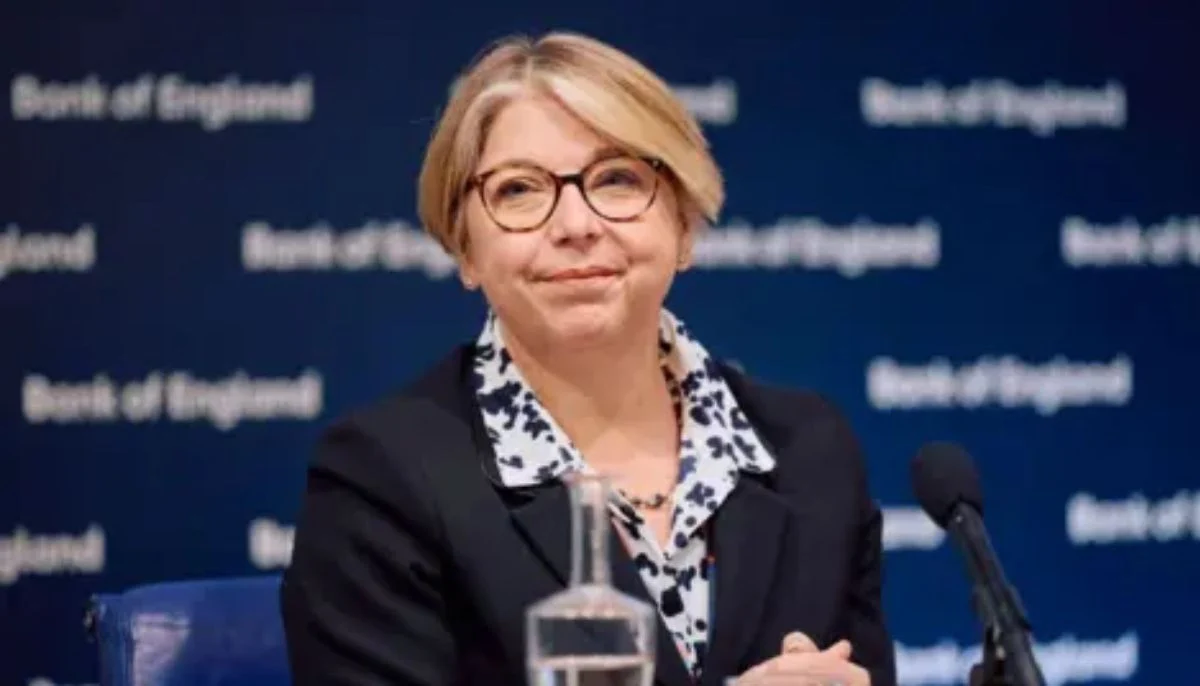
Recent warnings from the Bank of England highlight a significant disconnect between record-high stock prices and underlying risks to the global economy.
To that end, Deputy Governor Sarah Breeden warned that global stock prices are at an all-time high despite substantial economic risks, suggesting markets are currently complacent.
While declining to provide a specific timeline or scale, Breeden said the bank expects there will be a market adjustment at some point.
It is considered unusual for a high-ranking central bank official to speak so candidly about a potential stock market decline.
As stock values fall, households feel less wealthy, leading to a decline in consumer spending. Similarly, businesses have more difficulty raising capital resulting in delayed or canceled investments. Loss of corporate confidence may lead to a slowdown in hiring or job cuts.
The market is hitting record highs despite warnings from the International Energy Agency of the biggest energy shock in history.
The massive investment in AI infrastructure has drawn comparisons to the dotcom bubble of the late 1990s; While figures like Bill Gates have noted the spending frenzy, industry leaders like Nvidia’s Jensen Huang have dismissed concerns that the AI field is overvalued or headed for a crash.
Conversely, another concern is the increase in the number of private funds and businesses lending privately.
Some of these funds have suffered losses, forcing them to limit the amount of money that investors can withdraw, leading to concerns of vulnerabilities within the financial system.
“Private debt has gone from zero to two and a half trillion dollars over the last 15 to 20 years. It has never been tested on a scale until now, with its degree of complexity and interconnectedness with the rest of the financial system,” he said.
“It is a private credit crisis, rather than a banking-driven credit crisis, that we are concerned about.”
Breeden’s view was that his job was not to predict how far the market might fall, but to ensure that the financial system was fully prepared for such adjustments.
“What we are keeping an eye on: is how will prices fall? Will there be a sharp adjustment downwards? And if there is such an adjustment, what impact will it have on the economy? I’m not saying it will happen today, tomorrow, in 12 months. It’s making sure the system is resilient if that happens.”
Concerns have increased in connection with Breeden’s warning that these factors remain worrisome, even though the market has recently regained its composure.
