

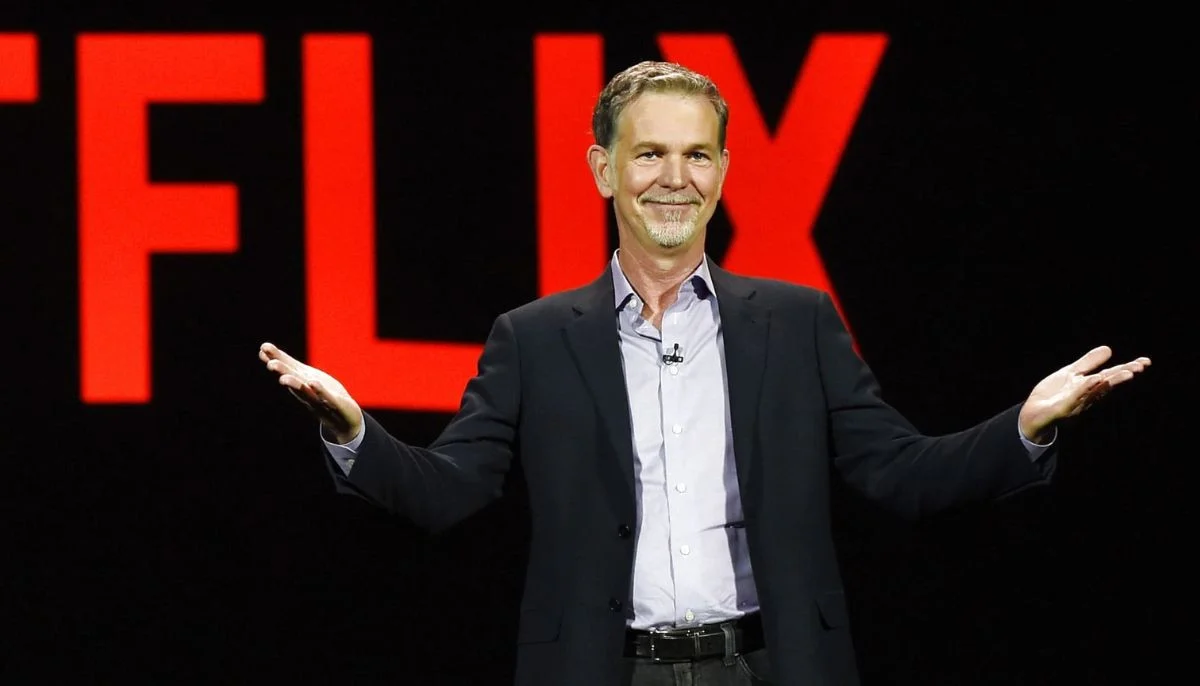
Most predictions about the impact of AI on employment focus on which jobs will disappear first. Reed Hastings, who co-founded Netflix in 1997, is making a different argument that entertainment may be an area best insulated from AI disruption, and his argument goes beyond the usual defense of human creativity.
Speaking on the Possible podcast, hosted by LinkedIn co-founder Reid Hoffman and his chief of staff Aria Finger, Hastings was asked which businesses he expected AI to impact most and which businesses it would largely save.
His answer was simple: “I think the least affected will be entertainment. You’re not going to see robots playing basketball. We like human conflict, and that’s what draws us into it.”
This issue is not based on the lack of capabilities of artificial intelligence, but on human nature. People pay attention to sports, drama, and performances especially because of the seriousness of the situations and the fact that the people involved are real.
Hastings views the human element of entertainment as immutable as opposed to the product of enhanced artificial intelligence.
Hastings did not emphasize that there is no way for artificial intelligence to influence entertainment. According to Hastings, the technology will make production cheaper, particularly in visual effects and post-production with savings already underway in the industry.
The distinction Hastings made here is between the industrial aspect of film production and the emotional aspect of film entertainment.
This viewpoint aligns with that of Netflix CEO Ted Sarandos, who made a similar case in an interview with The New York Times in 2024: “I don’t believe that an AI program is going to write a better script than a great writer or replace a great performance or that we wouldn’t be able to tell the difference.”
This problem was raised by Hastings because he pointed out the factor that could affect the whole situation. In other words, the key issue is whether young people will continue to watch longer videos or prefer watching shorter videos on social media like TikTok rather than full-length movies or TV shows, which is important for Netflix regardless of the impact of AI.
