

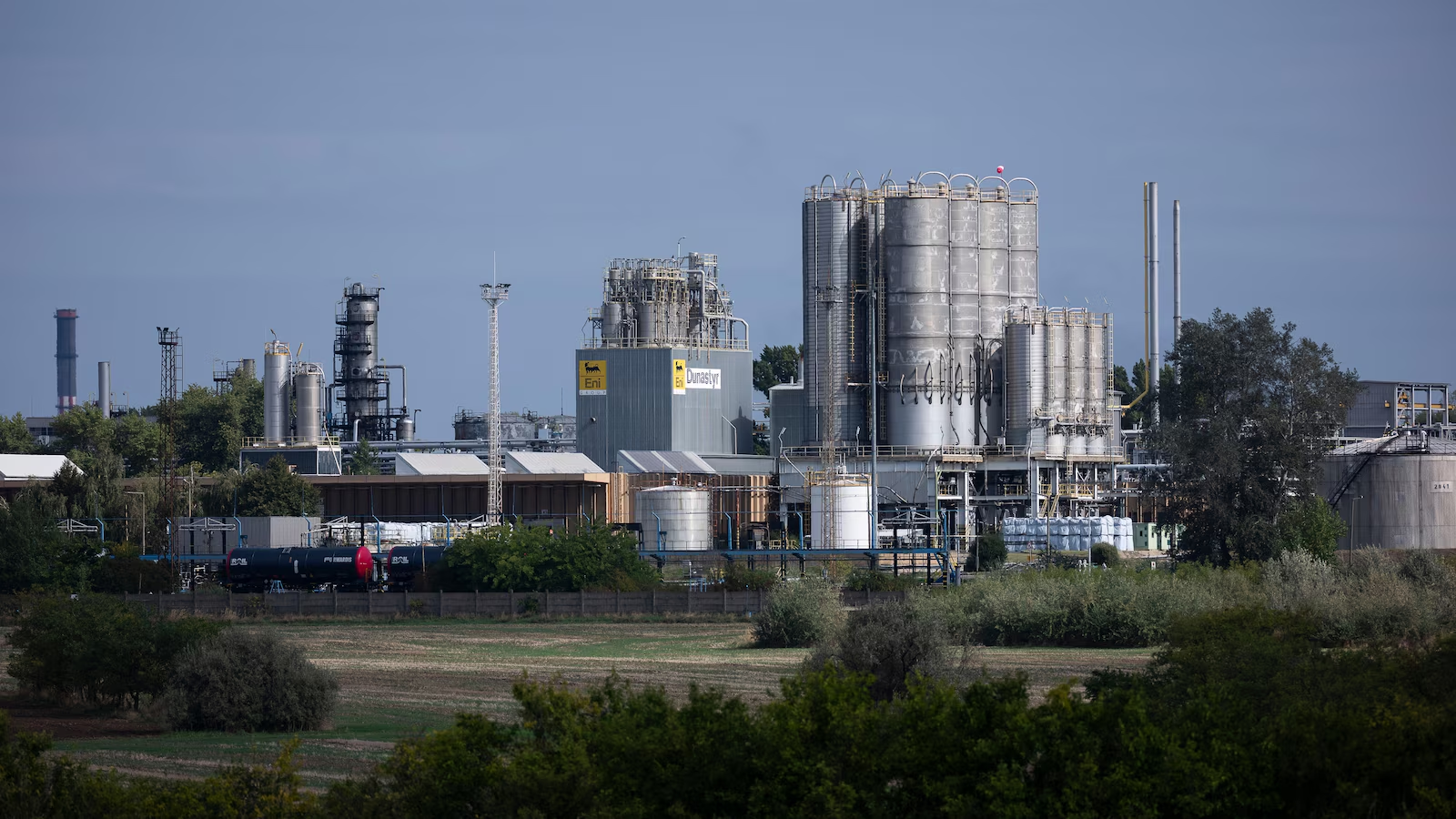
Budapest, Hungary — Hungary and Slovakia have agreed to build a pipeline that will transport oil products such as gasoline and diesel, Slovakia’s energy ministry said Tuesday as a step toward improving the stability of fuel supplies in the region.
The pipeline, which will connect Hungary’s refinery in Szalombta to Slovakia’s refinery in the capital Bratislava, will be 127 kilometers (79 miles) long and will be able to transport 1.5 million tons of gas and diesel per year, the ministry said.
Work to link the two refineries owned by Hungary’s Mol Group should be completed by the first half of 2027, Hungarian Foreign Minister Peter Szijjarto said Monday from Brussels, where the agreement was signed.
Szijjarto said the fuel link “will add further value from the perspective of Hungary’s energy supply and diesel supply, while helping to counter the effects of wars around the world.”
The agreement comes at a time when Hungary and Slovakia, the only two countries in the EU that continue to import Russian oil, are locked in a standoff. bitter feud With Ukraine over access to pipeline supplies crossing Ukrainian territory.
Russian oil shipments through the Druzhba pipeline have been disrupted since late January. Ukraine says the Russian drone attack damaged the pipeline’s infrastructure and put technicians at risk to repair it.
Ukrainian officials say that even if it is restored, the pipeline will remain vulnerable to further Russian attacks.
The governments of Hungary and Slovakia have accused Ukraine of deliberately blocking supplies of Russian crude, and have vowed to take strong retaliatory measures against Kiev until oil flows resume. The Hungarian government has already Blocked 90 billion euros ($104 billion) of EU debt To Ukraine in response to the blockages.
Slovakia’s energy ministry said in a statement that the supply disruptions had “highlighted the weakness of the energy infrastructure and the need to diversify supply routes and sources.”
“The new pipeline should therefore improve supply flexibility and enable more efficient fuel transfers between refineries in the two countries,” it said.
___
Associated Press writer Karel Janicek in Prague contributed to this report.
