

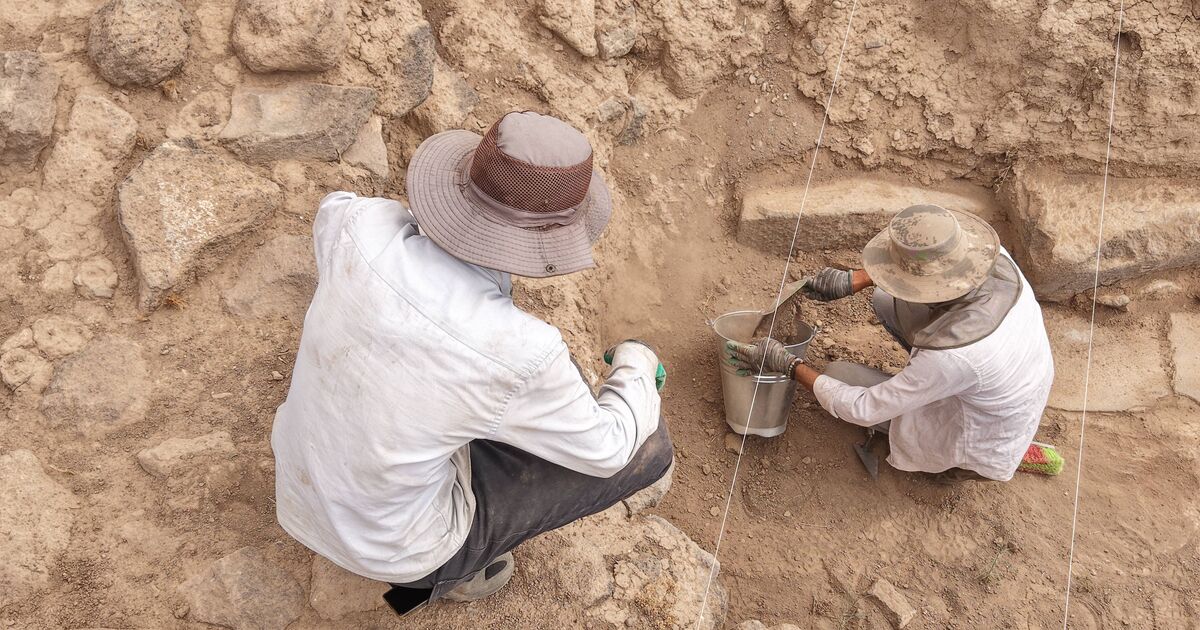
Archaeologists have discovered a royal order bearing the signature of a once-great African king – retrieved directly from a centuries-old garbage dump along the banks of the Nile River.
The remarkable discovery uncovered by a Polish research team from the University of Warsaw in Old Dongola in northern Sudan bears the name of King Qashqash – a sovereign previously thought to be legendary, the equivalent of Britain’s King Arthur.
Experts date the document to the late 16th or early 17th century, placing it as the oldest tangible archaeological evidence of actual rule of Qashqash.
Rather than describing military victories, the Arabic decree, written by a royal scribe named Hamad, instructs a man named Khidr to exchange textiles for livestock and turn everything over to its rightful owner, and ends with a sharp instruction: “Do not hesitate!”
Scholars suggest that the instruction provides information about the actual royal authority and administration of the less recorded period, Jerusalem Post reports.
The study describes it as “a rare glimpse of Sudanese kingship during one of the least-documented periods in Sudanese history” and, paraphrasing a well-known expression, attempts to demonstrate “the kingship of Nubia at work, not in war, but in everyday management.”
The page emerged within the House of the Mekk (‘House of the King’), a historic complex near the east bank of the Nile, hidden under layers of medieval debris.
Old Dongola was the capital of the Christian Kingdom of Makuria before transforming into a thriving trade centre, linking the Ottoman Empire to the north and the Funj Sultanate to the south.
Along with the page, archaeologists discovered several other document fragments, fragments of silk, linen and blue cloth, a gold ring, a dagger handle made of ivory or rhinoceros horn and gun shells, and a gunpowder flask.
The study notes that during that period, firearms were primarily status symbols rather than instruments of war, with their owners identified as members of an influential elite.
The discovery, published in the journal Azania: Archaeological Research in Africa, elevates Qashqash from an obscure figure known primarily from later biographies of holy men to a documented ruler who authorized royal affairs.
