

Housing cost and availability remains one of the most pressing concerns for Californians facing economic uncertainty. Yet some Golden State cities are channeling energy into a policy experiment that threatens to worsen the housing affordability crisis.
In Santa Ana, city officials recently approved an ordinance to ban the use of rent-pricing algorithms — software that analyzes data used by property managers to understand the market and consumer preferences. Politicians repeated baseless claims of price-fixing and claimed to protect renters.
Under the measure, landlords would be prohibited from using software tools that help recommend rental rates appropriate for market conditions. The ordinance passed despite warnings from critics that it is based on a misunderstanding of what these devices actually do and could invite litigation.
Recent city ordinances targeting price-fixing software in San Francisco, San Diego and elsewhere reflect the trend to blame technology for higher rents, even though both state and federal guardrails already exist that regulate data use and prevent pricing coordination.
At best, blaming technology for helping asset managers is a distraction from the real issue. The problem is a severe housing shortage.
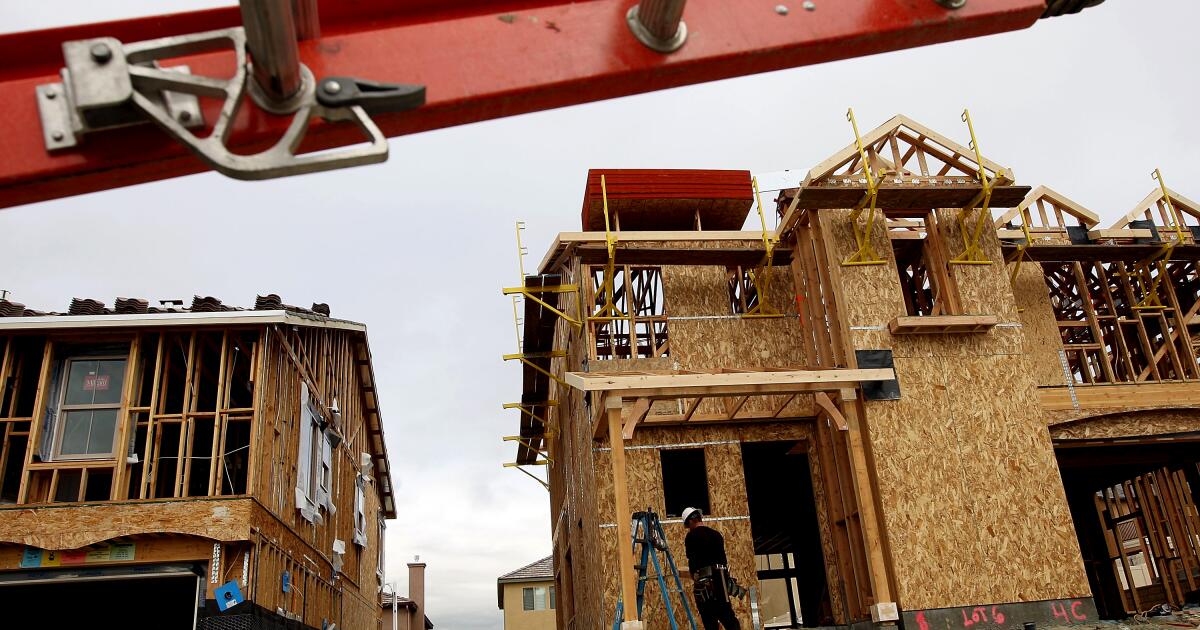
The history and economic evidence is crystal clear – when supply falls short of demand, prices go up. Want to lower prices instead? Then increase supply: build more housing.
Yes, the housing market is big, dynamic and complex. But a fundamental reality is unavoidable: the stringent level of regulations in California remains a persistent barrier to the housing supply Californians need.
Often, pressure from politicians to impose even more regulations, such as targeting software or expanding rent control, is done in the name of promoting affordable housing and protecting renters and others with low incomes.
But the interesting thing is that much of the new housing that gets built helps all renters, even those with low incomes. For example, research shows Even for higher-income households, the move to new luxury apartments frees up units that become more affordable for lower-income consumers – an effect economists know as filtering.
Real-world examples across the state illustrate this point. rent in los angeles The slowdown is finally starting to happen with the addition of more than 15,000 new apartment units in 2025.
Compare this to San Francisco, where rents have been rising due to a chronically low supply of housing. San Francisco took a similar route to Santa Ana Outlawing pricing software tools in 2024, but rents have not decreased and, in fact, have increased because the city has not yet adopted pro-construction reforms.
experts are writing for Michigan Journal of Economics Explain that the US housing shortage has made homes increasingly unaffordable for many Americans, especially low-income renters. They highlight that restrictive zoning is largely responsible for low production relative to job growth and agree that rent control is counterproductive because it discourages growth in supply even with strong demand.
These common sense concepts are so influential that they garner support across the ideological spectrum.
Economist Edward Glaser of the right-wing American Enterprise Institute provided testimony Last year the Senate Committee on Banking, Housing and Urban Affairs was briefed on the negative impacts across the country of the massively lower production of homes compared to 20 years ago. Glaser cited data showing that, across the country, prices are much higher in areas with more housing regulations.
And recently the left-leaning Center for American Progress proposed Proposal To eliminate the red tape that hinders housing construction, emphasizing that his recommendations “are built on the fact that we cannot make progress on housing affordability over the long term without seriously increasing home construction at the same time.” The headline on the center’s page for the plan reads: “Build, Baby, Build.”
Having a roof over your head is a basic human need and is the foundation of financial stability and upward mobility. Outlawing business tools commonly used to get lucrative headlines may make politicians feel better, but it’s not a real solution to California’s housing affordability crisis.
California policymakers must recognize that increasing supply to match demand is by far the most effective way to reduce housing costs. Californians deserve policies based on economic reality – and when it comes to housing, that means building more.
Mario H. Lopez is the President of the Hispanic Leadership Fund, a public policy advocacy organization that promotes freedom, opportunity, and prosperity for all.
