

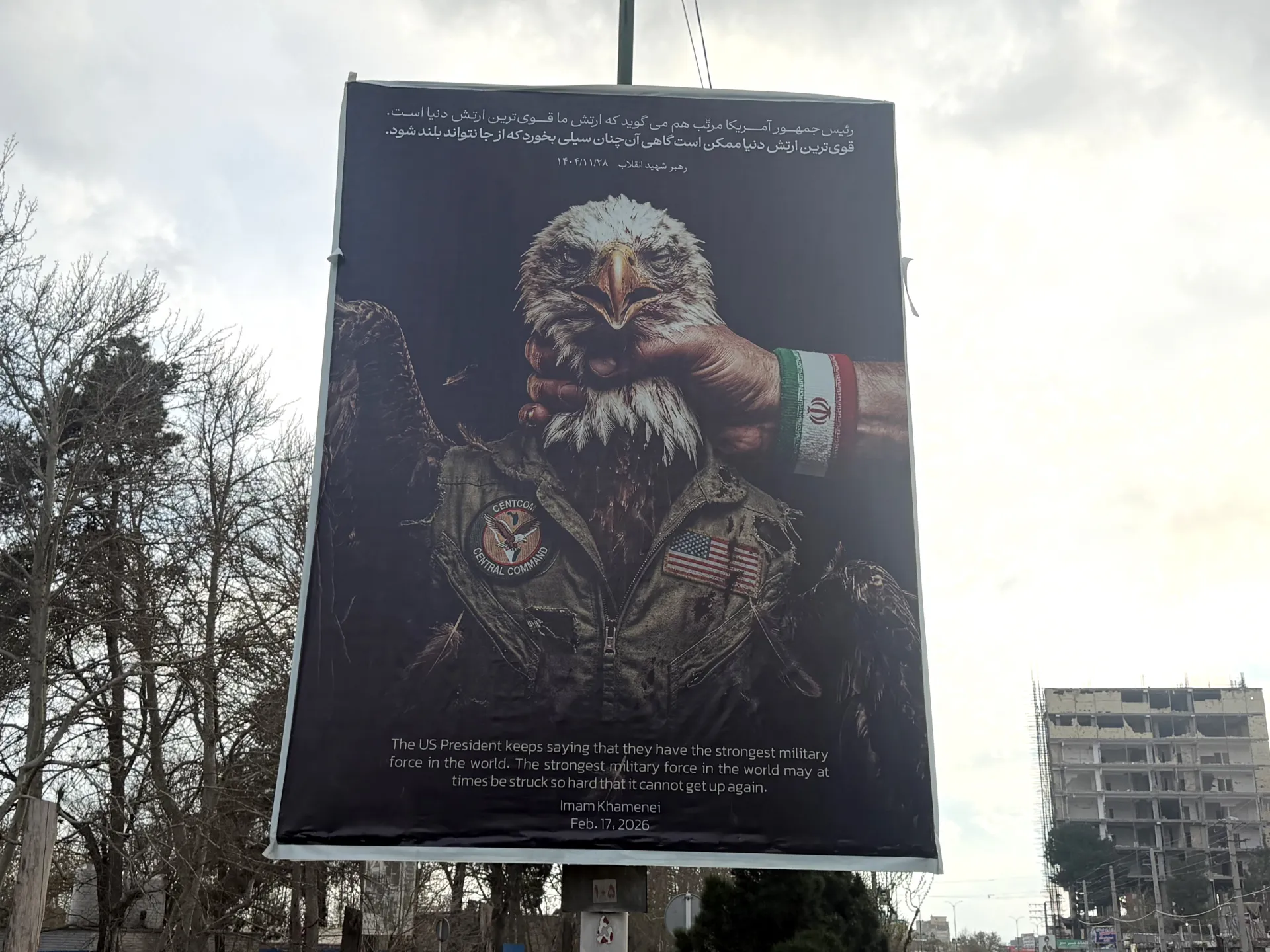
Tehran, Iran – The strikes by the United States and Israel have hit Tehran, Isfahan and other Iranian cities, as local commanders said they were bracing for war involving a possible US ground incursion.
Several airstrikes struck several areas of the capital before and after midnight and periodically throughout Tuesday, once again causing power outages in many areas. The Energy Ministry confirmed that shrapnel and shock waves damaged the main power transfer line, but said the disruption was rectified within a few hours.
Recommended Stories
list of 3 itemsend of list
Several industrial areas in nearby Karaj and surrounding towns were also attacked, while the Israeli military issued a new aerial map warning civilians to stay away from an area in Vardavar, west of Tehran, due to fear of attack. This area is the base for many pharmaceutical companies.
Officials said there was extensive damage to Tofigh Darou, a major pharmaceuticals company that was believed to have been hit by multiple projectiles.
Iran produces more than 90 percent of its medicine domestically due to US sanctions, and the company is one of the top producers of ingredients used in a wide range of drugs, including a cancer drug and an immunomodulator drug used to treat multiple sclerosis.
In Isfahan, central Iran, residents were stunned after a number of heavy bunker-buster bombs were dropped on a mountainous area next to the metropolis in an apparent attempt to target military installations. The munitions caused secondary explosions that were some of the largest recorded since the beginning of the war a month earlier and lit up the night sky, followed by massive sounds that echoed throughout the city.
In Zanjan, in Iran’s northwest, local media showed footage of considerable destruction after a building described as the “administrative department” of Hosseinieh Azzam, a major religious centre, was damaged. At least four people were killed and others were injured, according to local officials, who did not identify the dead.
Iranian officials say more than 2,000 people have been killed in US-Israeli strikes since the war began on February 28 and scores of residential units, schools, hospitals and historical sites have been hit.
This week US and Israeli warplanes bombed several civilian nuclear sites, the country’s top steelmakers and their power sources, petrochemical plants and the Iran University of Science and Technology in Tehran, where an imaging satellite was developed. A university professor who helped advance Iran’s missile program was murdered along with his two children at his home in northern Tehran last week.
US President Donald Trump again threatened to attack oil and gas installations, destroy power generation plants and “possibly” destroy all of Iran’s water desalination plants.
‘I wish they would take it to the grave’
The top commander of Iran’s Islamic Revolutionary Guard Corps (IRGC), which is currently running the war and deciding the country’s future, has continued to signal defiance following this week’s attacks.
The spokesman for the IRGC’s Khatam al-Anbiya central headquarters said on Tuesday that Tehran’s enemies are “humiliated and on the path to destruction” as the US raised the possibility of launching ground attacks on strategic islands off Iran’s southern coast.
The idea of gaining dominance over the Strait of Hormuz through a military attack is one “I wish they (the US) would take to the grave forever”, Ibrahim Zolfaghari said in a video message following an Iranian drone attack on a Kuwaiti tanker in Dubai port.
The IRGC also released footage of ballistic missiles fired towards Israel and countries across the region, as well as footage of the US military shooting down two advanced MQ-9 Reaper drones. It said retaliatory strikes would be launched against technology companies linked to the US and Israel in the region.
State television aired a program where analysts said they believed a ground military incursion by US troops into the region could benefit the Islamic Republic militarily, as it could put them at a disadvantage when trying to capture strong positions held by the IRGC on the islands.
“American ships are the most vulnerable point for the enemy,” Ali Fadawi, one of the IRGC’s most senior remaining commanders, told state television during an interview broadcast Tuesday.
He claimed that US warships are generating “fake signals” from their transponders and are located further away from Iranian shores than they actually show, with the commander saying this reflects “the complete unpreparedness of our forces”.
Ali Akbar Velayati, a former foreign minister and longtime foreign policy adviser to the late Supreme Leader Ayatollah Ali Khamenei, said in a social media post that any ground aggression would turn the war into “historical and civilizational defense”, a reference to Israeli and US officials labeling the conflict a war for civilization.
Iran announces more executions
Iranian officials continue to warn through state media that they take any form of local dissent seriously, and are prepared for harsh punishment, including execution.
Two more people were executed on Tuesday morning, with the judiciary confirming they were armed members of the foreign-based Mojahedin-e-Khalq (MEK) group, which is considered a “terrorist” organization by Tehran.
It comes after executions on Monday as well as others in recent weeks, some of which were also related to Iran’s nationwide protests in January, when thousands of people were shot on the streets of Tehran and cities across the country.
The United Nations and human rights organizations accuse state forces of taking unprecedented action against peaceful protesters, but officials blame “terrorists” and “rioters” backed by the US and Israel.
Iran’s judiciary spokesman Alireza Jahangir told state television on Tuesday that new indictments have been issued against 200 “mercenaries” accused of aiding the US and Israel, including recording footage of air strikes in defiance of the religious establishment and sending them to foreign-based outlets.
The judiciary reiterated that penalties for national security charges would include complete confiscation of assets as well as execution. The assets of several local and foreign-based Iranian celebrities and businessmen have already been seized due to their opposition to the Islamic Republic.
The government of President Massoud Pezeshkian held its first cabinet meeting on Monday since the start of the war, with an image showing a makeshift space decorated with blue drapes at an undisclosed location serving as a meeting place.
Israel’s Channel 14 alleged in a report that Pezeshkian is pushing to gain negotiating powers with the US, as Trump claims negotiations have progressed. But the Israeli outlet said IRGC chief Ahmed Vahidi rejected the request and did not want to make concessions to the US and Israel. Iran has not commented on the report.
“Any decision about ending the war will be adopted strictly considering all the aggravated situations and in the framework of ensuring the dignity, security and interests of the great Iranian nation,” Pezeshkian said during the cabinet meeting, in reference to Iran’s demands for guarantees and compensation.
