

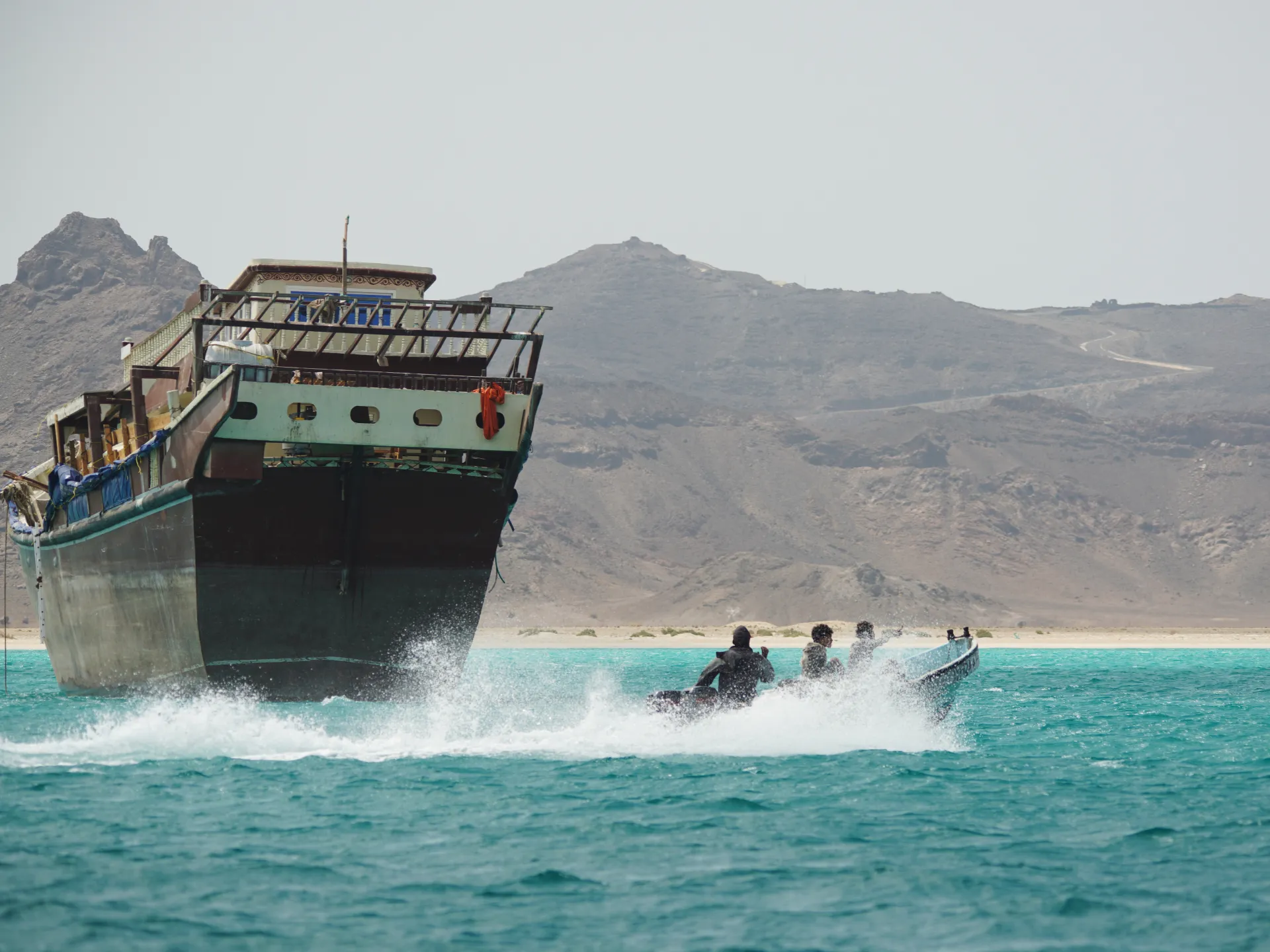
A top adviser to Supreme Leader Mojtaba Khamenei has threatened that Iranian allies could close the Bab al-Mandeb shipping route as Tehran has effectively done with the Strait of Hormuz.
The Bab-el-Mandeb connects the Red Sea to the Gulf of Aden and is an important waterway for global oil trade. Its importance has increased since Iran effectively closed the Strait of Hormuz – through which 20 percent of the world’s oil and gas is shipped in peacetime.
Ali Akbar Velayati, Iran’s former foreign minister and a veteran diplomat known for his influence in the establishment, warned on Sunday on X that “the unified command of the resistance front looks at Bab al-Mandeb the same way it looks at Hormuz”.
Velayati wrote, “If the White House dares to repeat its foolish mistakes, it will soon realize that global energy and trade flows could be disrupted with a single step.” Iran’s state-owned Press TV later confirmed his warning.
This follows US President Donald Trump’s threat to bomb Iran’s power plants and bridges from Wednesday this week if Tehran does not agree to reopen the Strait of Hormuz. Iran has said the Strait of Hormuz is open to ships from countries other than the US and Israel that negotiate safe passage. Trump has also previously threatened to bomb Iran’s desalination plants.
But if Bab el-Mandeb were to be shut down, the impact would go beyond the current war – it could exacerbate the global energy supply crisis created by the conflict, further exacerbating the economic turmoil being felt in factories, kitchens and petrol stations around the world.
Where is Bab el-Mandeb?
The strait is between Yemen to its north-east and Djibouti and Eritrea in the Horn of Africa to its south-west.
It connects the Red Sea to the Gulf of Aden, which further extends to the Indian Ocean. It is 29 km (18 mi) wide at its narrowest point, limiting traffic to two channels for incoming and outgoing shipments and is effectively controlled by the Iran-backed Houthis.
The Yemen-based group is a central part of Iran’s so-called “axis of resistance” – a coalition of groups ideologically or strategically aligned with Tehran, which Velayati mentioned in his Sunday post on X.
Why is the Bab el-Mandeb important for energy trade?
It is one of the most important shipping routes in the world.
The strait is an important route through which Saudi Arabia ships its oil to Asia. When the Strait of Hormuz is open, it is an important export route for Saudi Arabia as well as the Gulf countries. Crude oil, gas and other fuels to Europe via the Suez Canal or the SUEMED (Suez-Mediterranean) pipeline on Egypt’s Red Sea coast.
In 2024, approximately 4.1 billion barrels of crude oil and refined petroleum products are expected to pass through the strait – 5 percent of the global total.
If both the Bab el-Mandeb and the Strait of Hormuz were closed, it would block 25 percent – or a quarter – of the world’s oil and gas supplies.
It’s not just oil: About 10 percent of global trade goes through the Bab el-Mandeb, including containers shipped to Europe from China, India and other Asian countries.
The importance of Bab al-Mandeb has further increased due to the closure of the Strait of Hormuz.
Saudi Arabia, which has traditionally relied primarily on the Strait of Hormuz for its oil exports, has turned to its Red Sea port of Yanbu to ship crude out through the Bab al-Mandeb.
For this it has turned to the East West Pipeline, which runs from the Abqaiq oil processing center near the Gulf to Yanbu. The 1,200 km (745-mile) pipeline is operated by Saudi oil giant Aramco.
While the East West Pipeline moved an average of 770,000 bpd to the Red Sea coast in January and February, Saudi Arabia increased its use in March when the Strait of Hormuz was closed, according to energy intelligence firm Kpler. By the end of March, oil was flowing at the pipeline’s capacity of 7 million bpd – more than ever before.

How could Iran and its allies pull this off?
The Houthis have already shown that they can do this. During Israel’s genocidal war on Gaza, they blocked the Bab al-Mandeb against what they described as ships belonging to Israel or the US.
Due to continued attacks on shipping, insurers refused to offer reduced traffic. In May 2025, the US and the Houthis agreed to a ceasefire and the Yemeni group has since recaptured the Bab al-Mandeb.
Recent days have shown how easy it would be for the Houthis to repeat the disruption during the war on Gaza.
Since late March, the Houthis have fired missiles and drones at Israel, pointing to their effective entry into the war – for now, against Israel, not against the US.
But former US diplomat Nabil Khouri told Al Jazeera that the missile attacks launched by the Houthis against Israel were “symbolic participation, not full participation”.
The former deputy chief of mission in Yemen told Al Jazeera, “Because of the discussion of possible tensions, they have fired some missiles as a warning. American troops are coming to the region. There is talk that if there is no deal, there could be a full-scale attack on Iran, the likes of which has not been seen so far.”
If the Houthis really want to enter the war, their weapon will be the blockage of Bab al-Mandeb.
“All they have to do is shoot at some ships coming through there, and that will stop all commercial shipping through the Red Sea,” he said. “That will be a red line, and then you will see a very rapid increase in attacks against Yemen (from the US and Israel).”
What would the closure of Bab el-Mandeb mean for the world?
Elizabeth Kendall, a Middle East expert and president of Girton College at the University of Cambridge, told Al Jazeera that if the Red Sea strait was blocked, it would create a “nightmare scenario”.
“Because if you have sanctions on the Strait of Hormuz at the same time as sanctions are going up in Bab al-Mandeb, you will really disrupt, if not cripple, trade towards Europe. So it’s a knife’s edge, really, depending on what happens next,” he told Al Jazeera.
However, Kendall said that although this was a “sweet spot” for the Houthis, the Yemeni group might not have wanted to “provoke a Saudi or indeed wider reaction”.
