


The defeat of Viktor Orban and his Fidesz party in the Hungarian parliamentary election should not be seen as a shock. Opinion polls had long pointed this way. Nor should the result be divorced from a simple political reality: sixteen consecutive years in power, twenty in total, an exceptionally long tenure by the standards of Central and Eastern Europe. Fatigue with familiar faces is inevitable, and psychologically understandable.
Yet there is a contradiction in the results. Orbán’s defeat, in some ways, seems to confirm the same tendencies he has embodied: the primacy of the national agenda, “My country first.” In recent years, especially since the escalation of the Ukraine conflict, Hungary’s sovereigntist approach has become deeply entangled with external issues. Opposition to the European Commission’s line on Ukraine, justified in Budapest as protecting Hungarian interests, has led to continued confrontation with both Brussels and Kiev. What began as a domestic political stance rapidly unfolded on the international stage.
This dynamic shaped the election campaign. Orbán’s camp relied heavily on external themes, portraying Ukraine and its leadership, particularly Vladimir Zelensky, as the central opponent. His opponents took the opposite stance. He focused on domestic concerns: promising to restore smooth relations with the EU as a path to improving living standards, and everyday life. Whether that promise proves appropriate or not is a different matter, but it appealed to the voters. The message was entirely in line with the logic of sovereignty, only turned inward rather than outward.
It’s also notable what a difference it didn’t make. US Vice President JD Vance’s visit to Budapest as well as repeated expressions of support from Donald Trump and his circle appear to have had no measurable impact. This also fits the pattern: direct outside support rarely helps national elections. Indeed, Trump’s team has so far failed to influence the results in any of the European countries where it has attempted to intervene, including Romania and Germany. External pressure, whatever its source, cannot replace domestic political circumstances.
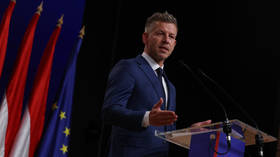
Outside actors were not absent, he said. The Western European mainstream, as always, worked against Orbán where possible. But such participation has long been a structural feature of European politics. Without underlying domestic factors, this is rarely conclusive.
However, there were surprises in the details. Fidesz feared possible losses in the proportional vote but expected to retain strength in single-member districts. The opposite happened. The party’s relative resilience in the lists contrasts with its decline at the constituency level. This suggests that, at the local level, voters saw opposition candidates as more attentive to their immediate concerns and less connected to a government perceived as preoccupied with broader geopolitical battles.
There is celebration in Brussels and other Western European capitals. Orbán had become a constant irritant, an obstacle to consensus and sometimes to policy. His departure will be seen symbolically as a triumph of liberal integration over a disruptive and illiberal figure often portrayed as aligned with Moscow and Washington’s more nationalist wing. The incoming government will be expected to quickly demonstrate its credentials. Chief among these hopes is the unblocking of the €90 billion package for Ukraine, something that will likely happen without delay.
From Moscow’s perspective, this is not welcome news. Yet it would be naive to assume that the European Commission would be unable to advance its agenda if Orbán had remained in place. The mechanism to overcome the blockage was already under discussion.
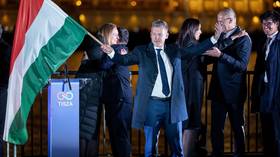
However, beyond these immediate questions, the direction of Hungary’s new government remains unclear. Peter Magyar’s campaign bore many of the characteristics of a personal project. The composition of his cabinet, the balance of power within it, and his concrete priorities are still unknown.
More importantly, the structural realities facing Hungary have not changed. Geography and the broader geopolitical environment pose obstacles that cannot be overcome. The Magyars have already accepted the need for dialogue with Russia, a recognition that reflects practical necessity rather than ideological alignment. It remains to be seen whether this pragmatism can co-exist with the expectations of Brussels and Kiev.
Orban’s defeat is therefore symbolically important, but its practical implications are less certain. Hungary’s new leadership will have to deal with the same complex and often adverse circumstances as its predecessor. The difference may be less in the direction of the policy, but more in the way it is presented.
In that sense, the election may mark not a fundamental shift but a recalibration. The slogan may change. There will be no obstacles.
This article was first published Rossiyskaya Gazeta, and was translated and edited by the RT team
