

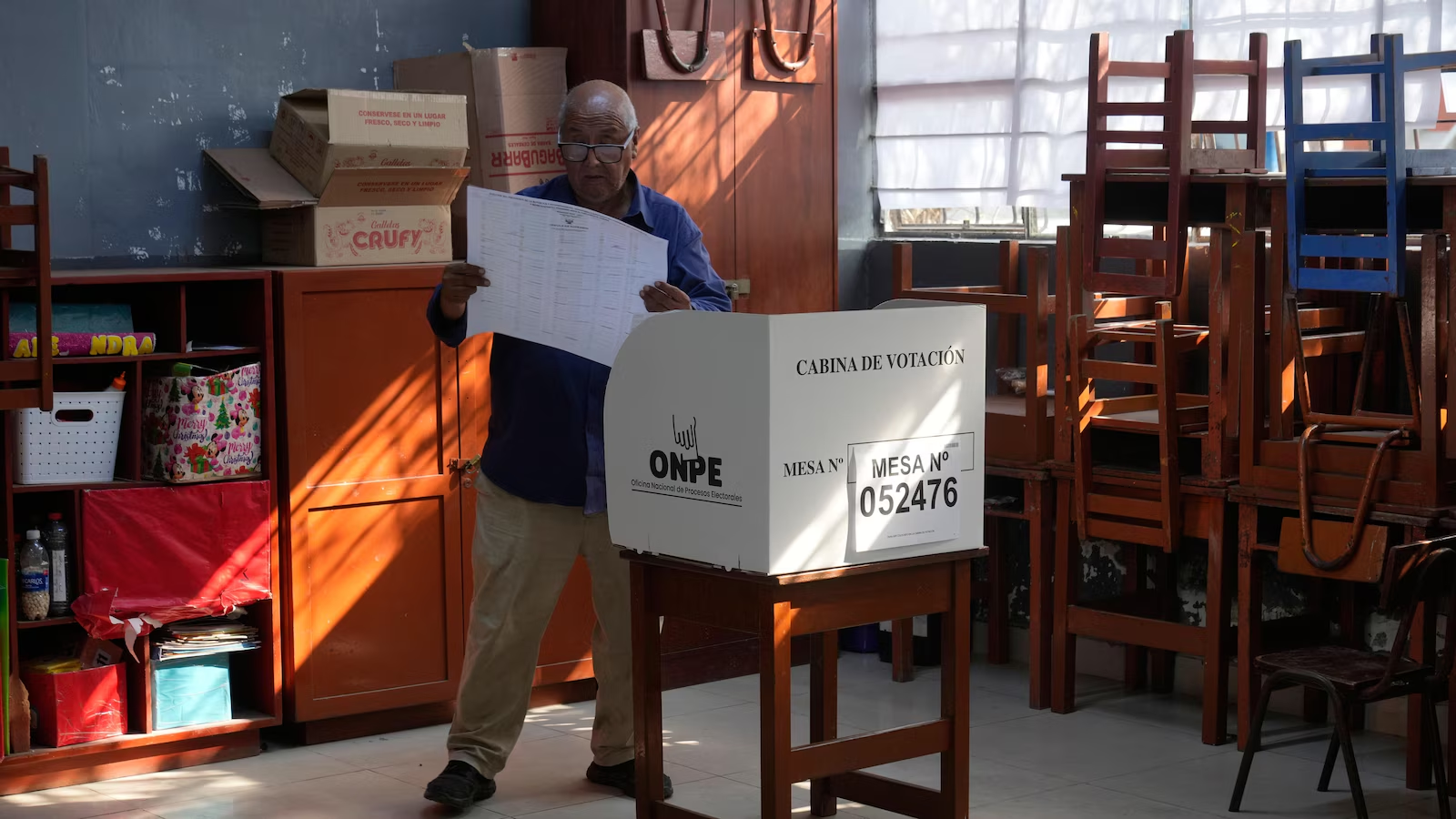
Lima, Peru — Peruvian voters will have to wait at least until Monday to know the results presidential election on sunday The process then became beset by logistical issues, leaving thousands of people at home and abroad unable to vote.
The problems forced electoral authorities to allow more than 52,000 residents of the Peruvian capital Lima to vote on Monday. The expansion, announced after vote counting began Sunday evening, also includes Peruvians registered to vote in Orlando, Florida, and Paterson, New Jersey.
Officials had initially said 63,300 people could vote on Monday but later revised the figure.
Voting is compulsory for Peruvians aged 18 to 70. Failure to do so can result in a fine of up to $32.
A former minister, a comedian and a political heir are among the 35 candidates vying to become Peruvian citizens Ninth President in just 10 years.
elections come in between increase in violent crime And corruption has fueled widespread discontent among voters, who largely view the candidates as dishonest and unprepared for the presidency. Many contenders have responded to crime concerns with sweeping proposals, including building mega-prisons, restricting food to prisoners, and reinstating the death penalty for serious crimes.
Nurse Heidi Justiniano hadn’t decided who to vote for while already standing in line outside a public school in Lima.
Justiniano, 33, said, “There is so much crime, so many robberies on every corner; a bus driver was murdered. What matters most to us at this time is safety, every person’s life.” “Politicians don’t always keep their promises. This time we have to choose our president wisely so he can make Peru better.”
More than 27 million people are registered to vote. About 1.2 million of them voted abroad, primarily in the United States and Argentina.
A presidential candidate needs more than 50% of the votes to win outright. However, given the deeply divided pool of voters and candidates, a runoff in June is almost certain to be the largest in the Andean country’s history.
Following recent legislative reforms that concentrated significant power in the new upper chamber, voters are also being asked to elect members of the bicameral Congress for the first time in more than 30 years.
