

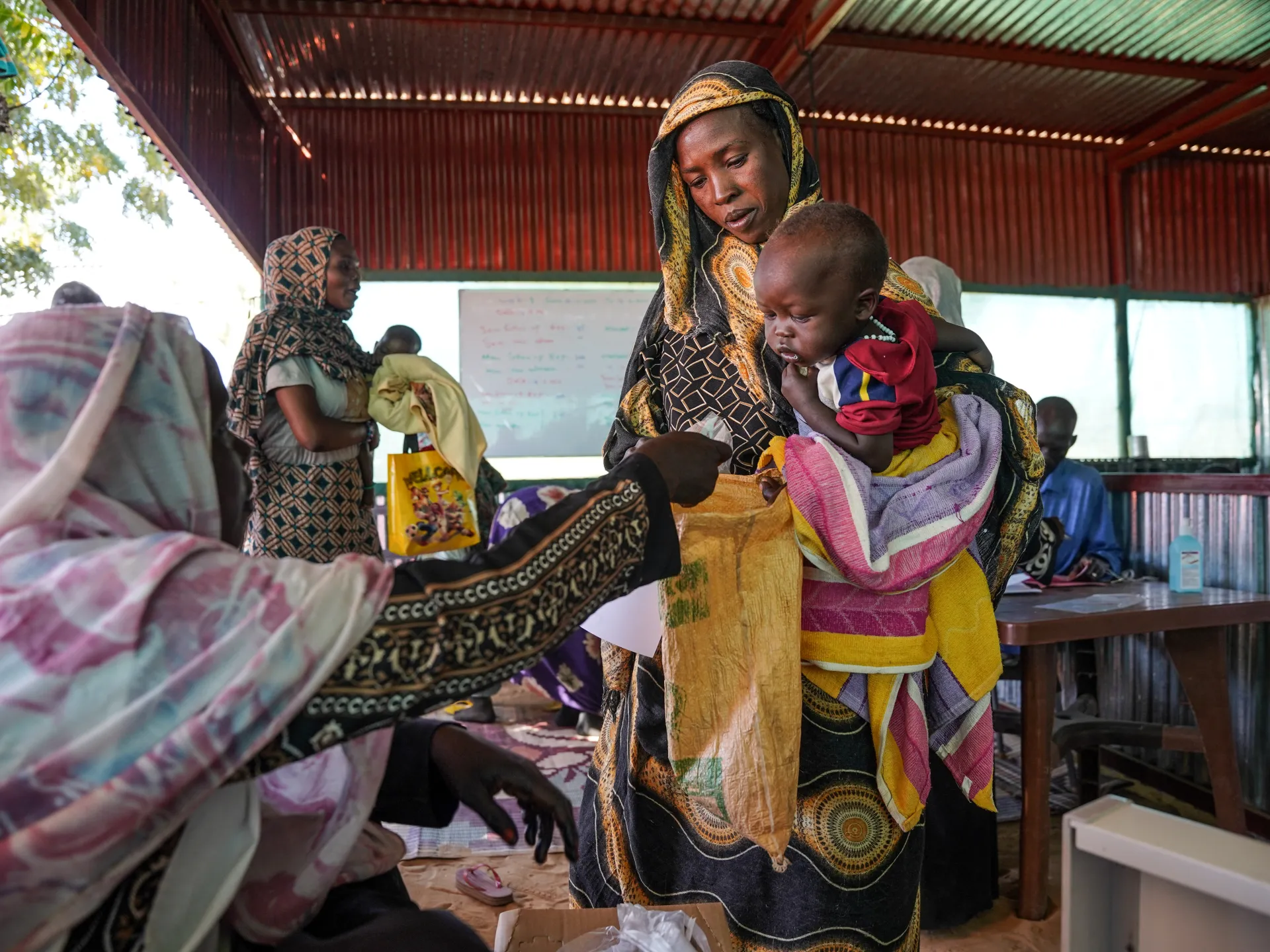
Save the Children says Sudanese children are being born into conditions ‘no child should ever have to face’.
Published on 14 April 2026
At least three babies every minute in Sudan are being born in conditions no child should have to face, an international charity has warned. The devastating conflict between the Sudanese army and the paramilitary Rapid Support Forces (RSF) has entered its third year.
Save the Children said on Tuesday that official figures show 5.6 million children have been born in Sudan since the war began in April 2023, meaning 5,000 babies a day are born in a country where millions are surviving on just one meal a day.
Recommended Stories
list of 3 itemsend of list
“These children are born in overcrowded shelters, under-equipped or damaged health facilities, or while their families are on the move,” said Mohammed Abdiladef, country director of Save the Children in Sudan.
“Children have the right to care and protection, even in conflict,” he said.
On April 15, 2023, the rivalry between Sudan’s army chief Abdel Fattah al-Burhan and RSF commander Mohammed Hamdan “Hemedti” Dagalo escalated into a war that quickly spread across the country.
Since then, fighting has killed thousands, displaced nearly 12 million people and created the world’s worst humanitarian crisis, according to the United Nations.
Both sides have been accused of war crimes and crimes against humanity, while the RSF has been implicated in atrocities in the vast Darfur region that UN experts say have the hallmarks of genocide.
Sudan’s health service collapsed
Save the Children said widespread violence and attacks on civilian infrastructure have strained the country’s already fragile healthcare system, putting millions of mothers and newborns at risk of death.
The rate of maternal deaths during childbirth has increased by more than 12 percent – from 263 maternal deaths per 100,000 live births in 2022 to 295 per 100,000 in 2025.
Up to 80 percent of health facilities in conflict-affected areas have become inoperable, while those still functioning face shortages of supplies, medicine, staff and fuel.
The World Health Organization has confirmed nearly 200 attacks on health facilities since the beginning of the war, killing more than 2,000 people.
In March, a drone attack on the Al-Dain Teaching Hospital in East Darfur killed at least 64 people, including 13 children and several health workers, and disabled the entire hospital.
Save the Children’s Abdiladif said attacks on health facilities “severely and permanently” affect mothers’ and newborns’ access to essential care.
“All parties to the conflict must ensure the protection of civilians and allow access to families in need of immediate assistance,” Abdiladef said.
