

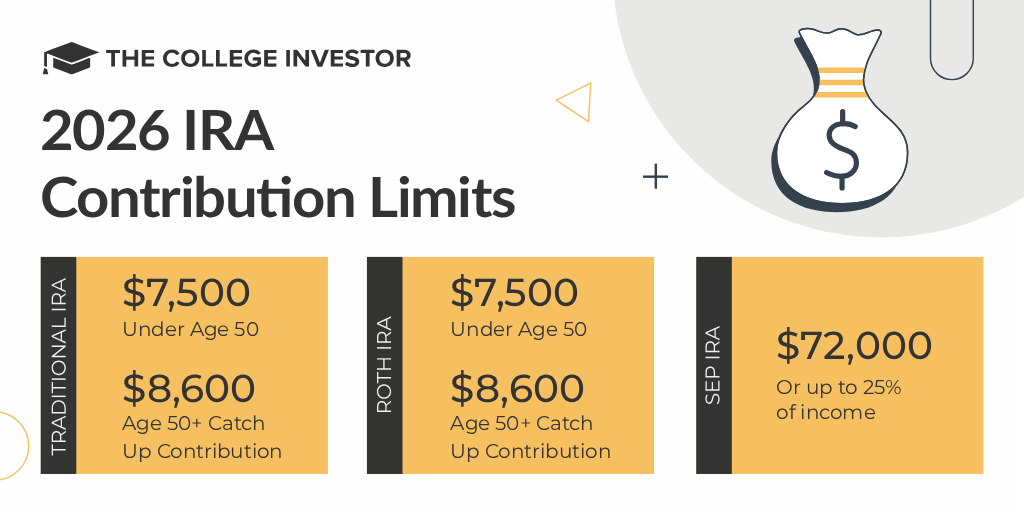
A SEP IRA allows you to contribute up to 25% of your compensation in 2026, or $72,000.
Remember, you can contribute to your SEP IRA until the tax deadline – April 15.
Whether you’re a side hustler or a full-time entrepreneur, a SEP IRA or Simplified Employee Pension Individual Retirement Account can allow you to boost investment returns by reducing your taxes while saving for retirement.
SEPs were created for both small business owners with employees and self-employed people without any employees. They’re kind of like a mix between a 401(k) and a traditional IRA.
Before opening an account, find out whether you are eligible or not and what is the contribution limit.
What is a SEP IRA?
A SEP IRA is a retirement account specifically designed for self-employed and small business people. Business owners can contribute to SEP accounts for themselves and their employees. Once contributions are made, the account is completely owned by the employee. However, employees cannot contribute to the plans.
Compared to traditional 401(k) plans, SEP IRAs are generally easier for you, the business owner, to create and maintain without too much accounting stress. Most brokerages allow you to open SEP accounts for yourself and your employees. You can contribute by sending a check or through electronic transfer.
Who is eligible to start a SEP IRA?
Anyone with self-employment or small business income can qualify to contribute to a SEP-IRA. If you have employees, you must contribute equal shares of compensation for yourself and your employees. Most people working in the gig economy will qualify to open a SEP IRA since they earn 1099-NEC income.
SEP IRA Contribution Limits
In 2026, you can Contribute 25% of your total compensation For an IRA with a maximum contribution of $72,000.
Compensation for self-employed people is your revenue, less expenses, including half of your self-employment taxes. The example below shows how a self-employed individual can find his maximum contribution.
|
Net Income (Revenue minus Expenses) |
|
|
income, low self-employment tax (net income minus half of self-employment taxes (Net income x 7.65%) |
$150,000 – $11,475 = $138,525 |
|
Contribution limit (25% of above) |
$138,525 x 0.25 = $34,631.25 |
Should I contribute to my SEP IRA or my 401(k)?
If you have a work 401(k) and a SEP IRA, you can contribute to both of these accounts. In 2026, you can contribute up to $24,500 to a 401(k) and $72,000 to a SEP-IRA (depending on your earnings). If you have employees, you must contribute for them at the same rate as you do for yourself.
Remember, a SEP IRA is a traditional IRA. This way, you can make traditional IRA contributions to your employer as well. employer’s contribution Don’t contribute to your IRA contribution limit, but your contribution Would like.
Comment: Be careful if you have a third retirement account like a Roth IRA. The money you (not the employer) contribute to a SEP IRA will reduce the amount you contribute to your other IRAs.
- If you contribute $5,000 to a SEP IRA, you can contribute up to $2,500 to a Roth IRA.
- If you contribute $7,500 or more to your SEP IRA, you Can not Contribute to a Roth IRA or Traditional IRA.
Should I open a Traditional IRA, Roth IRA, or SEP IRA?
You can usually choose between a traditional IRA, Roth IRA, and SEP IRA for retirement contributions. Each account has its own advantages and disadvantages. This chart compares some features for each account type.
However, remember that a SEP IRA requires you to own a business.
Here are the 2026 SEP IRA contribution limits:

Why would a small business owner choose a SEP IRA?
If you own a business, you’ll probably need to choose between a Small Business 401(k) and a SEP for their business. A SEP is funded entirely by employer contributions, while a 401(k) is funded by contributions from both the employee and the employer.
If you have employees, you may choose a SEP IRA for contribution flexibility. Your contribution rate and your employees range from 0% to 25% of total compensation.
There are restrictions you can choose to limit contributions. For example, you only make contributions if your employees meet all three of the following criteria:
- be at least 21 years old
- Have worked for the company in three of the last five years
- Earned at least $650 in compensation
You can choose to make contributions for yourself and your employees each year rather than worrying about contributions with each pay check, unlike a 401(k).
Our Picks for the Best Self-Employed Retirement Plans
Setting up these accounts was one of the biggest problems we heard from readers, so we’ve put together this review for you.
When do you have to contribute?
Contributions for you and your employees are due by the tax filing due date (including extensions). This means you must contribute by April 15 or October 15 if you filed an extension.
Is a SEP Right for Your Business?
Investing in a retirement account offers tremendous tax benefits, but you may not want to keep your money locked up.
If you have large investments or expenses coming up, you may want to delay contributions until next year. But don’t wait too long to invest so you can reap the benefits of compound growth as soon as possible.
Best Online Stock Brokers – According to Readers
If you are still stuck on choosing a SEP IRA, Solo 401(k), or SIMPLE IRA for your business, you can use any of these These top online brokers To help you open an account. We polled our readers for this!
