

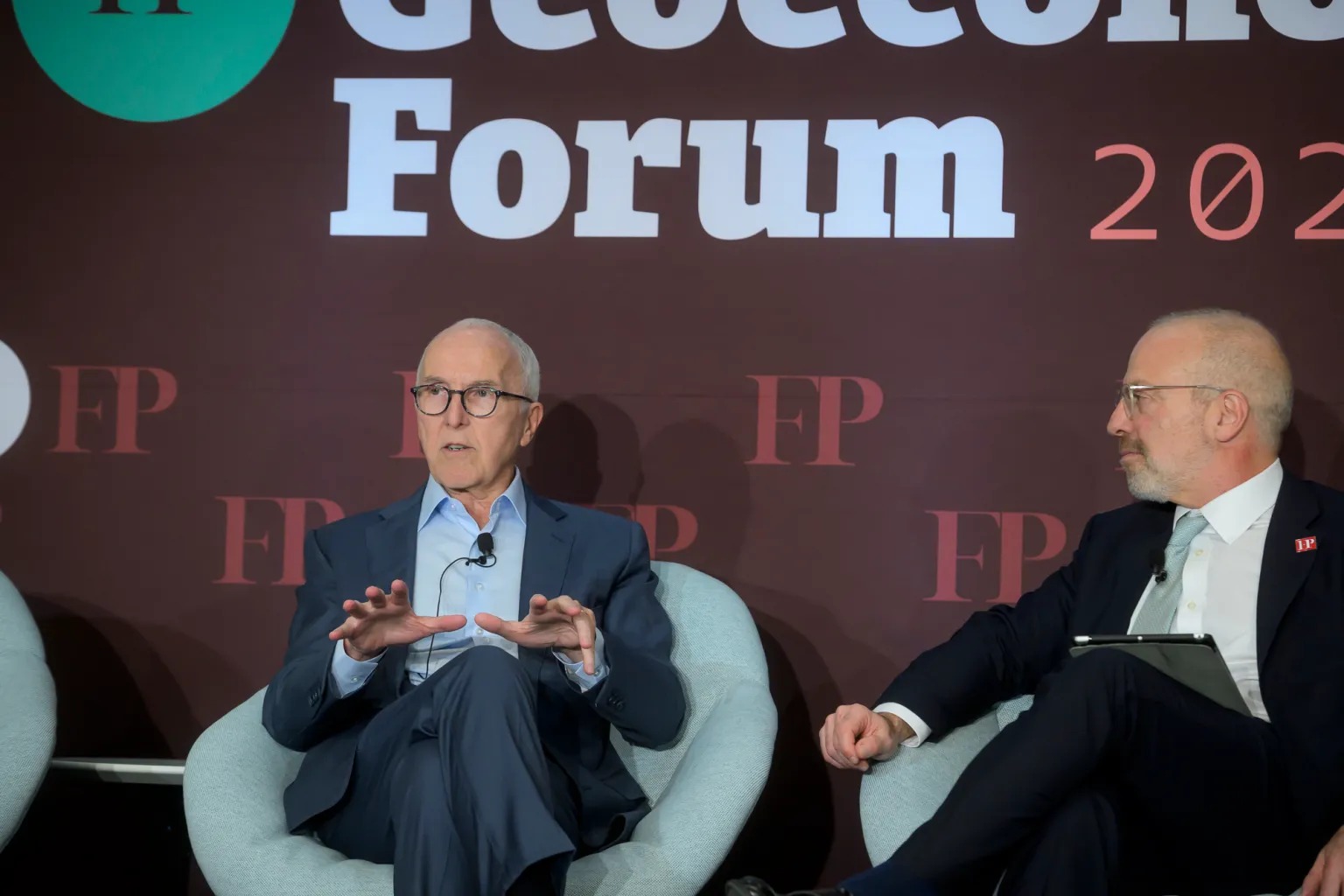
SRINAGAR, India, Apr 17 (IPS) – As the war in the Middle East spills over into global markets, policymakers, economists and industry leaders gathered in Washington this week to agree that economics is no longer separate from geopolitics. This is now its main means.
At the Geoeconomics Forum organized by Foreign Policy spring meetings Speakers from the International Monetary Fund and the World Bank repeatedly pointed to a world shaped by shocks, where supply chains, energy flows and technology have become instruments of power.
Foreign Policy CEO Andrew Solinger said in his opening remarks, “Geoeconomics is no longer a backdrop to global politics. It is the dominant and critical element.”
The urgency of that change is closely linked to the ongoing conflict in the Gulf, which has disrupted energy markets and exposed vulnerabilities in global trading systems. The war has made the world understand how quickly regional crises can turn into worldwide economic instability, affecting everything from fuel prices to industrial production.
Participants at the forum described a changing global order where governments are increasingly deploying economic instruments deemed neutral or technocratic.
Trade policy, capital flows and supply chains now serve strategic goals. Critical minerals needed for semiconductors and artificial intelligence systems have become geopolitical leverage points. Energy routes such as the Strait of Hormuz have turned into potential choke points with global consequences rather than mere transit corridors.
US Under Secretary of State for Economic Affairs Jacob Helberg said in his address, “Geopolitics and economics have always been linked. We are going back to an ideology that considers them inseparable.”
Hellberg pointed to growing competition over rare earth minerals, where China dominates processing and has begun to use export controls as a strategic tool. Additionally, logistics corridors and manufacturing hubs have emerged as additional pressure points in the global system.
“The stack is completely interconnected,” he said, referring to the chain from raw materials to finished technology. “There are choke points at every layer.”
The forum returned repeatedly to a central theme: fragmentation.
Countries are adapting to a “surprise-prone” world marked by conflict, pandemics and financial instability. It has moved away from global integration towards more regional and strategic economic blocks.
Middle powers in particular face difficult choices. As competition between the United States and China intensifies, many countries are considering how to align their economic and technological futures.
Dr. Pedro Abramoway, vice president of programs at the Open Society Foundations, argued that this time offers both risks and opportunities for these countries.
“We need to ensure that middle powers act as middle powers, not just middlemen,” he said, stressing that democracy can shape their role in the changing order.
Abramov said the current moment has exposed long-standing imbalances in the global system.
“It reveals the reality that existed before,” he said, referring to earlier global arrangements that often did not serve the interests of the Global South.
He said that domestic political pressure is now reshaping the engagement of countries at the global level. Leaders can no longer mobilize externally without responding to internal constituencies.
“That internal pressure could empower those middle powers to assert their sovereignty and negotiate effectively,” Abramov said.
The forum highlighted the growing demand for a rebuilt international order based on sovereignty and public interest rather than narrow economic advantage.
“We need clear clarity of agenda. We need a commitment from leaders who express that they are not representing large corporations or, again, interests and organizations that speak for themselves, but are actually speaking in the name and representing the majority of the world,” Abramov said.
Project Liberty founder Frank McCourt warned against framing the future as a binary choice between American private sector dominance and a Chinese state-led model.
“This is a false dichotomy,” he said, advocating a third way that aligns technology with democratic values.
He highlighted the growing unease among countries that feel caught between competing systems, noting that many are exploring alternative frameworks for digital governance and economic cooperation.
The human influence behind the strategy
While much of the discussion focused on high-level strategy, speakers acknowledged the human consequences of geo-economic shifts.
Energy shocks translate into higher costs for households. Disruptions in supply chains affect jobs and access to goods. Decisions made in boardrooms and ministries impact communities around the world.
Solinger said, “The best laid plans can be disrupted by unexpected circumstances. You have to move forward, adapt and build back better.”
That message resonated throughout the program.
IPS UN Bureau Report
© Inter Press Service (20260417101601) – All rights reserved. Original source: Inter Press Service
