

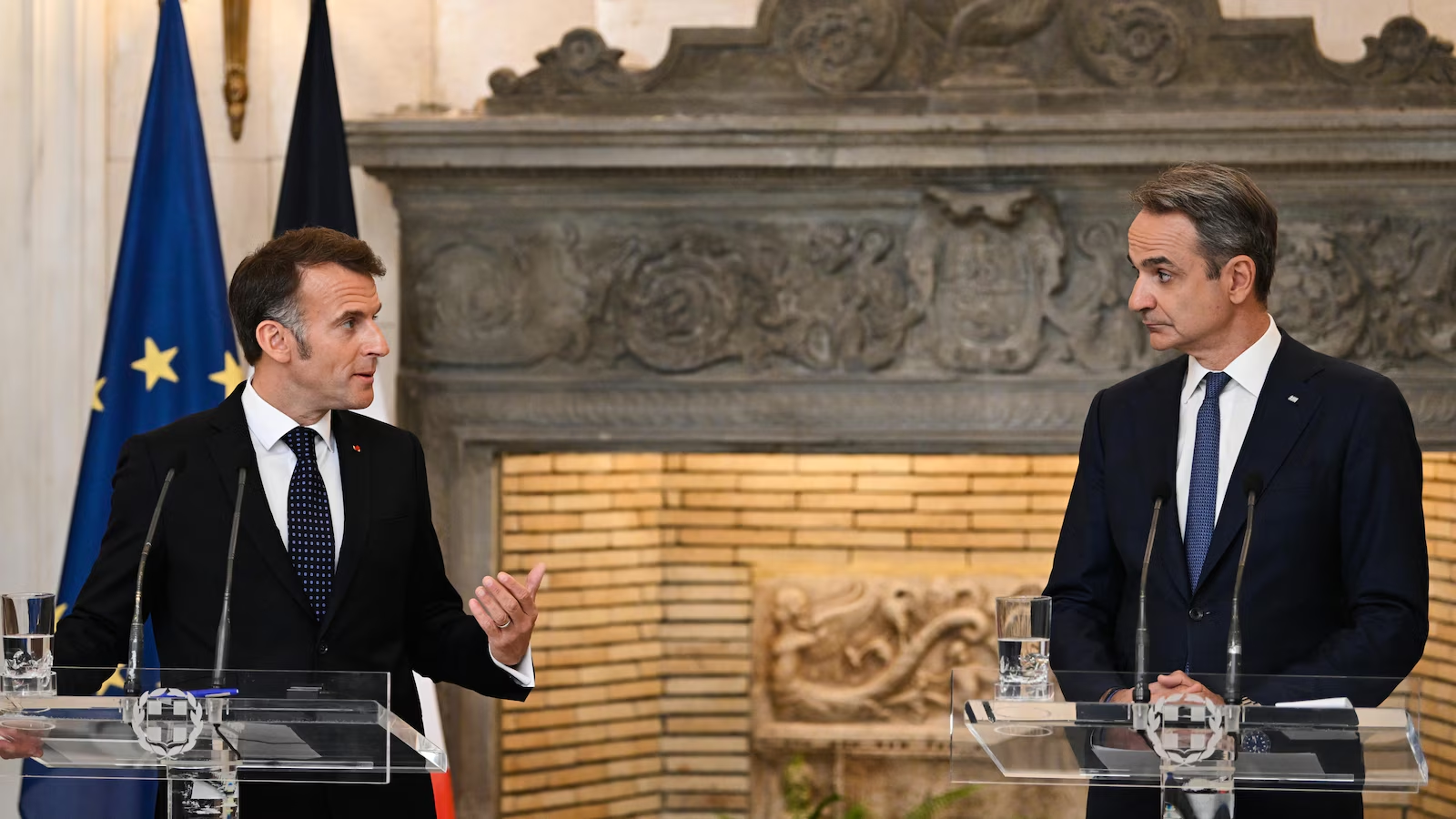
Athens, Greece — The French president said on Saturday that an ongoing effort by the EU to boost its defensive capabilities is not intended to create an alternative to the NATO alliance but to respond to a long-standing US call for the continent to take responsibility for its own security.
Emmanuel Macron said Europe should not work to weaken NATO, which binds the continent with its US ally. Instead, Europeans are now moving to meet Washington’s demands over the past decade, “sometimes well, sometimes less well”, to take care of their own security.
“The lesson we must take is that we must no longer be dependent,” Macron said after talks with Greek Prime Minister Kyriakos Mitsotakis. “We Europeans must strengthen this European pillar of NATO, we must strengthen this Europe of defense – not against anyone, not as a substitute for anything.”
Mitsotakis echoed the French president, saying the US should be pleased that the EU is taking its self-reliance seriously and investing more in its defence, calling US demands for more spending “reasonable”.
After traveling to Cyprus for an informal visit EU leaders summitMacron visited the Greek capital to renew the 2021 defense partnership between France and Greece, which includes a mutual assistance clause in case of an armed attack against either.
“This mutual assurance and assistance clause is inviolable, and it is not a subject of debate between us,” Macron said. “So there is no question mark, no doubt – and all our potential, or actual, enemies should be very clear about that.”
The 3 billion euro deal included the purchase of 24 Rafale fighter jets and four state-of-the-art frigates, including Kimon, which Macron and Mitsotakis visited on Saturday.
Greece, which has long had tense relations with its eastern neighbor Turkey, has been improving its military capabilities, and most of its defense purchases have come from France. Among them is the French MICA anti-air-missile system which can be used by aircraft, land forces and warships.
The two leaders hailed the agreement as an example for other EU partners to enhance and boost the competitiveness of the 27-member bloc. Mitsotakis encouraged EU leaders to abandon the “national egotism” that draws a protective curtain over their domestic industry and move ahead with more mergers to produce economies of scale.
Macron underlined the need for European industry to innovate and win back consumers with better, more desirable products that will finance the EU’s defense goals.
“We all Europeans – Franco-Greek relations are a prime example – need to buy more European products, produce more European goods and innovate more within Europe,” he said.
Both the leaders mentioned Article 42.7 The EU’s own mutual defense clause, What Macron said were “not just empty words.” The French president signaled the two countries’ readiness to assist fellow EU member Cyprus by sending a warship there following a drone attack on a British base on the island nation during the Iran war in early March.
The French president warned against creating panic by talking about fuel shortages as a result closing the strait of hormuz From where almost one-fifth of the world’s oil and gas passes. He said fuel supplies remained “under control” and he did not anticipate any shortages.
He said Europe was focused on helping reopen the Strait of Hormuz, although he acknowledged it would take some time for the situation to return to normal.
Mitsotakis said Greece, as a global shipping power, wants any diplomatic solution to include a “non-negotiable” clause for complete and unimpeded freedom of navigation through the strait without charging tolls from ships, as was the case before the start of the Iran war.
