

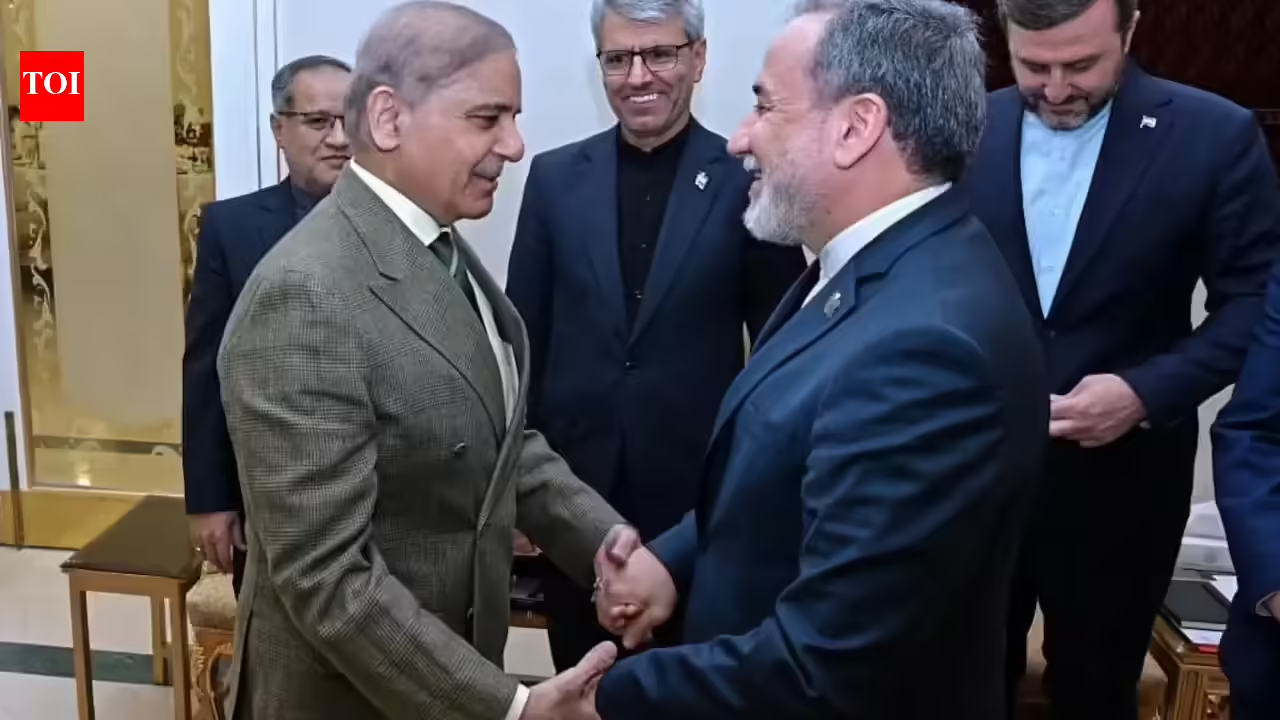
In a high diplomatic effort, Pakistan Prime Minister Shehbaz Sharif held talks with Iranian Foreign Minister Abbas Araghchi in Islamabad on Saturday.Araghchi arrived in Islamabad carrying Tehran’s formal response to the US proposals, which discussed the ‘regional situation’ and ceasefire dynamics. The meeting saw the presence of Pakistan’s top civilian and military leadership, including Army Chief Asim Munir and Deputy Prime Minister Ishaq Dar.Appreciating the visit and describing it as ‘fruitful’, Araghchi wrote in a post on X, “Very useful visit to Pakistan, whose good offices and brotherly efforts to bring back peace to our region we greatly value. Shared Iran’s position regarding a practical framework to permanently end the war on Iran.” “It remains to be seen whether the US is really serious about diplomacy.”
No US-Iran meeting despite mediation efforts
Despite Pakistan’s attempts to mediate talks, no direct or indirect talks took place between Iran and the United States. Tehran made it clear it would not meet the visiting US delegation, which included Middle East envoy Steve Witkoff and adviser Jared Kushner.Instead, Iran stated its position through Pakistani mediators and reiterated that any talks would remain indirect. A key condition placed by Tehran was the removal of the US naval blockade of Iranian ports and the strategically important Strait of Hormuz.Officials and analysts have described the prospects of talks as ‘fading fast’ as Islamabad is unable to bring the two sides to the negotiating table despite hosting the event simultaneously, Dawn reported. Ahead of the anticipated talks, Islamabad was placed under an unprecedented security lockdown. Major roads were sealed and red zones cordoned off, severely disrupting daily life.However, the elaborate security arrangement failed to yield any diplomatic success. Expected high-level talks between Washington and Tehran failed to materialize, exposing Pakistan’s mediation efforts.
Iran fulfilled the demands, left Islamabad
After several meetings with the Pakistani leadership, Araghchi left Islamabad the same day, effectively ending hopes of a second round of talks in the city.According to reports, the Iranian delegation handed over ‘an official list of demands’ to Pakistan for communication to the US and its allies. These included conditions relating to cessation of hostilities and lifting of sanctions and blockades.Araghchi later said that Iran had conveyed its ‘principled position’ regarding a ceasefire and an end to what he described as an ‘imposed war’.He is now scheduled to visit Oman and Russia, signaling a shift in Tehran’s diplomatic focus away from Pakistan.
Trump canceled the visit of American delegation
In a major development, US President Donald Trump canceled plans to visit US envoys to Pakistan citing lack of meaningful engagement.“I told my people… you’re not flying 18 hours to get there… we’ve got all the cards. They can call us any time they want,” Trump said.The decision came after Iran refused to engage with the US delegation, making the trip diplomatically futile.In a separate post on Truth Social, Trump wrote: “I have canceled the trip of my representatives to Islamabad, Pakistan, to meet with the Iranians. The trip wasted too much time, too much work! Furthermore, there is tremendous infighting and confusion within their “leadership”. No one, including them, knows who is in charge. Furthermore, we hold all the cards, they hold none! If they want to talk, all they have to do is call!!!”
Collapse of talks reflects earlier deadlock
The collapse of this round of diplomacy is reminiscent of the first round of talks held earlier in Islamabad, which lasted for over 20 hours but failed to achieve any breakthrough.Despite continued indirect exchanges through Pakistan, key disagreements, including sanctions relief and the naval blockade, remain unresolved.
Pakistan’s mediation efforts failed
While Pakistan attempted to present itself as a key mediator, the outcome exposed its limited influence over real stakeholders.Even though Sharif described his meeting with the Iranian foreign minister as a ‘warm and cordial exchange’, the inability to facilitate US-Iran ties highlighted Islamabad’s marginal role in the broader geopolitical standoff.With Iran shifting its diplomatic reach to Oman and Russia and the US withdrawing from immediate engagement, Pakistan’s ambitions of hosting a decisive breakthrough in the conflict appear to be waning.
