

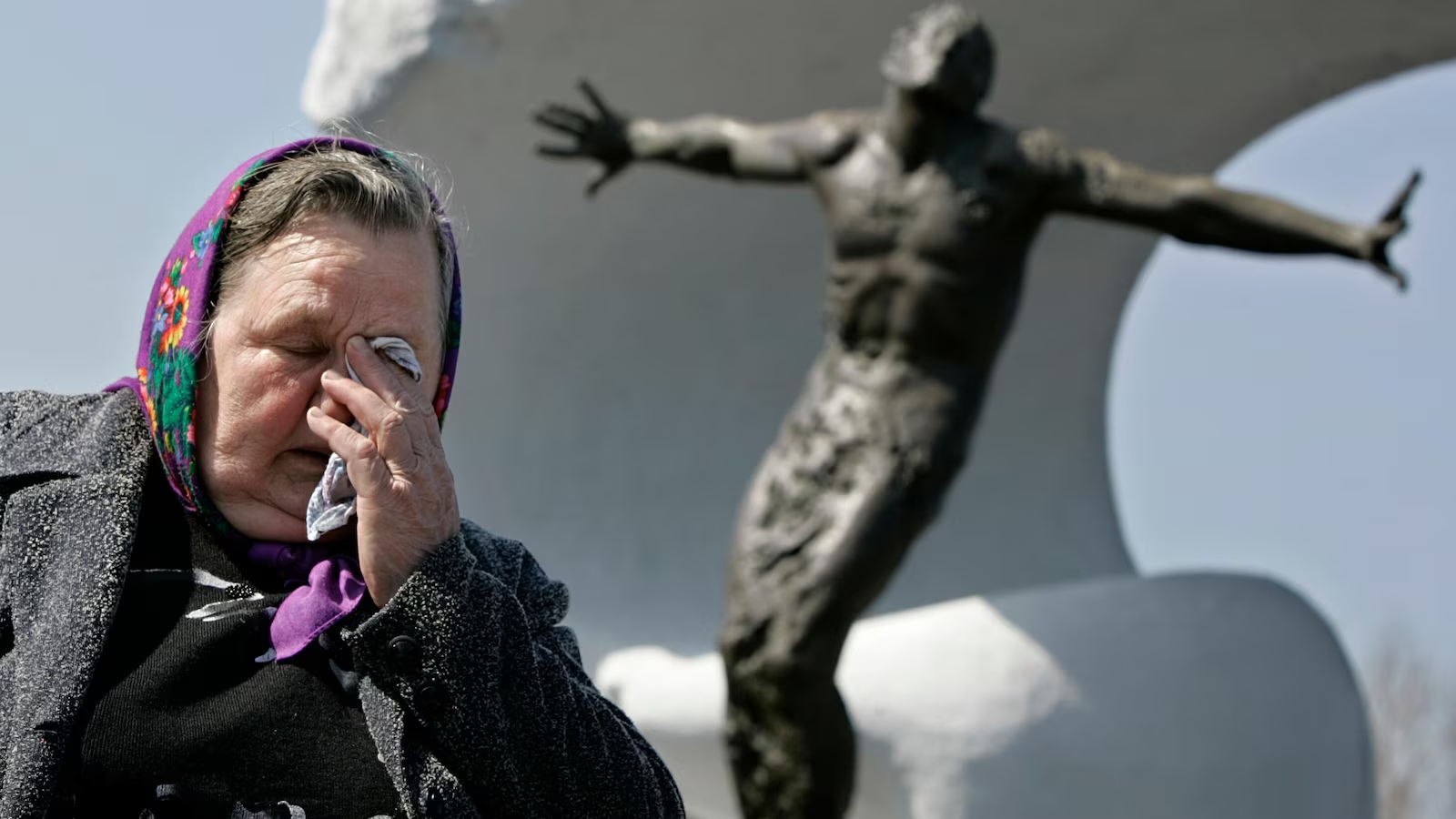
Editor’s Note: In the weeks following April 26, 1986, but explosion and fire Chernobyl Nuclear Power Plant, Apart from brief government announcements, it was difficult to obtain any information about the scope of the disaster. Soviet Union.
Acting on a telephone tip, then-Associated Press Moscow correspondent Carol J. Williams and another Western journalist went to a cemetery in the northwestern part of the capital, where they found the simple graves of some of the victims. Journalists were briefly detained by police at the cemetery and accused of trespassing, but were able to watch workers digging graves for the victims.
As part of its coverage of the 40th anniversary of the Chernobyl disaster, the AP is republishing Williams’ story from June 24, 1986:
___
Carroll J. by williams
The 23 fresh graves located just inside the main entrance of the Mitinskoye cemetery are identical. There is no indication to identify the dead as victims of the Chernobyl nuclear disaster.
Each grave has flowers and a concrete border on a mound of soil. Artisans are making identical marble tombs. The eerie voids indicate that more deaths are likely.
Six gravesites bear the names of firefighters who the Soviet press identified as victims of radiation at Chernobyl, and a cemetery official said Tuesday that the plot was for those who died as a result of the nuclear accident.
At a cemetery on the northwestern outskirts of Moscow, workers toiled in a steady drizzle to install marble headstones bearing the victims’ names, dates of birth and the day of their deaths in gold-painted inscriptions. All dates of deaths were after the April 26 accident at the Chernobyl nuclear power plant.
Some graves had temporary, hand-printed signs with names and dates.
A cemetery official refused to give his name to two Western journalists visiting Mitinskoye and said a monument would eventually be built to those who died.
“They will all be brought here,” the official said, declining to say how many deaths have resulted from the Chernobyl accident.
The last official report on casualties from the Ukrainian power station was given on 5 June, when Soviet officials said that 26 people were killed, two of whom died during the initial fire and explosion.
One of the victims, power plant worker Valery Khodemchuk, will be buried at the ruined No. 4 reactor because his body was never recovered, the Communist Party daily Pravda reported on May 23.
The newspaper reported that another man, Vladimir Shushenok, was killed instantly and buried in a village near the power station.
Dr. Robert Gale, an American bone marrow specialist who helped Soviet doctors treat people suffering from radiation sickness, said there would probably be more deaths among the 55 or 60 people still in critical condition.
People suffering from radiation sickness were brought to a hospital in Moscow and the deaths probably occurred there.
More deaths are feared at the Mitinskoye cemetery. Fifteen graves form a row behind the Chernobyl plot. There is a second row of eight graves, with three graves on the right and five graves on the left, which would contain seven graves.
Gold stars are engraved on the headstones of firefighters Viktor Kibenok, Vladimir Pravik, Nikolai Vashchuk, Vasily Ignatenko, Vladimir Tishchura and Nikolai Titenok and their ranks in the military fire brigade, who were the first to respond to the accident.
Cemetery personnel declined to say how long ago the burials had occurred, or whether the rituals were separate for each victim or conducted together for the group.
At each grave, bouquets of red and pink flowers left by relatives were carefully placed on the soil.
An elderly woman visiting another area of the cemetery commented, “It’s so sad, they were so young.” “They were brought here for treatment in hospitals, but they could not be sent home for burial.”
A danger zone has been created around an area of the nuclear power station and all residents of the area have been evacuated.
Cemetery officials confiscated both the journalists’ notes and the film, saying that the journalists needed permission to visit the cemetery.
A policeman posted at the cemetery said it is prohibited for everyone except family members and special permission from local authorities is required to copy names on headstones or take photographs.
Authorities later escorted the two journalists to the graves on the condition that they not make notes or take photographs.
