

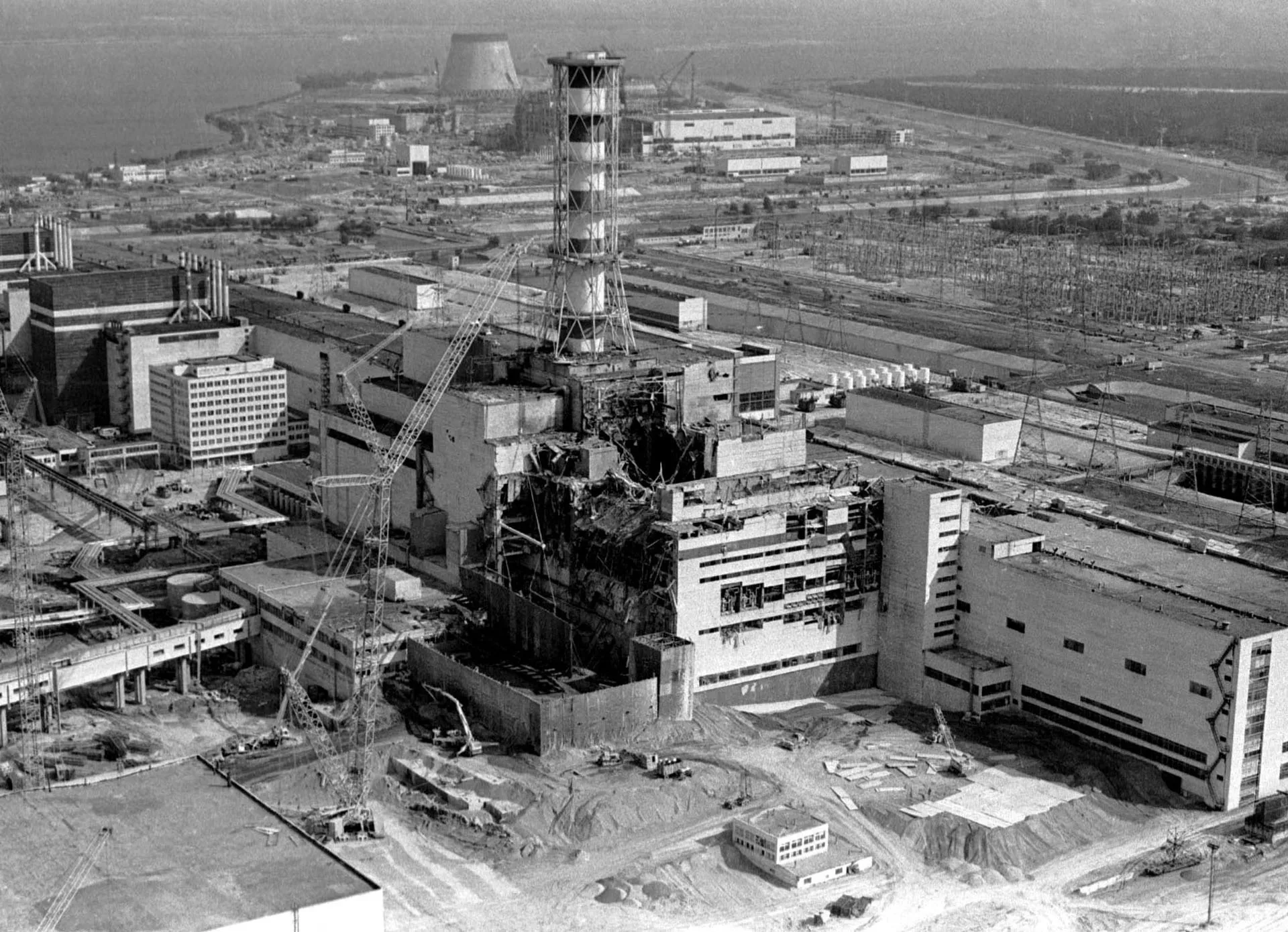
Forty years ago, a reactor at the Chernobyl nuclear power plant in the then-Soviet Republic of Ukraine exploded. At least 30 people were killed soon afterwards. The explosion resulted in the release of large amounts of radioactive particles which spread through clouds over Ukraine, Belarus and Russia and then to other parts of Europe.
It is estimated that thousands of people have died since then from deadly diseases, including cancer, caused by radioactive exposure. The frequency of birth defects increased between 200 and 250 percent in the affected areas. Hundreds of thousands of people were forced to leave their homes.
Chernobyl is not history. It is a lived reality of radioactive contaminated land that cannot be farmed, homes that cannot be returned, lasting impacts on the health of thousands of people, and costs that continue to grow from generation to generation.
The lesson is clear. When nuclear systems fail, the consequences are long-lasting, widespread, and exceptionally difficult to manage. The damage doesn’t end when the headlines fade. Today that lesson is no longer limited to accidents only. It is being escalated by acts of war.
On the 40th anniversary of the Chernobyl disaster, the world faces another threat of nuclear disaster as nuclear sites in Ukraine and Iran are threatened.
In Ukraine, there have been frequent military activities near nuclear sites, such as attacks on the electricity grid, illegal occupation of the Zaporizhia Nuclear Power Plant and, most recently, damage to the new secure confinement structure at Chernobyl due to a Russian drone strike.
In Iran, several nuclear sites have been repeatedly bombed. The International Atomic Energy Agency also confirmed that the US-Israeli strikes came within 75 meters of the Bushehr nuclear power plant.
At the same time, the war on Iran has exposed the fragility of the global fossil fuel system, as did the Russian invasion of Ukraine in 2022. Oil and gas prices have soared due to disruptions in key global trade routes such as the Strait of Hormuz, increasing the cost of transportation, food and energy for millions of families around the world who are already struggling with long-term survival issues. No one should be forced to pay higher bills because of a war they had nothing to do with, yet that’s how fossil fuel markets operate.
These are not separate crises. They point to the same structural problem.
Both nuclear and fossil fuel systems concentrate risk in large, centralized infrastructures. In a world defined by geopolitical tensions, extreme weather and economic instability, risk is almost impossible to contain. Nuclear plants and centralized power systems are targets of war. Oil and gas supplies may be disrupted at strategic chokepoints. In both cases, the consequences are global.
And in both cases, humanity has to pay the price. But there is an option.
In war and peace, decentralized renewable energy with storage offers a path to greater flexibility, sustainability, independence, and true energy security. It reduces the risk of geopolitical shocks, limits the ability to weaponize energy systems, and strengthens the ability of communities to respond to crises.
Since the beginning of Russia’s full-scale invasion, decentralized solar and battery systems have helped keep hospitals, schools, and critical services running across Ukraine during repeated attacks on the energy grid. These systems are faster to deploy, easier to repair, and harder to disable. When one part fails, the others continue to function.
Renewable energy does not depend on fuel that must pass through conflicting shipping lanes or pipelines. It cannot be blocked or weaponized for political gain. No state or corporation has control over the sun and wind. They do not make windfall profits from the conflict, nor do they expose households to sudden price shocks induced by global events.
Importantly, if renewable energy installation is targeted, it does not result in an environmental and humanitarian disaster.
As we mark the 40th anniversary of the Chernobyl disaster, it is important to consider its lasting radioactive legacy, but also ways to avoid its recurrence. In today’s increasingly unstable world, the dangers of centralized energy systems have increased manifold. Additionally, the option has moved from theoretical to proven. The question is whether we choose to build systems that increase risks or commit to investing in systems that reduce them.
The views expressed in this article are those of the authors and do not necessarily reflect the editorial stance of Al Jazeera.
