

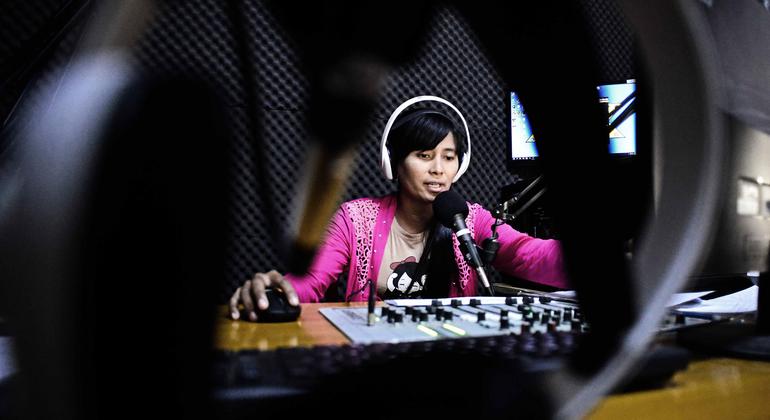
report By un women And the partners highlight how online violence targeting women in public life is becoming more technologically sophisticated, aggressive and harmful in the artificial intelligence (AI) age.
“AI is making abuse easier and more harmful, and it is fueling the erosion of hard-won rights In a context marked by democratic retreat and networked misogyny,” Said Kalliop Mingerou, who leads the agency’s team working to end violence against women.
intimate photos leaked
Key Points: Effects, Manifestations and Prevention of Online Violence in the AI Age It is based on a 2025 survey in which 641 participants from 119 countries responded.
The findings revealed that 12 percent of female human rights defenders, activists, journalists and other media workers have experienced the sharing of personal images, including intimate or sexual material, without consent.
Six percent have been victims of “deepfakes” – AI-generated images that look real – while one in three have received unwanted sexual advances online.
Some? 41 percent of respondents said they self-censor on social media To avoid misuse, while 19 percent self-censor in their professional work For this reason.
‘Forced to remain silent’
The picture is even more worrying for women journalists and media workers as harassment has forced 45 per cent to self-censor on social media – an increase of 50 per cent compared to 2020. Furthermore, about 22 percent have self-censored their work.
An environmental journalist from India said, “When online right-wing groups label me a ‘traitor’ and thousands of WhatsApp forwards spread these false accusations, it becomes terrifying to live in my own country.”
“We have started self-censoring by moving away from investigative reporting. This is because local right-wing activists, inspired by these posts, confronted my relatives and spoke rudely to them. It is not easy to live freely; we are forced to remain silent”
There were also female journalists and media persons People are twice as likely to report incidents of online violence to police compared to 2020 – 22 percent versus 11 percent.
They are now more likely to take legal action against perpetrators, enablers (such as tech companies) or their employers – rising from eight percent in 2020 to 14 percent in 2025.
effects on mental health
The report documents the serious impact online violence has on women’s mental health.
About a quarter The number of women journalists and media persons has been 24.7 percent. Diagnosed or treated for anxiety or depression.
About 13 percent have been diagnosed with PTSD (post-traumatic stress disorder).
One respondent – a journalist and community organizer – shared how these mental health impacts are linked to self-censorship, discussions around the democratic process, and financial hardship.
“When we talk loudly about democracy, there is no ‘spirit’ of democracy – just a ‘display of madness,'” he told the researchers.
“Unable to deal with the relentless pressure, I resigned from my job in December 2023. I am now sitting at home and concentrating on restoring my mental health”
The situation has caused serious financial problems as she is “currently subsisting on rice porridge, which is a direct result of being kept quiet and out of work.”
lack of legislation
Despite the crisis, significant gaps remain in legal protections against online violence world bank data It turns out that Less than 40 percent of countries have laws that protect women from cyber harassment or cyberstalking..
Ms Mingerou stressed that “our responsibility is to ensure that systems, laws and platforms respond as urgently as this crisis demands.”
This report is the second in a series based on a global survey.
The next edition will address a broader range of issues related to online violence against women in public-facing roles, including analysis of the characteristics and behaviors of perpetrators and the role of “Big Tech” companies.
For more on this and other important updates on press freedom, and the increase in the total number of journalists coming under criticism around the world, visit our UN live coverage on Monday to mark the International Day of Press Freedom.
