

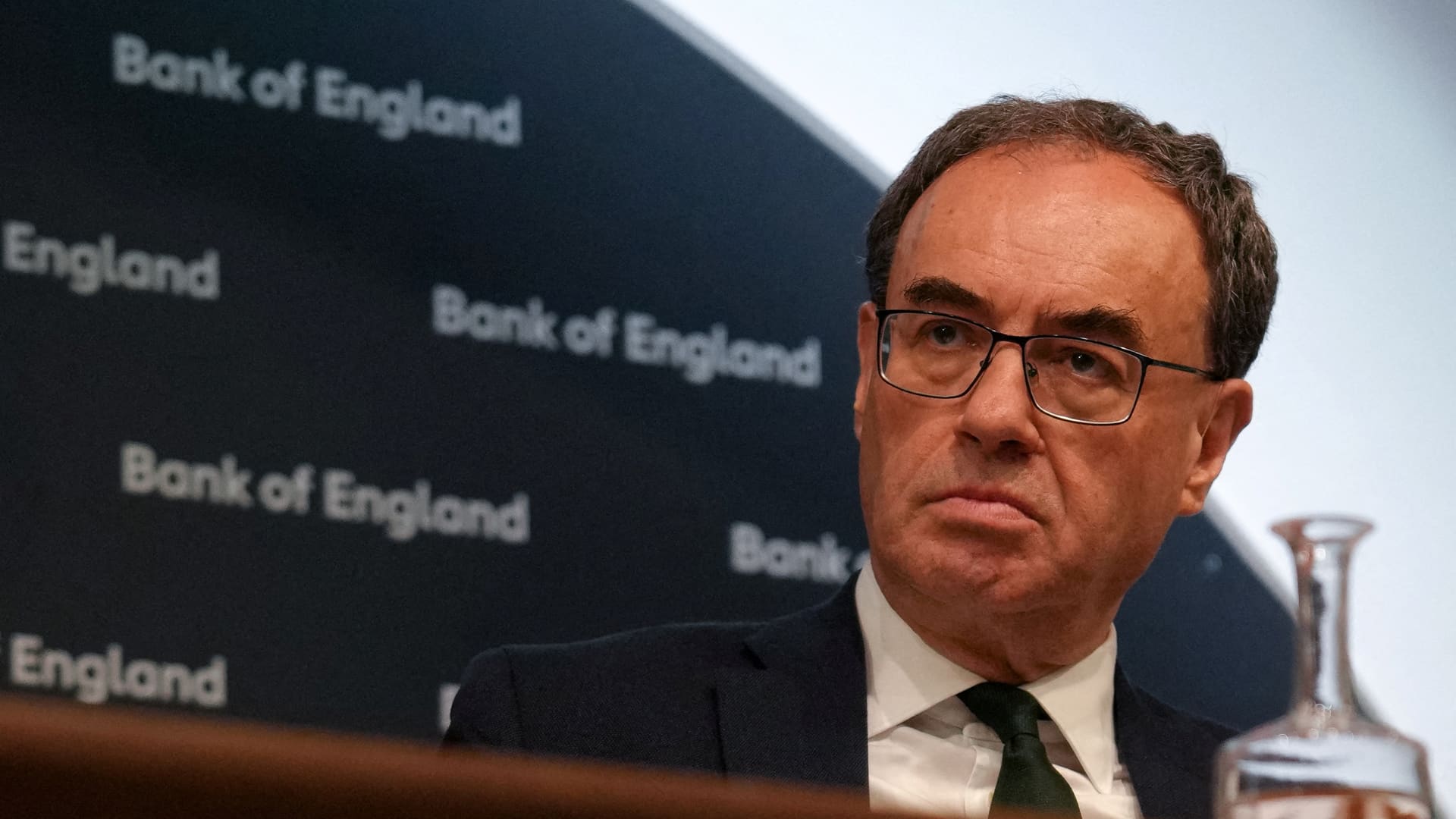
Bank of England Governor Andrew Bailey attends the central bank’s monetary policy report press conference at the Bank of England in the City of London on May 8, 2025.
Carlos Jasso AFP | getty images
Bank of England policymakers will have to grapple with the “difficult combination of economic impacts” as the UK faces the consequences of an energy price shock, according to Governor Andrew Bailey.
The UK central bank chief told CNBC in an interview on Thursday that the outlook for energy prices is “very uncertain” but that such a “long-term impact” would likely lead to price increases in the rest of the economy and hit inflation more deeply.
“This is what we would call a negative supply shock. In other words, unfortunately, the increase in energy product prices… is also having a negative impact on activity in the economy,” he said. “It’s a tough combination.”
It came as the bank’s monetary policy committee voted in an 8-1 split to keep the benchmark rate, known as the “Bank Rate”, at 3.75%, with known hawk BOE chief economist Hugh Pill being the sole dissenting vote for a 25 basis-point increase.
Bailey made sharp remarks, warning that a prolonged energy price crisis could force the BOE to take action on monetary policy.
“If we see this coming through – becoming embedded and persistent – then we have to respond, because that’s our job and that’s how we get inflation back on target,” he said.
Bailey told CNBC that reaching the committee’s 2% inflation target is “critically important”, and the bank will monitor how energy prices are impacting the economy, labor market and employment data.
March’s inflation print showed the consumer price index rose to 3.3% from 3% the previous month, as fuel prices pushed the overall basket higher.
The BOE said on Thursday that inflation “is likely to be higher later this year as the impact of higher energy prices passes” and that it is wary of second-round effects – such as workers demanding higher wages in the face of higher living costs, potentially fueling more inflation – in the economy.
Before the war, interest rates were expected to be cut in 2026, but those forecasts have since been reversed, with expectations that the BOE could raise rates later this year.
— CNBC’s Holly Elliott also contributed to this report.
