

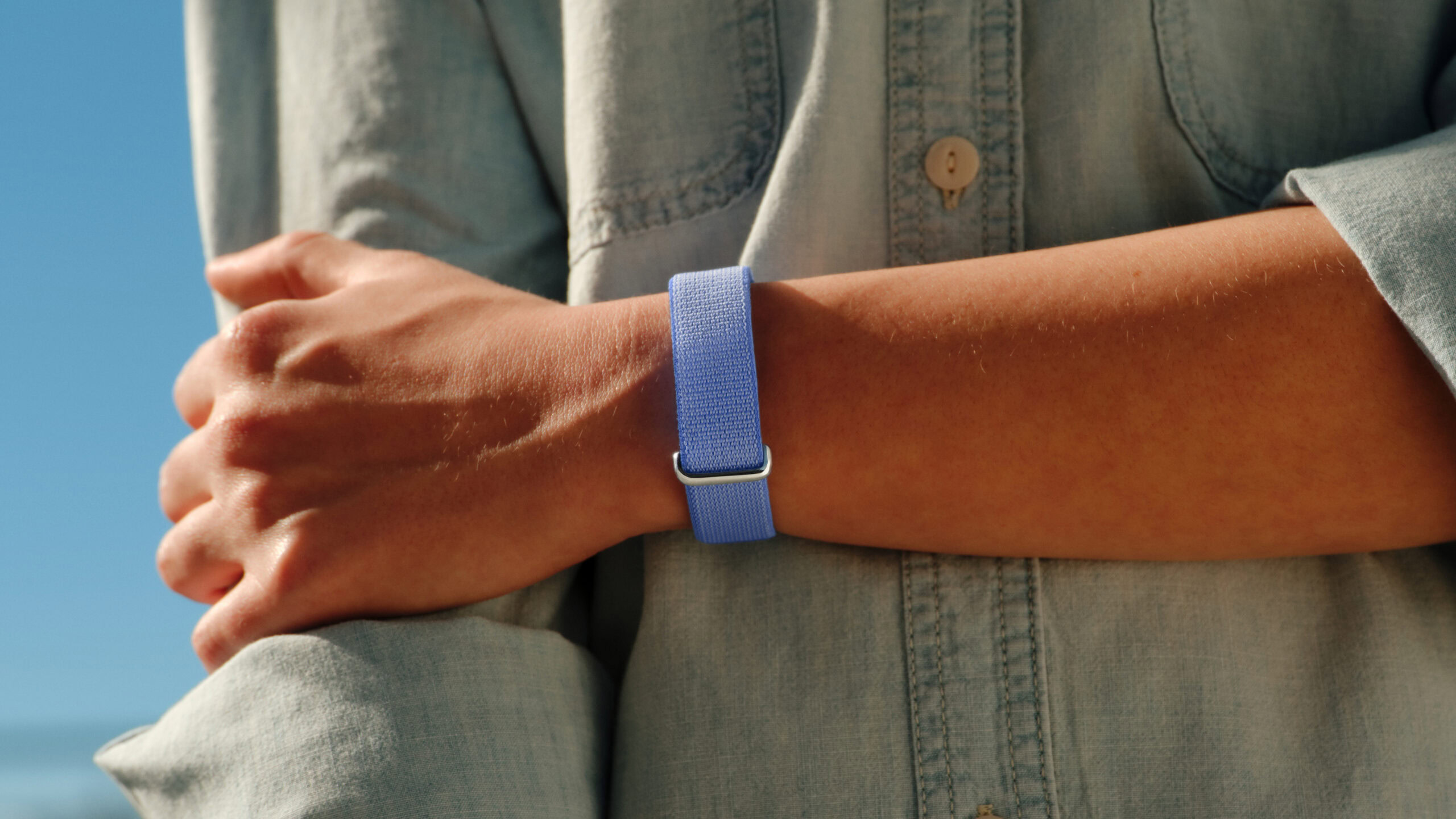
It finally happened! After begging for their return for years, screenless fitness trackers are back, at least in the form of Google’s new Fitbit Air. I’ll admit, I didn’t expect Google to respond to my pleas, but given that Fitbit started life with simple, intuitive trackers like the 2013 Flex, it seems fitting that we’ve come full circle with the 2026 Air.
As mentioned, the Fitbit Air’s module-and-strap design means it ditches the display in favor of an indicator LED. However, it is still a well-equipped fitness tracker with sleep tracking, daily activity monitoring, heart rate variability recording, and more.
But despite its surprisingly long feature list for a device smaller than the smallest traditional tracker, one key omission ruins the entire device for me – the Fitbit Air lacks built-in GPS.
Would you consider purchasing a fitness tracker without GPS functionality?
3 votes
Google saw the benefits of a screenless fitness tracker and created one
Fitness trackers with displays have become the norm, and given their status as watch replacements and smartphone extensions, it makes total sense. However, removing the screen offers several benefits to those primarily concerned with background fitness monitoring.
Aesthetically, it has a clean design. The Fitbit Air looks like a simple but sophisticated strap that straps onto one’s arm, allowing one to wear a traditional analog watch with it. The device, especially in Obsidian, looks far more professional than candy-colored running watches. But hey, if you want something brighter, you can buy another strap and just put the module in there.
Screenless fitness trackers offer a myriad of benefits, from better battery life to more focus on tracking health data.
Then there are practical benefits to this design, too. No screen means less battery consumption – a big positive for a device that’s supposed to be worn as much as possible. According to Google, the Air can last up to a week between charges, and that’s on a device with a much lower volume than its other trackers.
There’s also a distinct lack of temptation to fiddle with the screen, whether it’s selecting a watch face or checking notifications. A screen-free fitness tracker focused on one thing: monitoring your well-being. That’s it. Everything else you need can be done on your phone.
And, in theory, a minimalist device should let you leave your bulky phone at home when going for a brisk walk. Unfortunately, that’s not quite the case with the Fitbit Air, and it’s all due to the lack of location features.
How one small omission goes against the purpose of the Fitbit Air

GPS tracking may not seem like a big deal, but it is essential for outdoor sports lovers. Whether it’s cycling, hiking, running or walking, a built-in GPS or similar location system enables a device to more accurately track distance traveled, which directly impacts downstream fitness calculations.
Without GPS, Fitbit devices calculate distance traveled a simple formula. This multiplies your stride length by the number of steps counted. Since stride length can vary with speed and terrain, and the number of strides can be cheated by swinging your arms, this final calculation is nothing more than an estimate. When location data is available through GPS and other location systems, Fitbit relies on satellites to more accurately track your activities.
Putting a phone in a pocket to track location goes against the original idea of the Fitbit Air: a discreet, lightweight, portable tracker.
To overcome this, devices without GPS typically rely on their companion smartphone for positional data. This is how the Fitbit Air operates. This system, called Assisted GPS, runs contrary to the original idea of the Fitbit Air: a device that aims to be discreet, lightweight, and easily portable. Now, if I want my Fitbit Air to track a run, I have to have my phone with me somewhere. Hiking or cycling? Same problem. What was supposed to be a thin band that tracks all my fitness details has now become a thin band with a bulky smartphone.

Kaitlyn Cimino/Android Authority
It’s probably wrong to blame Google for this omission, as none of WHOOP’s screenless fitness bands even include GPS. And considering that its straps are far larger and wider than the Fitbit Air’s, WHOOP really has no practical excuse.
It is also important to note that GPS is not necessary for every user. People who prefer stationary cycling at the gym to cycling in traffic won’t need distance tracking. Under these circumstances, the Fitbit Air’s inability to track location isn’t that big of a shock. However, should you ever want to go from a treadmill to the track, this missing feature will become an issue.
Google had a chance to push WHOOP further and cater to a much broader user group, but it missed it.

Kaitlyn Cimino/Android Authority
fitbit charge 6
Then what about screenless fitness trackers that pack GPS? Well, that’s the big problem here – they don’t exist. You either settle for a bulky watch or fitness tracker with GPS smarts, or a screenless tracker that estimates your distance.
Ironically, the device that comes closest to this comes from Google itself. Fitbit Charge 6 is now listed frequently minimum $119 newWhich makes this full-fledged fitness tracker an attractive, better-equipped alternative to the $99 Fitbit Air. But, if I chose it, I would have to accept the presence of a screen, its worse battery life, and its much heavier construction. Then there’s the fact that it’s almost three years old, and given Google’s behavior towards older Fitbit devices, I’m not sure how long it will be supported.
This isn’t as obvious a choice as you might think.
The Fitbit Charge 6, with its GPS smarts, suddenly looks like a great deal again.
I don’t believe Google is doing its screenless fitness tracker any justice. It seems the company is positioning the Air as a companion to the Pixel Watch rather than a capable standalone product.
The new Google Health app allows the Pixel Watch and Fitbit Air to connect together, giving the user the option to choose the preferred data source for each metric. Presumably, this will allow Pixel Watch users to switch to the Air for stop-gap tracking during charging, and vice versa during outdoor workouts. It’s certainly a useful feature, but the Air’s lack of GPS makes it a poor consolation. Not every Air buyer will design having a Pixel Watch, or will already have one.
Should you buy the Fitbit Air?

GPS isn’t just a luxury; It is an integral part of a fitness-tracking machine that all users can benefit from.
Google really had a chance to make the best screenless fitness tracker ever, and it wasted it by neglecting a vital feature that runners, cyclists, and other outdoor trainers rely on. Even my mom wants her fitness band to accurately track the distance to our local library, and she often leaves her phone at home. GPS isn’t just a luxury; It’s an integral part of a fitness-tracking machine that increases accuracy and, by extension, every fitness-tracking metric that depends on distance covered.
Are you planning to buy Fitbit Air?
0 votes
Look, I can criticize Google for not making the most of this opportunity, but I can’t be too unhappy with Air’s existence. This is Google’s first attempt at a screenless fitness tracker configuration, and I really think Google did a good job on paper. I hope the company continues to refine the device line. And if there’s scope for a Fitbit Air Pro with a bigger battery and built-in GPS, I’ll be the first to slap my wallet on the counter. Until then, I can’t recommend the Fitbit Air to people who want something other than a leading-edge fitness tracker or a Pixel watch.
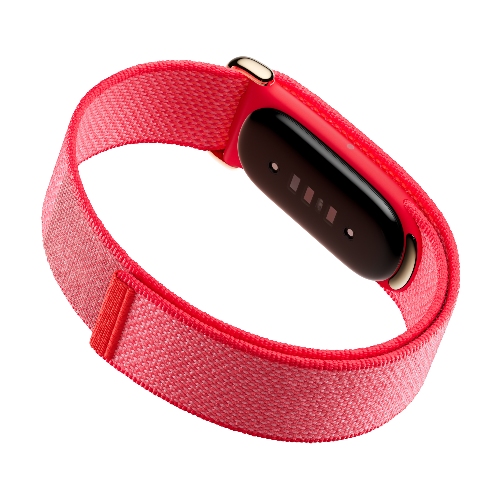
Screen-free fitness tracker • Google Health Coach • Affordable price
Google Fitbit Air is the company’s first screenless fitness band.
Google Fitbit Air combines Fitbit’s reliable health tracking with Google’s smart insights in one app. It works with both Android and iPhone and brings fitness, sleep, medical records, food and hydration tracking into a single, easy-to-use health hub.
Don’t want to miss the best of Android Authority?


Thank you for being a part of our community. Please read our comment policy before posting.
