

A federal judge ruled Wednesday that the Trump administration probably violated the law by deporting a Colombian woman to the Democratic Republic of Congo in April, even though that country refused to take her.
The judge ordered the administration to return the woman, Adriana Maria Queiroz Zapata, 55, to the United States, a rare example of a judge doing so amid the administration’s deportation campaign.
The decision had not yet been listed in a public document on Wednesday night, but it was shared with The New York Times by Ms. Zapata’s lawyer.
Both U.S. Immigration and Customs Enforcement and the State Department are under pressure from the White House to find places to deport migrants who the government normally cannot send to their home countries because a judge has ruled they would face persecution and torture there.
As a solution, the administration is cutting deals with countries that are willing to accept these immigrants. Court records show Congo had agreed to accept some deportees, but refused to accept Ms. Zapata on medical grounds.
According to her lawyer, Lauren O’Neill, Ms. Zapata has diabetes, hyperlipidemia, and hypothyroidism. Because of those conditions, Congo’s interior ministry told ICE in a letter that it could not accept him because he could not provide adequate medical care, according to the letter, which was obtained by The Times.
Judge Richard J. “The government deported him to the DRC, therefore, sending plaintiff to the DRC was probably illegal,” Lyons wrote.
Federal law allows the government to deport people to countries other than their home country. But that law requires that the new country agree to accept them.
The Department of Homeland Security did not immediately respond to a request for comment. A message seeking comment from the Congolese embassy in Washington was not immediately returned.
The case is similar to that of Kilmer Armando Abrego Garcia, a Maryland man who was wrongfully deported to El Salvador last year. The courts ordered the administration to bring him back to the United States. Judge Lyons cited that case in his three-page decision.
Ms. Zapata fled from her former partner, a man tied to the Colombian National Police who, she said, raped her and beat her brutally, she said in an interview with The New York Times last week from the Congolese hotel where she was staying.
In 2025, after the US immigration court considered the documentary evidence and his testimony, a judge ruled that the government could not deport him back to his home country because he would face torture.
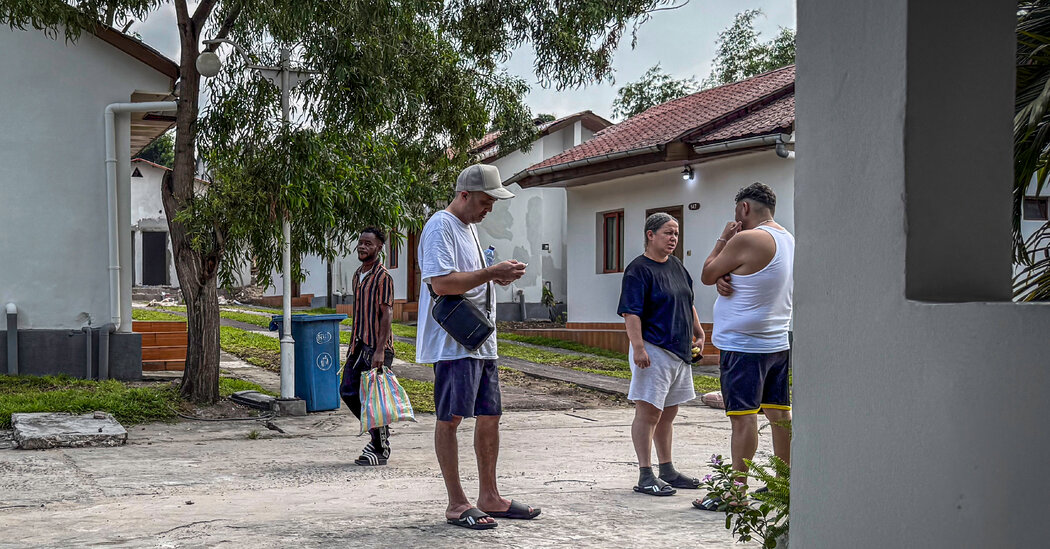
Ms Zapata, who is now in a hotel just outside the Congolese capital Kinshasa with 14 other migrants deported by the Trump administration, said she was fearful of what would happen next.
“I stay in my room 24 hours a day. I’m scared all the time,” she said in an interview before the court’s decision.
Judge Leon ordered the administration to explain by Friday evening what steps it has taken to bring Ms. Zapata back to the United States.
The judge, who was nominated to the federal bench by President George W. Bush, separately drew the ire of Mr. Trump after ordering him to halt construction of the new White House ballroom last month.
Hamed Aliaziz And eileen sullivan Contributed to the reporting.
