

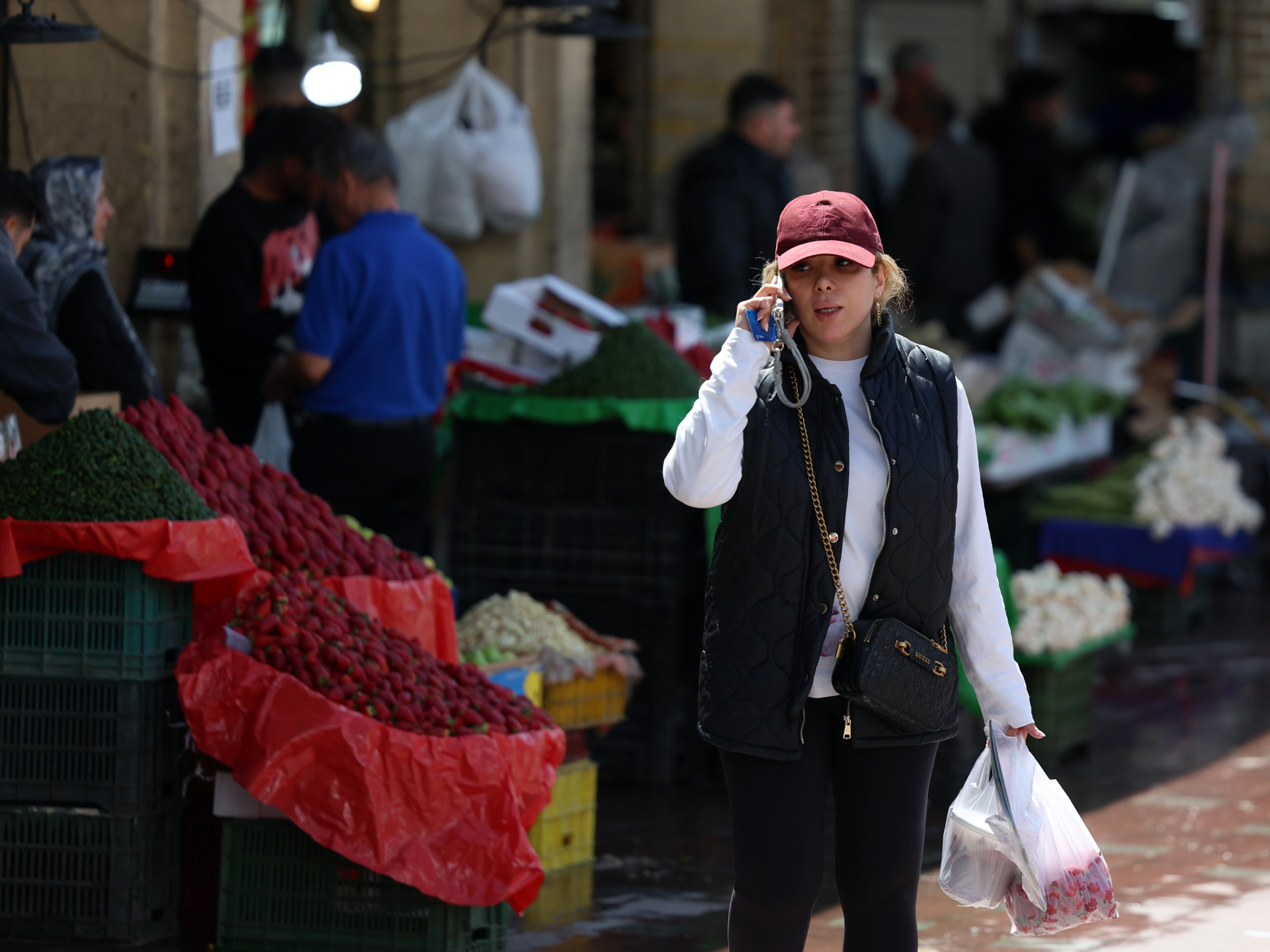
Tehran, Iran – Iranians are dealing with the consequences of the US-Israeli war on their country for the fourth week in a row, even as they grapple with a collapsing economy and the country’s longest internet shutdown ever.
Much of the country is closed this week for the Nowruz holidays to celebrate the Persian New Year.
Recommended Stories
list of 3 itemsend of list
But there have been several unexpected shutdowns in Iran this year, including the 12-day war with Israel and the US in June and bloody nationwide protests in January, as well as the energy crisis due to air pollution.
For many business owners, market activity has decreased significantly over the past year and especially in the lead-up to Nowruz, which has meant a significant reduction in income.
“There was some crackdown in the last few days, but our sales around this time were about one-third of normal levels, which is supposed to be the time of the year when we get the most business,” said a vendor selling textiles and related goods in Tehran’s Grand Bazaar.
“Nobody is sure what will happen next when we open back up after the holidays. The situation has gotten worse over the past few years,” he told Al Jazeera, speaking on condition of anonymity due to security concerns.
The purchasing power of Iranians has been falling steadily for years, and well-paying jobs have become scarce due to a disastrous mix of local corruption and mismanagement, coupled with the “maximum pressure” campaign of sweeping sanctions launched in 2018 during President Donald Trump’s first term in office.
While annual inflation was officially around 70 percent just before the war, the food inflation rate soared to more than 100 percent, signaling more trouble ahead for low-income Iranians. The stock market was in danger due to large capital outflows and experts raised concerns about possible hyperinflation and dollarization in the troubled economy.
The government has said it is cutting spending and will raise the minimum wage for workers by 60 percent in addition to offering modest cash subsidies, but rising costs have proven disastrous, especially since the 12-day war in June. Taxes have also increased significantly this year.
A small grocer in western Tehran said regular stores had access to most goods and commodities since the war began on February 28, but rising prices had put off many customers.
“You may notice that many people check or calculate prices twice when they come to buy things. This is not an uncommon sight these days,” he said.
Some families left Tehran and other major metropolises soon after the war began and have not yet returned, concerned about their own and their loved ones’ safety. Many people are wasting their meager savings and their future has become uncertain.
But there is no sign of respite, at least in the short term, even as Trump suggested on Monday that diplomacy may still have a chance to stop the war, which has also seen the Islamic Revolutionary Guard Corps (IRGC) launch projectiles at regional neighbors and drive up global energy costs.
internet blackout
Inside Iran, the fact that more than 90 million people have been blocked by the state from accessing the global internet for the 25th day is making everything grim for the population left in the dark.
The shutdown not only prevented most Iranians from reaching their voices to the global community during the war and significantly limited the flow of information to state-run outlets, but it has also caused severe psychological and financial suffering to the population.
A young woman who runs a small online business selling jewelery and accessories on Instagram and Telegram said, “This time, there is not even a word about when the internet can be connected again. This is not only humiliating, but it is also forcing businesses to close and causing inflation to rise.”
They said they have had no steady income in months since the country imposed a nearly complete 20-day internet shutdown in January, when thousands of people died in the streets during nationwide anti-regime protests.
Many online shops subsequently decided to either stop advertising or suspend operations altogether so they could help spread the news about the unprecedented protest killings.
property confiscated
Many private businesses were closed or had their online pages suspended by authorities as they expressed solidarity with the slain protesters, even by posting Instagram stories.
The judiciary also froze the assets of several Iranians, including a well-known businessman who owned cafes and food brands, over protests.
The latest effort was announced on Tuesday, when the judiciary said the assets of a man and several people close to him had been frozen because they were “active elements colluding and collaborating with terrorists and the US-Israel pedophile regime”.
Local media identified the man as Borzou Arjamand, an actor who has been advocating the overthrow of the government since leaving the country some time ago.
The judiciary also announced on Tuesday that it now has the ability to “identify and seize online assets” of people associated with “hostile states”.
It comes amid multiple warnings of asset freezes by authorities inside and outside the country against Iranians for dissent.
“Fixed sentences are being implemented in the court cases of enemy terrorist agents,” Hamzeh Khalili, first deputy of the judiciary, told state television in a video message on Monday.
Execute
Iran has executed several people in the past week on national security charges related to the war in June last year and nationwide protests in January.
Authorities continue to crack down on any attempts to send footage of street battles or armed state-run checkpoints to media outlets outside the country amid the internet shutdown.
The IRGC-affiliated Fars news agency on Tuesday released a “confession” from an unidentified young woman, whose eyes and mouth were covered with a black mask.
He was arrested because he filmed the missile impact point from the window of his house.
“Those who send videos to anti-Iran media should wait for this moment,” Fars said.
Iranian officials have also explicitly warned that anyone who protests against the establishment in the streets will be shot as an “enemy”.
They have continued to mobilize pro-regime paramilitaries and civilian supporters to maintain control on the ground.
Addressing the Iranian people during an interview this week, Brad Cooper, the top US military commander in the region, said it was better for anti-government protesters to “stay inside right now”.
“(But) at some point there will be a clear signal, as the President (Donald Trump) has indicated, that you will be able to come out,” he said.
