

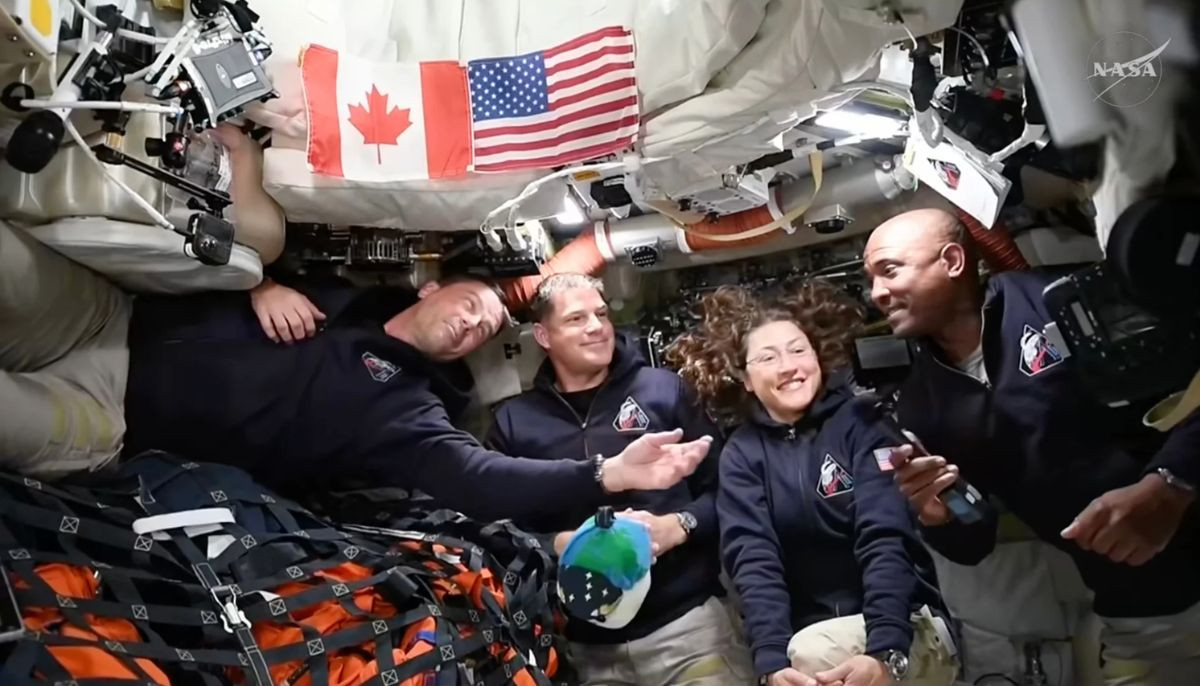
For NASA, the success of the Artemis II mission was measured not just in orbital mechanics or heat shield integrity, but also in likes, shares and live views. After a successful splashdown off the California coast last Friday, the agency is celebrating a communications victory that turned the nine-day lunar flight into a high-definition digital spectacle.
Scoville said, after 200 unmanned missions AFP He spent two years working at the agency to better engage the public in NASA’s new Moon missions. Since then, viewers have watched captivating glimpses of the journey, ranging from livestreamed events with the astronauts to an extraordinary portfolio of astronomical photographs.
“I like having livestreams available, and I also think it’s cool that they use Twitch,” Roethler said, referring to the video streamer site favored by gamers. “This is a platform that the majority of our students use.”
Scoville said, with Artemis II, “there have been just smiles and really emotion through NASA, where we’ve had a history of being a little dry sometimes.”
“It’s okay to jump up and down and scream at the moon,” he said.
A new era of lunar engagement
Unlike the Apollo missions of the 1960s, which aired on only a few television channels, Artemis II had to compete in a fragmented digital landscape. Despite the challenge, the mission garnered millions of views through social media clips and astronomical photography. During the lunar flight, astronauts Christina Koch, Victor Glover, Jeremy Hansen, and Reed Wiseman provided an almost literary description of the lunar surface that enthralled both scientists and the general public.
“Apollo” Comparison: Reaching a New Generation
While some analysts, like the Planetary Society’s Jack Kiraly, argue that the moment doesn’t live up to the legendary hype of the Apollo landings — which were watched by 20% of the global population — the Artemis team believes their mission serves a different purpose. In a politically fractured world, mission commander Reed Wiseman hoped the view of a “unified Earth” from a distance would give the public a chance to pause for a moment. As Scoville noted, the mission allowed people to tap into their “inner rocket nerds,” signaling a new chapter where NASA is as much a space exploration agency as it is a media powerhouse.
