

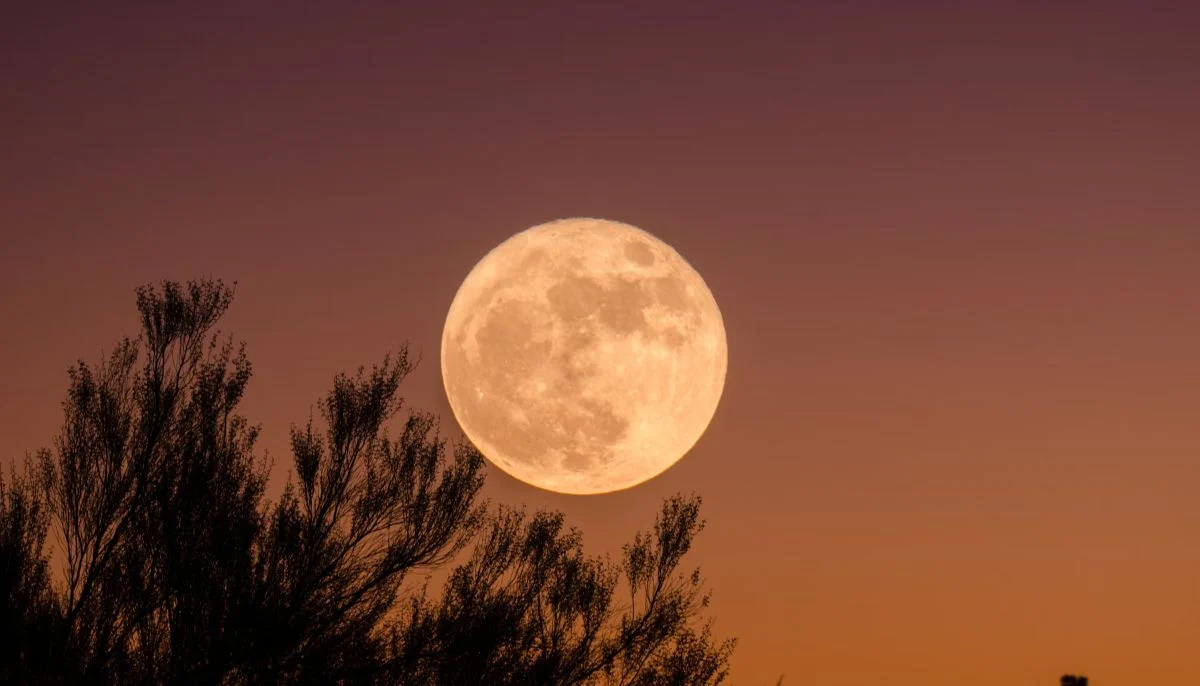
What would happen if the moon disappeared overnight? Scientists say the consequences will be immediate and severe, changing Earth’s oceans, climate and even the length of a day. Without the Moon, Earth’s day would last only six hours.
Earth will experience a complete transformation that scientists predict will occur within a brief geological period as a result of which the planet will rotate at approximately twice its normal speed.
The Moon is responsible for about two-thirds of Earth’s tidal activity. When you remove the Moon from Earth, the tides will reduce to one third of their current size because the Sun’s gravitational force will be their only remaining tidal force.
People believe that the situation seems to be under control. The situation presents an unbearable challenge. Tidal movements through coastal waters transport nutrients that nourish entire ecosystems that depend on crabs, mussels, starfish and snails.
When the process stops churning, the ecosystem experiences complete collapse rather than minor degradation. The direct consequences of this relationship will lead to mass extinction of land creatures that depend on coastal animals for food across vast areas inland.
Ocean currents, which get their energy from tidal forces, use their momentum to move warm water across the ocean while maintaining temperature balance. If these systems disappeared the world would experience climate change in all its regions.
The Earth revolves around the Sun maintaining an inclination of about 23.5 degrees to its orbital plane. The Moon’s gravitational pull maintains the tilt that creates our four seasonal periods. The Moon’s gravitational force acts as a stabilization factor that keeps the tilt at its current angle.
Without it, the Earth would experience unpredictable tilt movements that could reach anywhere between zero degrees and extreme tilt angles that would cause severe ice ages or extreme summer heat to spread into present-day temperate regions. Scientists predict that atmospheric instability will generate wind speeds that could reach more than 300 mph during the worst weather conditions.
Moonlight serves as an operational tool in the natural environment. Nocturnal hunters, from big cats to owls, plan their hunts around the phases of the moon, and use low light to catch prey.
A completely starry sky will create the opposite effect. The initial increase in prey numbers will occur when populations of predators that have evolved lunar-based hunting patterns face decline or extinction.
Ecosystem disturbances will increase their impact on ecosystems that already suffer from tidal and seasonal instability.
