

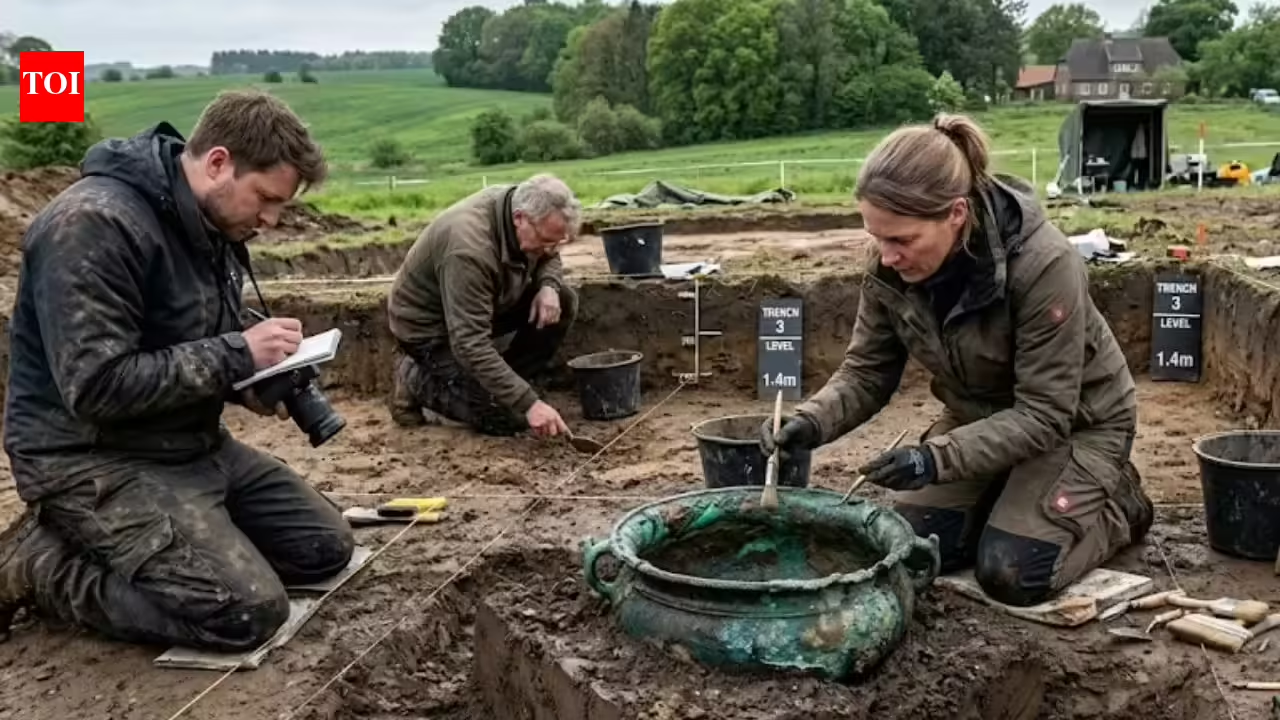
In Schalby, northern Germany, archaeologists found rare bronze cauldrons dating from the third to fifth centuries AD. The cauldron was recovered through cooperation between the State Office of Archeology of Schleswig-Holstein and Aarhus University. The cauldrons are called ‘Westland Cauldrons’ and provide important evidence of trade and cultural exchange in ancient times. Previously thought to be found only in the Scandinavian and Rhine regions, cauldrons found in northern Germany represent a significant challenge to how we think about the extent of Roman-period trade networks. Researchers hope to use advanced technology, including ‘block lifting’ and computed tomography (CT) scanning, to preserve the cauldrons, while also learning about any possible hidden materials buried inside them. This work will enhance our understanding of the complexity of social hierarchies and the interconnectedness of economies during migration periods.
1,700-year-old bronze cauldron dating back to the Roman Empire found in northern Germany
The Wasteland Cauldrons found at Shalby reveal a much more extensive trade network between northern European elites and Rome than historians previously assumed. It might have been thought that such specialized goods would have reached only places like Scandinavia and the Rhine Basin. These findings from the Schleswig-Holstein site indicate long-distance exchange networks between local elite groups in the Roman world and these northern European elites between the third and fifth centuries AD, according to a research study at the State Office of Archeology of Schleswig-Holstein. In fact, there were trade, diplomatic and ritual exchanges between the Roman world and the decentralized and heterogeneous communities of Northern Europe long before the Viking Age.
How CT scanning protected delicate archaeological finds
The metal was very fragile, and a non-destructive block lifting method was used for archaeologists to excavate the cauldrons with the dirt around them to prevent them from falling and breaking during excavation. The cauldron has been scanned via CT, and after being scanned, will undergo controlled laboratory testing.Imaging the interiors of the vessels without the use of force will help archaeologists examine these cauldrons to determine whether the vessels contained objects or whether there were other objects that may have been among the grave goods associated with them. Cauldron imaging provides archaeologists with the ability to preserve the integrity of the archaeological context within the archaeological record.
Why were elite Roman objects buried in Germany?
Preliminary study has shown that the cauldrons appear to have been placed inside each other, and this has led experts to believe that they were deposited deliberately, possibly as a ceremonial cache or sacred burial offerings. The deliberate interment of such valuable, imported objects may indicate their status as highly respected symbols of social rank and spiritual value among the indigenous Germanic peoples. The ongoing investigation by the State Office of Archeology of Schleswig-Holstein will evaluate the original purpose of this deposit and try to identify whether any of the objects deposited were organic in nature, which could provide additional information on ancient food practices or burial customs.
