

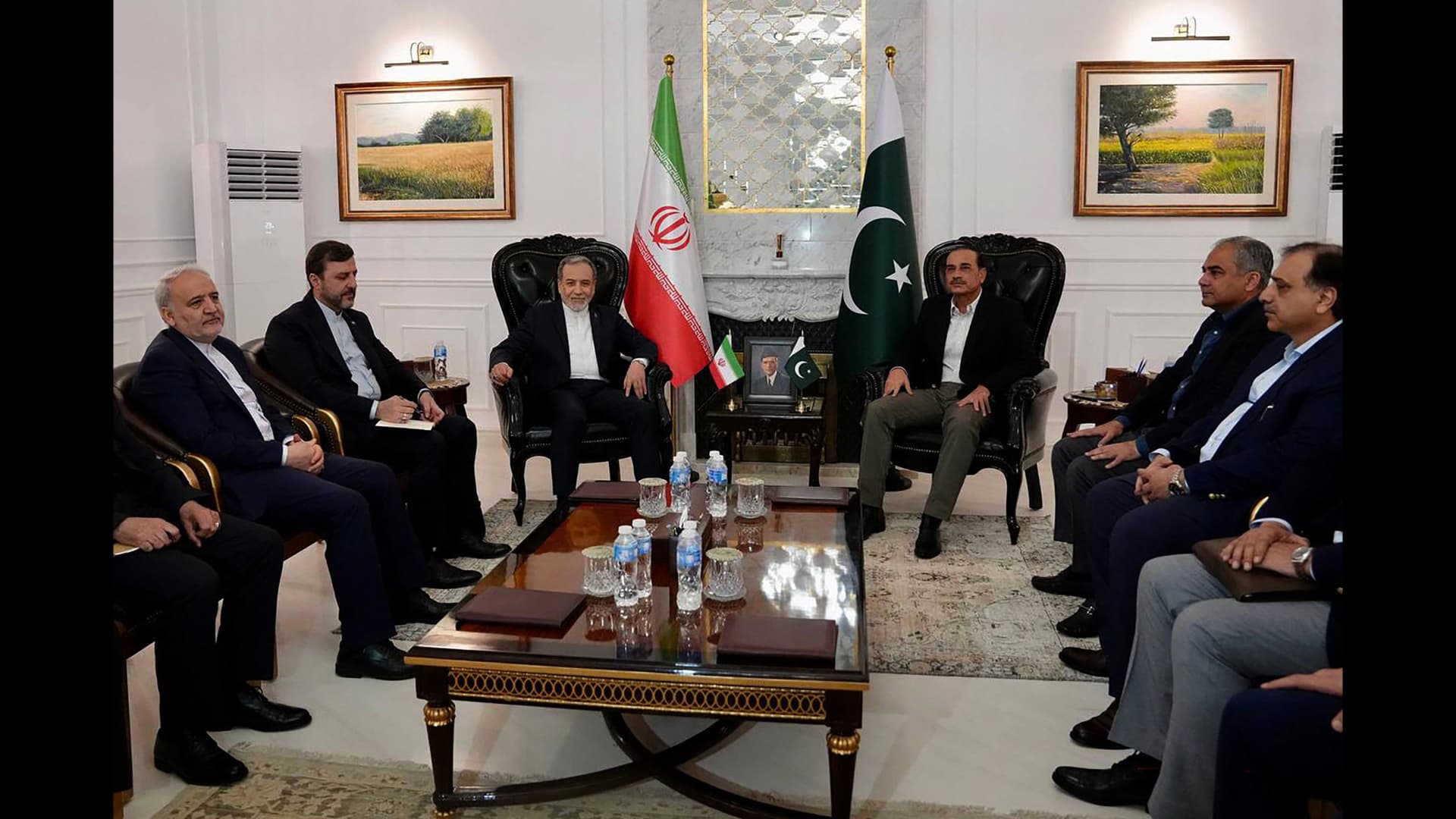
This handout photo released by the Iranian Foreign Ministry on April 25, 2026 shows Pakistan Army Chief and Field Marshal Syed Asim Munir (3rd R) meeting with Iranian Foreign Minister Abbas Araghchi (3rd L) upon his arrival in Islamabad. (Photo by Iranian Foreign Ministry/AFP via Getty Images) / XGTY / Limited to editorial use – Mandatory Credit “AFP Photo/Iranian Foreign Ministry” – Handout – No marketing, no advertising campaign – Distributed as a service to clients
– | AFP | getty images
Met with Iranian Foreign Minister Abbas Araghchi Pakistani Army Chief Asim MunirThe prospects for a second round of direct talks between Iran and the US over the weekend looked uncertain, the Iranian Embassy in Pakistan said in a post on Twitter on Saturday.
A senior Iranian official said representatives of his government have no plans to meet senior US negotiators visiting Pakistan for talks.
“No meeting is planned between Iran and the US, Iran’s comments will be conveyed to Pakistan,” Iranian Foreign Ministry spokesman Esmail Baqai said in a statement. Post Friday late night on X.
On Friday, White House press secretary Carolyn Leavitt confirmed that US special envoys Steve Witkoff and Jared Kushner would visit Pakistan on Saturday morning to engage in “direct talks” with their Iranian counterparts.
“The Iranians reached out” and asked for in-person talks, Leavitt said on Fox News, as President Donald Trump had asked him to do.
He said, “So the President is sending Steve and Jared over to hear what they have to say, and we hope it will be a productive conversation and hopefully get the ball moving toward an agreement.”
Leavitt said Vice President J.D. Vance, who led a former US delegation to Islamabad for initial talks with Iran, would not attend this weekend’s talks.
Trump told Reuters in a phone call later Friday that Iran “will make an offer,” adding that he did not yet know what it would be and “we’ll have to see.”
Araghchi had earlier on Friday said he was “going on a timely visit” to Islamabad, Muscat and Moscow “to closely coordinate with his partners on bilateral matters and consult on regional developments”.
The Islamabad talks will be “brokered by the Pakistanis,” Leavitt said in the Fox interview.
The first round of peace talks, which were held in Islamabad two weeks ago and led by Vance from the US side, ended without any agreement.
A US delegation including Vance was expected to return to Pakistan earlier this week for further talks, but the visit was delayed after Iranian officials reportedly said they would not come.
Much of the mutual bitterness is centered on the Strait of Hormuz, a key oil-shipping route, where traffic has slowed due to Iranian threats and, as of last week, a retaliatory US naval blockade.
In a Reuters interview, Trump said the US would not lift its blockade of Iranian ports until a deal was reached.
oil pardon
America is also maintaining other types of economic pressure on Tehran.
Treasury Secretary Scott Besant told The Associated Press on Friday that the US does not plan to renew a one-time waiver allowing purchases of Iranian oil at sea.
“Not Iranian,” said Besant. “We have a blockade, and no oil is coming out.”
“And we think that in the next two, three days, they’re going to have to start shutting down production, which would be very bad for their wells.”
According to the AP, Besant also said the US does not plan to renew the waiver allowing purchases of Russian oil and petroleum products, which are currently at sea.
The tensions have further strained an already tenuous ceasefire, which was announced on April 7 amid Trump’s threat that Iran’s “whole civilization will die” if no deal is reached.
Despite the ongoing tension in the strait, Trump gave a unilateral decision on Tuesday This was extended shortly before the armistice ended.
After the war began on February 28, the Trump administration repeatedly said it expected operations to be brief and end within four to six weeks.
Since passing that deadline, the administration has reset its timeline, while emphasizing that past U.S. conflicts have lasted much longer.
“Unlike the endless wars of the past, which dragged on for years and decades but had little to show for it, Operation Epic Fury has delivered a decisive military result in a matter of weeks,” Defense Secretary Pete Hegseth said at a press briefing Friday morning.
— Reuters and the Associated Press contributed to this report.
