

The funding announced by the United States on Wednesday brings recent US humanitarian assistance through the UN-coordinated system to $3.8 billion, following a $2 billion allocation announced in December.
united nations Secretary General Antonio Guterres welcomed The latest contribution, saying “will.” Allow humanitarians to reach millions of people in the most urgent crises with life-saving assistance.“
Emergency relief coordinator Tom Fletcher described the funding as vital at a time when humanitarian agencies are “overstretched, under-resourced and literally under attack.”
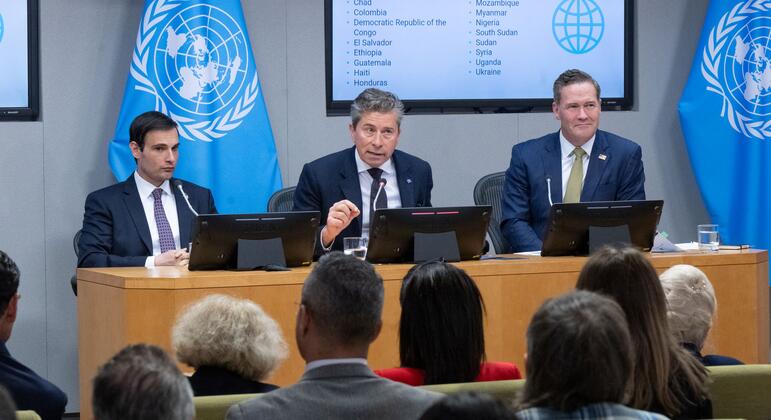
“This aid will help save millions of lives,“Mr. Fletcher Said at the United Nations Headquarters in New York, where he appeared with US Ambassador Mike Waltz and US Under Secretary of State for Foreign Assistance, Humanitarian Affairs and Religious Freedom Jeremy Levin.
The funding comes as humanitarian agencies face increasing pressure from conflict, displacement, climate shocks and shrinking donor budgets. according to EstimateApproximately 239 million people around the world are currently in need of humanitarian assistance.
Funding to help millions of people
Mr Fletcher said the first $2 billion tranche announced in December had already enabled aid agencies to distribute Life-saving assistance to 14.4 million people during the first four months of 2026.
“This is a title we should all be proud of and we should celebrate,” He said.
According to the UN Relief Coordination Office, the earlier funding package targeted 18 crises across multiple sectors. OCHAFunds available through humanitarian funds raised in those countries were tripled.
Six crises began without any pooled funding at the beginning of the year.
As of this week, $1.71 billion of that allocation was already under implementation, with UN agencies and partners aiming to reach more than 22 million people through the US allocation alone.
an important lifeline
Mr Fletcher said The funding had provided “a lifeline at a critical moment”. When humanitarian operations were at risk of collapse due to severe funding cuts and disrupted supply chains.
Of the assistance already provided, more than six million people received food assistance, while 10.4 million people received access to safe water. The funding is also providing direct assistance to more than 690 health facilities and more than 779,000 households.
In addition, approximately 300,000 girls and 266,000 boys are receiving assistance for severe malnutrition, while funding is also directed to protection services for women and girls, including survivors of sexual violence.
‘We can deliver’
Mr Fletcher said the humanitarian system is accelerating reforms aimed at improving efficiency, accountability and local decision-making.
He said agencies have reduced bureaucracy, shortened allocation timelines and increased transparency through online tracking systems that show where funds are being spent.
“We have shown that we can operate even in the most challenging circumstances.” He said.
Mr Fletcher also stressed that humanitarian needs continue to outstrip available resources, with the UN’s 2026 humanitarian response plan calling for $23 billion to deliver critical assistance to 87 million people around the world.
“Our focus going forward,” he said, “is to secure the remaining funding needed to deliver this ambitious plan, and then to get out there and deliver it.”
