

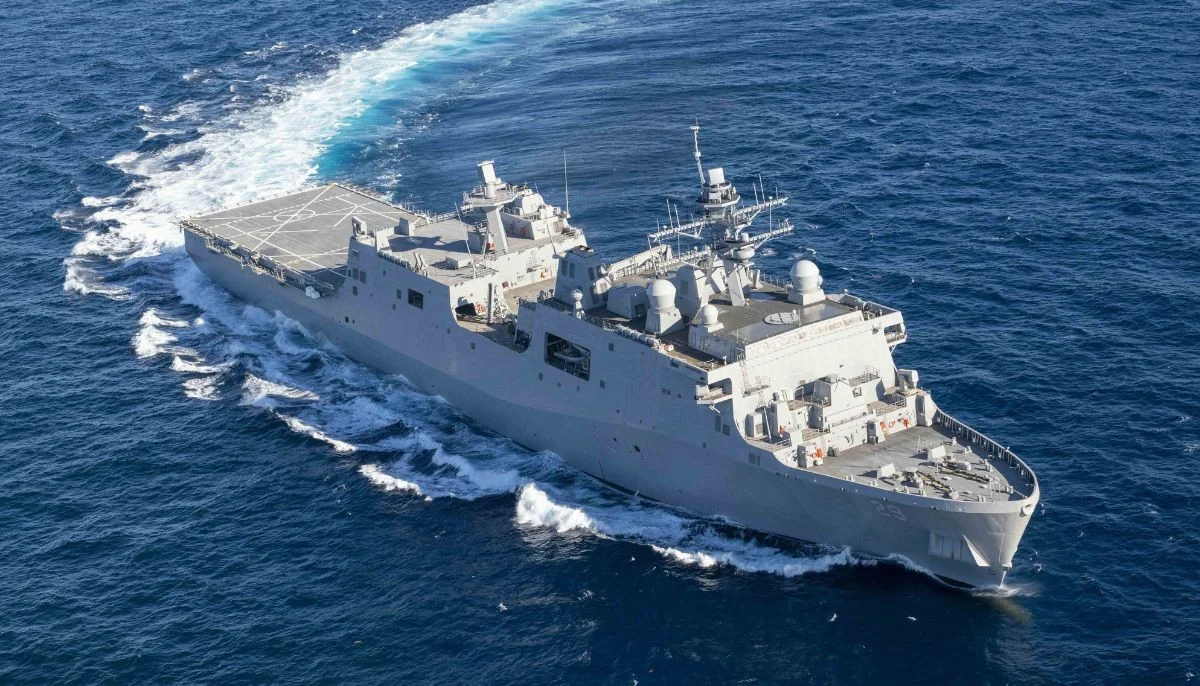
Chief of Naval Operations Admiral Daryl Caudle issued a directive in April 2024, 2026, requiring Surface Warfare Officers (SWOs) to command all amphibious warfare ships. The policy change ended the long-standing tradition of naval aviators commanding amphibious assault ships, transport docks and dock landing ships.
Meanwhile, the change is intended to take advantage of the technical complexity of modern amphibious fleets and the deep maritime and mechanical expertise of surface officers to manage ship systems.
According to current data, the amphibious fleet is struggling, with only 45% of ships being combat-ready, which is significantly lower than the surface fleet (63%) and the submarine community (65%).
To ensure stability and performance, commanding officers are now required to serve a minimum of two years in their roles to better oversee complex maintenance cycles.
“Inherent in these improvements is that (commanding officers) must not only have excellent knowledge of readiness, maintenance procedures, component design and failure modes, damage control, and operational procedures, but also be masters of their ships while being in command long enough to make real and effective changes,” wrote Admiral Daryl Caudle, Chief of Naval Operations.
Aviators would still command nuclear-powered aircraft carriers. However, the Navy is now researching new ways for aviators to gain “deep draft” command experience without using amphibious ships as stepping stones.
Experts, including retired Capt. Bradley Martin, said surface officers are better suited for these roles because their entire career paths align with amphibious platforms. Brig. General Lee Meyer confirmed that the USS Wasp’s service life has been extended five years to 2034 due to past mechanical failures.
While federal law mandates a minimum of 31 amphibious ships, Marine Corps Commandant Gen. Eric Smith warned at the 2026 Sea-Air-Space Expo that current levels are still inadequate to meet global military needs.
